


Playing It Forward: How Mirzapur’s First Cricket Box Turf Came to Life
This venture reflects how young entrepreneurs are redefining recreation and fitness infrastructure in tier 2 cities.

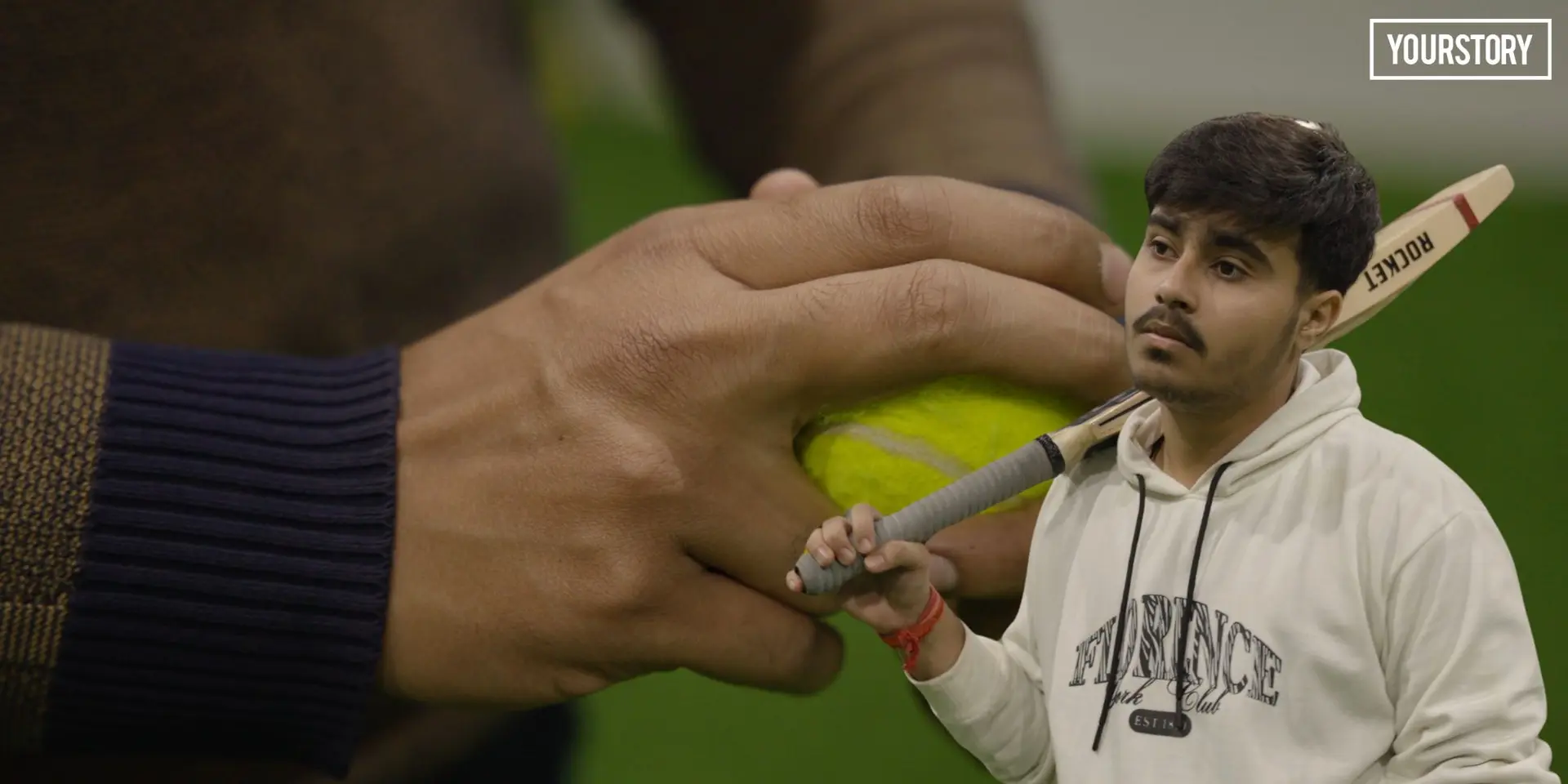

In India’s smaller cities, where open playgrounds are steadily disappearing, the need for structured sports infrastructure is growing rapidly. Recognising this gap, Mahu Khatri from Musaffarganj in Mirzapur, Uttar Pradesh, took a bold entrepreneurial step by launching the district’s first cricket box turf.
Located in a region where such facilities were unavailable within a 60-kilometre radius, the venture reflects not just business ambition but also a response to changing urban realities.
From idea to action
The idea of setting up a box cricket turf had been on Khatri’s’s mind for some time. However, like many young entrepreneurs in tier 2 and tier 3 cities, turning that idea into reality required the right moment and family backing.
That moment arrived in June-July this year.
While casually exploring business concepts, Khatri revisited his long-standing interest in creating a cricket-based facility. Discussions with his father and extended family followed, and the response was encouraging.
The family recognised two critical factors: the lack of sports spaces in Mirzapur and the growing demand for recreational fitness options. With open grounds shrinking and structured sports gaining popularity, the decision to proceed was met with support.
Navigating the unknown
Despite coming from a business family involved in carpets, sarees, and garment wholesale, Khatri had no direct background in sports infrastructure.
The learning curve was steep.
Understanding how to design and operate a box cricket turf required extensive research. Khatri connected with sports equipment vendors, consulted installation contractors, and relied heavily on online resources.
From selecting turf material to determining net dimensions and structural requirements, the process took nearly two to three months of planning and groundwork.
Learning through responsibility
Interestingly, Khatri did not rely solely on family funding to build the venture.
While his family was willing to support him financially, he chose to apply for a loan under the CM Yuva Udyami Vikas Abhiyan (CM YUVA) Yojana.
The motivation was not just capital.
He wanted to experience the discipline of financial management — understanding repayments, handling expenses, and running a venture independently.
The scheme’s interest-free structure made it particularly attractive, especially when compared to traditional bank loans.
After learning about the programme and visiting the District Industries Centre (DIC), Khatri completed the documentation process within 15 to 20 days. The loan was facilitated through Bank of Baroda.
Investment and execution
Setting up the cricket box turf required an overall investment of approximately Rs 20–25 lakh.
Through CM YUVA , Khatri secured a loan of Rs 5 lakh, while his family contributed the remaining capital.
The funds were primarily used for:
- Turf installation
- Netting
- Structural poles
- Lighting systems
With planning and procurement in place, the facility moved from concept to execution within a short timeframe.
A new sporting culture
Khatri’s cricket box turf represents more than just a business venture.
It signals the emergence of structured recreational infrastructure in smaller cities, where entrepreneurship is increasingly tied to lifestyle and community needs.
For aspiring entrepreneurs, Khatri’s journey offers a simple lesson: calculated risk is essential, but preparation is equally important.
By combining research, family support, and institutional funding, he transformed an idea into a first-of-its-kind facility in Mirzapur.
As cities evolve and leisure becomes a priority, ventures like these are likely to redefine how smaller towns engage with sports and wellness.