


How Aspiring Leaders India Foundation is building leadership for first-generation students
For many first-generation graduates, leadership is rarely taught as a skill. Aspiring Leaders India Foundation’s programme is built to address that gap by breaking it down into learnable, practical components.

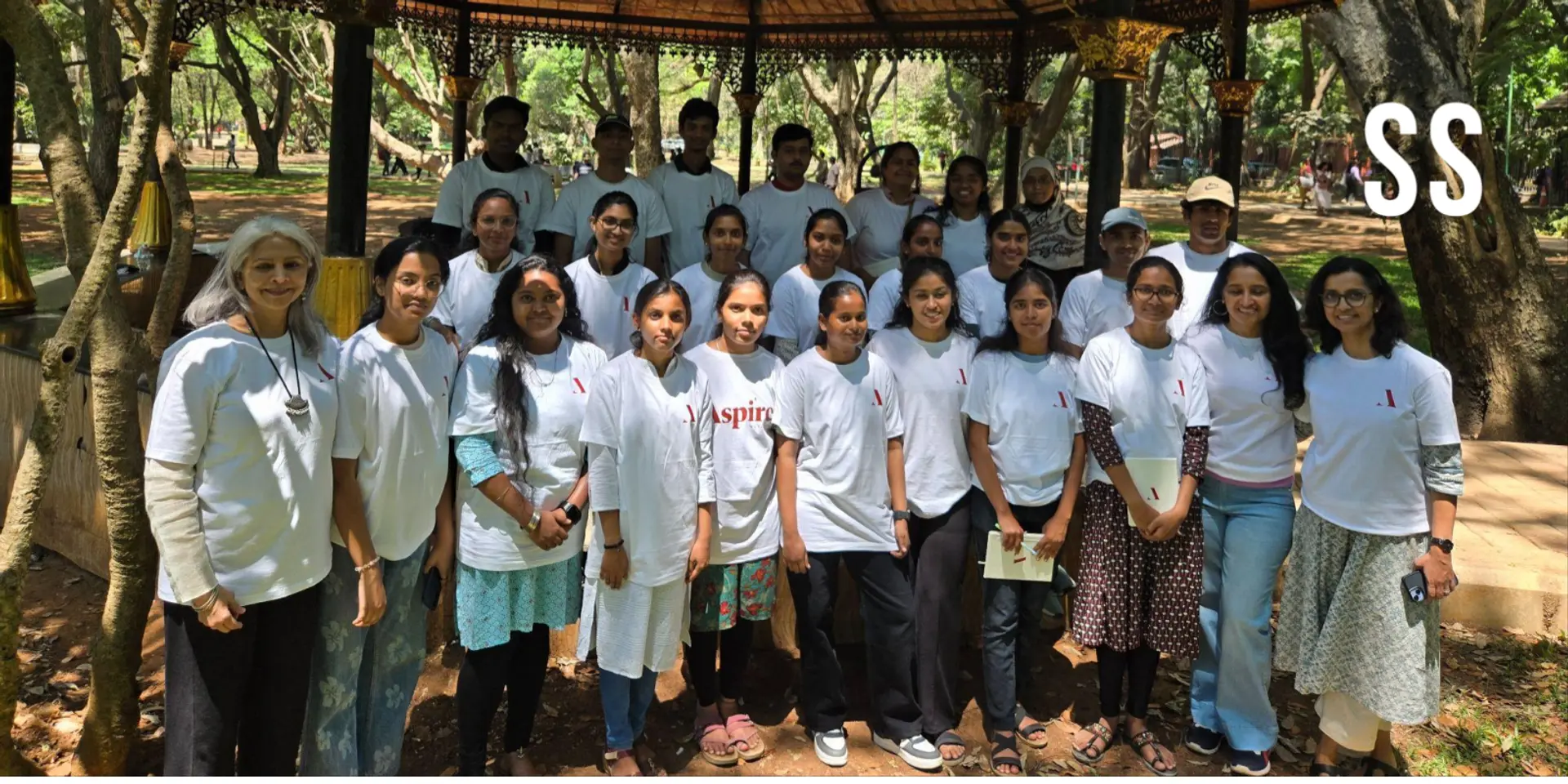

When leadership development programmes talk about “confidence”, they often assume that it is already shaped by privilege: English fluency, urban exposure, inherited networks. For Nithyambika Gurukumar, Executive Director of the Aspiring Leaders India Foundation, that assumption is the first thing to be dismantled.
The Bengaluru-based non-profit runs fully funded leadership development programmes for first-generation low-income college students. In over a year since its launch in India, the Foundation’s approach hasn’t been informed by how to mould participants into familiar corporate archetypes, but instead, expanding what leadership can mean, and who gets to practise it.
“Leadership really comes into play when you are able to be your authentic self,” says Gurukumar. “When one is able to confidently portray what is to be taken forward, navigate multicultural nuances, and do all of that without letting go of who they are.”
This framing matters the most when working with learners who have been repeatedly told implicitly or explicitly that where they come from is what determines how far they can go.
Removing elitism from leadership
The first step, according to Gurukumar, is defining what real leadership is.
“Is leadership really about being the head of a department or an organisation?” she asks. “Or is it about being able to navigate the world of work or academia, ask for help, admit vulnerability, and still move forward?”
“Saying ‘I don’t necessarily need to know everything’ is also leadership, especially in the contexts we’re working in,” she says.
Sashi Gundala, Director of Operations, says the confidence gap is often the most immediate barrier. “Students from Tier II and Tier III cities often don’t think they can stand in front of Tier I city kids and express themselves,” she says. “They don’t believe their thoughts and ideas could belong in that room.”
The Foundation’s repeated surveys with participants have shown the team that they are often least confident when speaking in front of a group. Their goal, therefore, is to expand the world for these students to see how far their prospects can go. “Earlier, their world was limited to their city. Now they’re interacting with peers from other countries. They make friends, they learn cultures and their world really just explodes,” says Gurukumar.
Leadership as a skill, not a personality
The programme itself is structured in a way to demystify leadership by breaking it into learnable skills. Gundala explains that the curriculum focuses on decision-making, critical thinking, collaboration and ownership. “Grades and resumes take you only so far,” she says. “Once you enter the workforce, you need more.”
Many students have never been given the space to make decisions at all, she adds. “They don’t know you can write down pros and cons, talk to people, and arrive at a choice,” she says. “We teach that process.”
Participants begin with a ‘Big Five’ personality assessment to identify strengths and weaknesses, and spend the nine-week programme working deliberately on those gaps. Learning happens through discussion-based scenarios rather than lectures, with students required to respond to each other’s ideas.
The programme runs through a Discord-based platform, which Gundala likens to a structured WhatsApp group. Students watch videos, read material, comment, and respond to peers across small, diverse cohorts.
Alongside this, 15 to 20 live masterclasses with senior professionals from India and abroad are also offered. “Students attend them live, interact with these leaders, ask questions, and this exposure does a lot for their confidence and networking,” says Gundala.
Questions around English inevitably come up when leadership programmes work with students from small towns with lower socio-economic access. For Aspiring Leaders India Foundation, language is more of a shared learning curve within the cohort rather than a filter. “We only ask for basic English,” explains Gurukumar. “And everyone in the cohort has the same level.” Groups typically include learners from India, Brazil, Nigeria or Ghana, ensuring no one enters as the most fluent voice in the room.
“This is not about coming out speaking perfect English,” she says. “It’s about understanding that the language barrier is not a ceiling.”

From leadership theory to lived application
The programme’s final four weeks centre on a capstone project, which Gundala describes as “almost like an internship”. Students work on real-world problems— sometimes testing their business ideas—with feedback from experts. They even list the capstone as professional experience on their resumes.
This structure has led to their trained students building ventures that are deeply rooted in their lived realities. Gurukumar recounts the story of an alumnus who grew up around blind community members and went on to develop accessible medical information in Braille, including vernacular adaptations. “That idea came directly from what he saw around him,” she says.
Another alumnus from Aurangabad, who is in Bihar now, runs a venture converting plastic waste into fuel while generating local employment. A third—an engineer from Hyderabad working at Oracle—co-founded a company mentoring young girls in STEM, after noticing how few were encouraged to pursue it in his hometown.
“We are seeing ideas emerging that are close to home, but with the ambition to scale beyond there,” says Gurukumar.
Aspiring Leaders India Foundation also materially backs these ambitions. Alumni can apply for three types of grants: academic funding for higher studies, seed funding for business ideas, and community awards for local development projects. “These awards encourage them to actually act on what they’re thinking,” says Gundala. “So that their ideas don’t stop at intention.”
Extended support beyond the classroom
Gurukumar says alumni engagement is a central pillar of the foundation’s leadership work, with ongoing mentoring, city-level meetups, and curated sessions based on alumni needs. They include training from industry exposure to understanding how to use AI tools meaningfully.
“We don’t want this to feel like you’re in and out,” she says. “Support has to be consistent and authentic.”
The foundation currently operates at under Rs 1,000 per student, a scale that, while very inclusive, brings its own constraints. Infrastructure gaps, unreliable internet and electricity are factors that continue to limit their reach for students from far-flung areas. “We have to be realistic,” says Gurukumar. “There’s no point offering a great programme if access itself becomes the barrier.”
“We rely too much on the idea that a mentor fixes everything,” says Gurukumar. “It’s far deeper than that. Leadership development requires sustained scaffolding.”
She is also wary of narratives that over-romanticise hard work. “We need to industrialise luck. Hard work alone doesn’t flatten inequality.”
Gundala says her best hope for students would be that even if the foundation were to stop tomorrow, hypothetically, they carry one thing forward: “The ability to lead themselves first, to make informed decisions and know they matter.”
“We would like our students to know that their postcode or background is not a limitation,” says Gurukumar. “If they have that confidence, they stand a real chance to chart their own path.”
Edited by Jyoti Narayan