



20-year-old inventor builds AI glasses that talk to blind users
A young Nigerian innovator is developing voice-enabled smart glasses to help visually impaired people detect obstacles and stay connected.

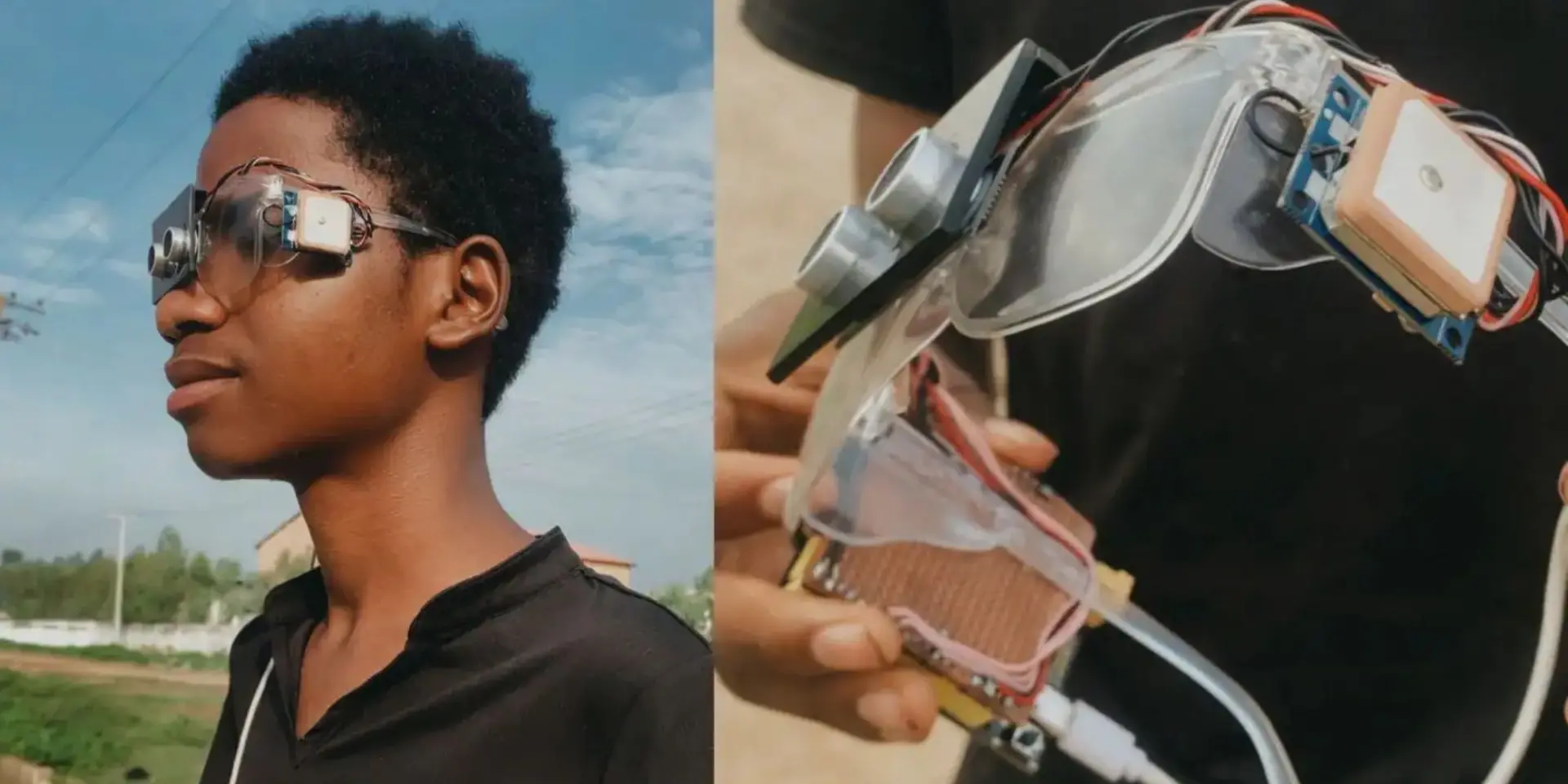

A 20-year-old Nigerian inventor is building AI-powered glasses that can detect obstacles, identify locations and speak to the wearer, turning what the camera sees into audio guidance.
The device is designed to help people with visual impairments navigate their surroundings more independently. By combining a camera, AI and voice feedback in a wearable form, the project shows how everyday technology could make the world easier to navigate for people who cannot see.
Meet the 20-year-old behind the idea
Khalifa Aminu, an inventor from Kano, Nigeria, is developing the device with the aim of improving day-to-day mobility for blind and visually impaired users. As reported on August 20, 2026, Aminu’s project focuses on practical assistance rather than entertainment, setting it apart from many consumer smart glasses.
Aminu says the idea grew from watching people in his community struggle with everyday navigation. Earlier prototypes used ultrasonic and infrared sensors to trigger alerts and were tried by a visually impaired tester whose feedback led to refinements such as smaller hardware, a wireless switch and clearer voice prompts in place of simple beeps.
How the AI glasses work
The concept combines artificial intelligence with sensors to detect objects in front of the wearer and provide timely audio cues to help avoid obstacles.
Built-in GPS lets users know where they are, while a tracking feature is designed to share a lost wearer’s location with a designated caregiver via WhatsApp or email. Aminu is also working on a version that adds voice interaction so the glasses can effectively “speak” to the user about their surroundings.

What stage the project is in
The technology is still being developed and has not been validated to replace a white cane, guide or other established mobility aids in all environments.
Aminu recently demonstrated progress in a post on X dated August 19, 2026, outlining that the system blends AI, sensors and GPS to enable obstacle detection and location awareness. Further testing and iteration are underway.
If proven reliable in real-world conditions, voice-enabled AI glasses could complement existing tools by turning visual scenes into useful audio, supporting safer, more independent travel for blind users. Features such as location sharing may also reassure families and caregivers, while the use of accessible components could keep future costs down and broaden availability.