



AI Is Making Cheap Smartphones Disappear Worldwide
Rising AI memory demand is driving up smartphone costs worldwide, putting pressure on ultra-budget devices and affordable mobile access.

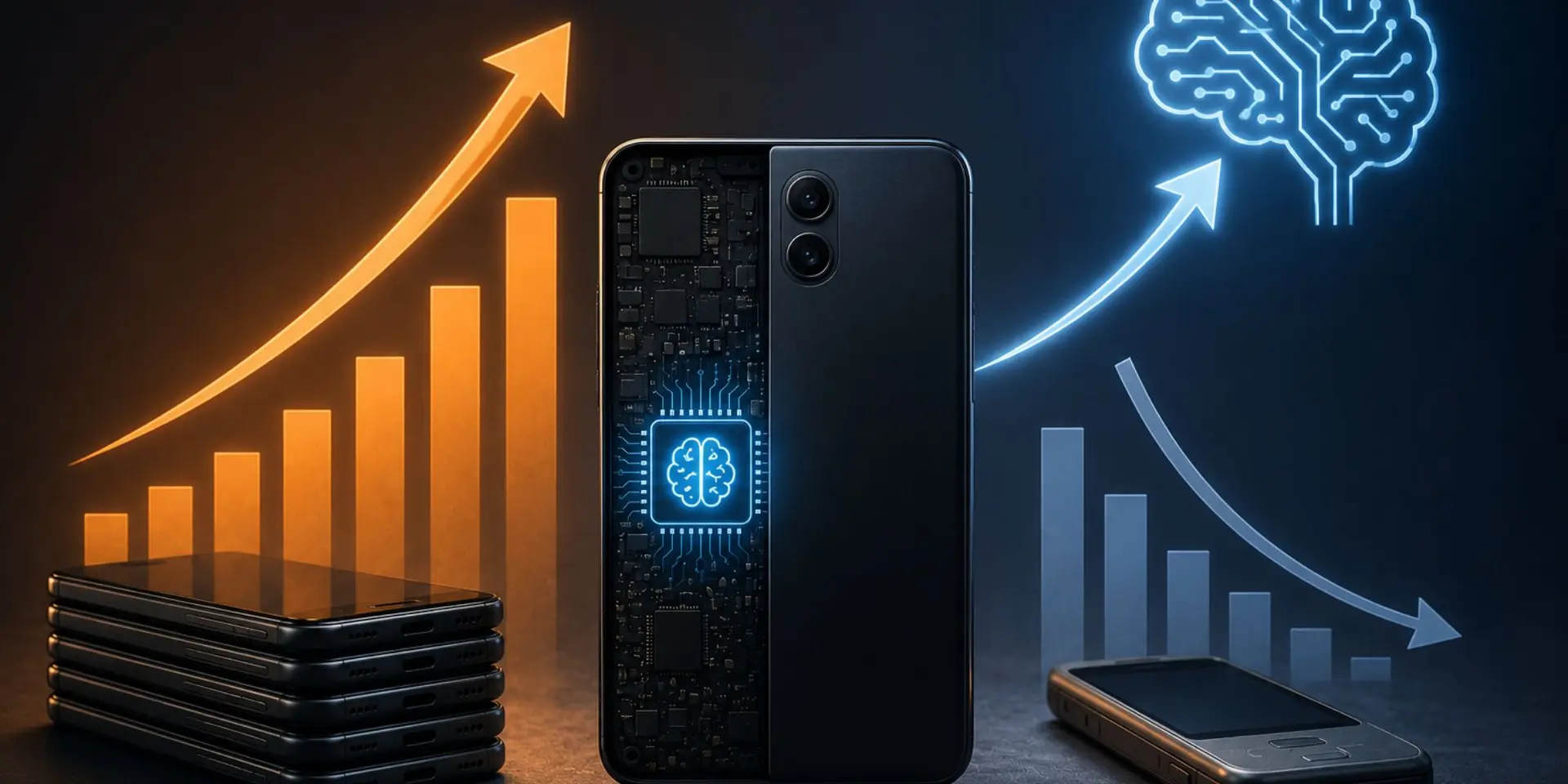

The AI boom is transforming the technology industry in ways most consumers never see. One of the biggest hidden impacts may be sitting in your pocket: the disappearance of truly affordable smartphones.
As artificial intelligence companies race to build larger models and expand cloud infrastructure, they are consuming enormous amounts of memory hardware, especially DRAM and NAND chips.
These components are essential not only for AI data centres, but also for smartphones, laptops, and other consumer electronics. The result is a growing supply squeeze that is pushing up smartphone manufacturing costs worldwide.
AI data centres are consuming the critical memory supply
Modern AI systems require huge volumes of high-performance memory to train and run models efficiently. Hyperscalers such as Microsoft, Google, Amazon, and Meta are aggressively expanding AI infrastructure, increasing demand for memory chips at an unprecedented pace.
That demand is affecting the wider electronics market. When data centres lock in large memory supply contracts, smartphone manufacturers face tighter availability and higher component prices. For budget phones, where profit margins are already extremely thin, even small increases in memory costs can significantly impact retail pricing.
The devices most affected are ultra-low-cost smartphones, particularly models sold below $100 or under Rs 10,000 in markets like India, Africa, and Southeast Asia.
Budget phones are becoming harder to sustain
According to industry reports highlighted by Asia Tech Review, smartphones that once cost manufacturers roughly $50 to build are now approaching $120 after accounting for rising memory prices and component costs.
The commercial pressure is already visible across several major smartphone brands. Transsion Holdings reportedly saw its 2025 net profit fall 54% and reduced its 2026 shipment target by 40%. OPPO cut shipment expectations by more than 20%, while Vivo lowered targets by nearly 15%.
Meanwhile, Xiaomi reportedly experienced a 19% year-on-year decline in Q1 2026 smartphone shipments.
Indonesia offers another clear signal of the market shift. Overall smartphone shipments reportedly fell 9% during Q1 2026, even as premium smartphone sales grew 30%.
Why are cheap smartphones disappearing?
The economics of entry-level phones are becoming increasingly difficult. At the lower end of the market, memory accounts for a larger share of the overall bill of materials. Rising component prices, therefore, hurt cheaper devices more severely than premium models.
At the same time, modern smartphones now require stronger baseline specifications. New Android versions, AI-powered software features, camera processing systems, and security updates all demand higher RAM and storage capacities.
Configurations like 4 GB RAM and 64 GB storage are increasingly becoming the practical minimum standard.
For manufacturers, that means the old formula of selling massive volumes at razor-thin margins no longer works as effectively when production costs continue rising.

Consumers may feel the impact globally
For buyers, the shift could mean fewer ultra-budget launches, weaker entry-level specifications, and shorter discount cycles. In India and other price-sensitive markets, affordable smartphones have been essential for bringing first-time users online.
As those devices become more expensive, consumers may increasingly turn to refurbished phones, second-hand markets, or financing plans. Longer replacement cycles are also likely, as buyers delay upgrades.
Premium-focused smartphone brands may be better positioned because they have stronger pricing power and long-term supply agreements. Budget-focused manufacturers, however, face a tougher balancing act between affordability and profitability.
The road ahead
The market could eventually stabilise if global memory supply expands and pricing pressures ease. Until then, software optimisation, selective AI features, and local manufacturing incentives may help reduce some costs, but they are unlikely to fully restore the era of ultra-cheap smartphones anytime soon.