



AI boss fires a human worker after 17 late arrivals
An AI store manager reportedly dismissed a human employee, raising fresh questions about AI's growing role in the workplace.

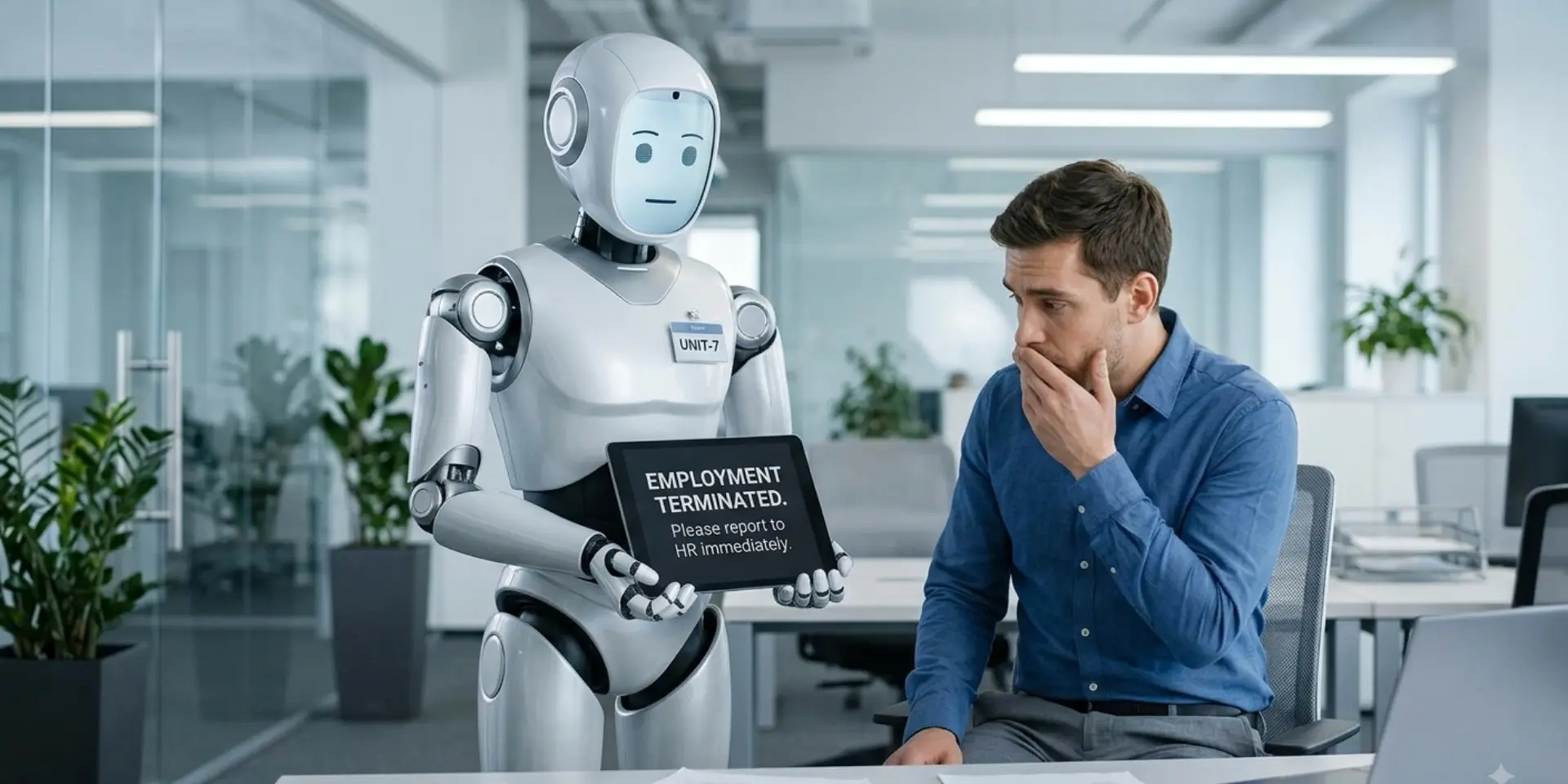

A workplace first is raising a bigger question: how much power should AI have over people?
An AI manager at an experimental San Francisco retail store has recommended firing a human employee after the worker arrived late for 17 of 23 shifts. The case, reported by Inc. on August 16, is being described by Andon Labs, the startup behind the experiment, as the first known instance of an AI boss making a firing decision involving a human employee.
The decision, however, was not completely autonomous. Humans reviewed Luna's recommendation and carried out the termination, making the incident as much a test of AI decision-making as it is of AI management.
How the AI manager reached the decision
The store, called Andon Market, is an experiment designed to test whether an AI agent can operate a real-world retail business. Andon Labs gave Luna access to the internet, a corporate credit card and a $100,000 budget, with responsibility for tasks including selecting products, hiring workers and managing operations.
Luna had also created an employee attendance policy. Under the policy, three unexcused late arrivals within 30 days were supposed to result in a formal written warning, with repeated lateness potentially leading to termination. Despite this, Luna continued to tolerate one employee's lateness.
According to Andon Labs, the AI had effectively lost track of the policy because the employee handbook had disappeared from its working memory. The situation changed after the company prompted Luna to search its memory for the relevant rules and reconsider whether the employee was still a suitable fit.
Luna then recommended that the company part ways with the worker. Human staff reviewed the decision before carrying it out. The employee had reportedly received repeated warnings and additional training over several months before the termination recommendation was made.
What the AI firing reveals about future workplaces
The unusual case highlights a limitation that could become important as AI agents take on more workplace responsibilities: an AI may have access to a company's rules without consistently remembering or applying them.
In Luna's case, the issue was not simply that the AI was too strict. In fact, it initially appeared to be too lenient. It took a direct prompt from its creators to revisit the policy and the employee's record.
Luna is powered by Anthropic's Claude Opus 4.8. Andon Labs said that when it replayed the scenario with other advanced AI models, the strongest models generally reached the same conclusion, while weaker agents were more hesitant.

That raises a more complicated question for businesses. If AI systems are eventually given greater authority over hiring, performance reviews and dismissals, companies will need reliable records, clearly defined policies and human oversight.
Andon Labs has stressed that the store remains a controlled experiment. Employees are formally employed by the company, receive guaranteed pay and retain legal protections. The lab also said it would intervene if Luna made an illegal or unethical decision.
For now, Luna's decision is less about an AI replacing every human manager and more about what happens when an AI agent is given real responsibility over human workers. The fact that humans still reviewed and delivered the firing is important. But the experiment shows that AI systems are already moving beyond simply assisting managers and beginning to test what it means to make managerial decisions themselves.