


AI searches Hubble archive to uncover hundreds of cosmic anomalies
ESA-built tool trawls nearly 10 crore Hubble image cutouts and flags more than 1,300 oddities in two and a half days, NASA says.

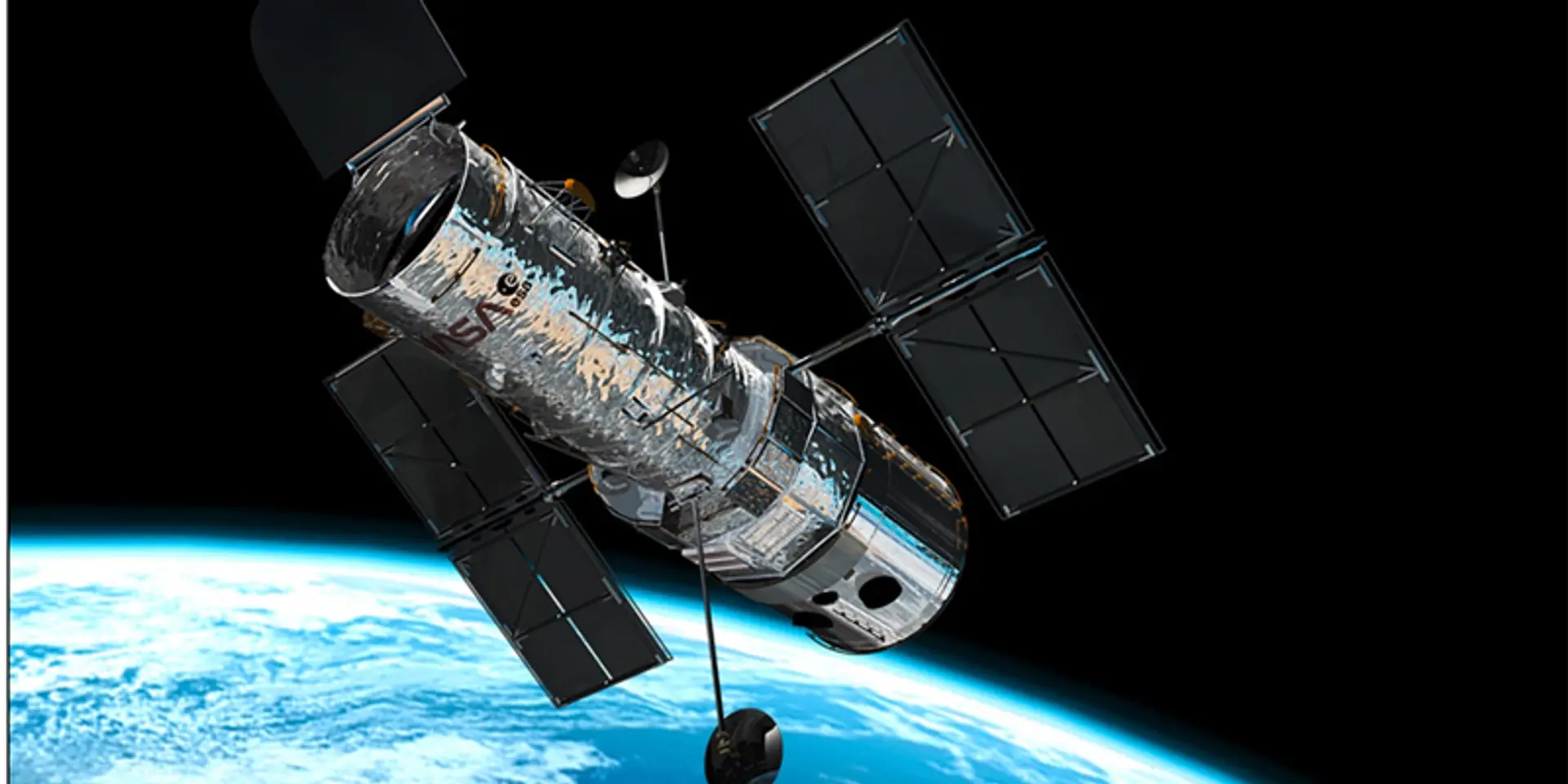

Artificial intelligence has helped astronomers trawl through decades of Hubble Space Telescope data to uncover more than 1,300 unusual cosmic objects. The scan of nearly 10 crore image cutouts from the Hubble Legacy Archive surfaced phenomena ranging from colliding galaxies and gravitational lenses to jellyfish galaxies and ring-shaped systems, according to NASA.
AI combs through 35 years of Hubble data
The project analysed almost 100 million small image tiles, each only a few dozen pixels across, representing Hubble observations accumulated over 35 years. In about two and a half days, the system flagged more than 1,300 anomalies for closer human inspection, with over 800 having no prior record in scientific literature. NASA said the approach demonstrates how quickly AI can parse archives at a scale that is impractical for manual review, while still relying on astronomers to validate the most promising candidates.
Among the most striking finds were multiple examples of gravitational lensing, where a massive foreground galaxy bends and magnifies the light of a more distant galaxy into arcs or rings. Researchers also identified interacting and merging galaxies with long tidal streams, galaxies packed with giant star-forming clumps, several jellyfish galaxies showing gas tails that resemble tentacles, and edge-on planet-forming discs in our own Milky Way. A handful of objects resisted any clear classification, creating fresh targets for detailed follow-up.
ESA team builds the tool, Hubble archive provides the canvas
The AI technique, developed by European Space Agency researchers David O’Ryan and Pablo Gómez, is built around a neural-network method called AnomalyMatch that learns visual patterns and then highlights outliers. After the algorithm produced a ranked list, the team manually verified the top candidates to confirm true anomalies. Agency statements noted that this is the first systematic anomaly search across the entire Hubble Legacy Archive at this scale.
The study appears in the journal Astronomy & Astrophysics.
Leadership at the two agencies has repeatedly pointed to AI as central to squeezing more science out of existing missions. NASA Administrator Bill Nelson and ESA Director General Josef Aschbacher have emphasised the strategic role of advanced data analysis in space science programmes in recent years. While the latest Hubble result is a research milestone, it also signals how agencies intend to operationalise AI in routine pipelines.
How does the AI separate the rare from the routine
Instead of trying to label every image, the system learns what “normal” looks like for Hubble data, then searches for departures from that norm. In practice, AnomalyMatch evaluates millions of small cutouts, assigns a score for unusual features, and compiles a shortlist. Astronomers inspect these candidates to eliminate artefacts and confirm genuine astrophysical oddities. This human-in-the-loop design accelerates triage without ceding scientific judgement to a black box, researchers said.
Why this matters for the next wave of sky surveys
The Hubble archive is only a foretaste of the data avalanche expected from new observatories. NASA has noted that the upcoming Nancy Grace Roman Space Telescope, along with ESA’s Euclid mission and the National Science Foundation and Department of Energy’s Vera C Rubin Observatory, will generate unprecedented volumes of images. Automated anomaly detection will be essential to spot rare or unexpected phenomena quickly, enabling timely follow-up with space and ground telescopes.
What the numbers say
- Dataset size, nearly 10 crore image cutouts from the Hubble Legacy Archive.
- Processing time, about two and a half days to scan the archive.
- Confirmed anomalies, more than 1,300 objects, with over 800 not previously documented.
- Examples found, gravitational lenses, merging and interacting galaxies, jellyfish galaxies, ring galaxies and edge-on planet-forming discs.
Hubble continues to operate as a partnership between NASA and ESA, with mission operations led by NASA’s Goddard Space Flight Center and science operations at the Space Telescope Science Institute in Baltimore. According to NASA, the new AI-assisted sweep shows that the telescope’s legacy is not confined to its past images, it also includes fresh discoveries waiting to be mined by modern tools.