



Alibaba Unveils AI Models Built Specifically for Robots
Alibaba is expanding its Qwen AI strategy from chatbots to embodied AI, with models designed to help robots understand, plan and act in the physical world.

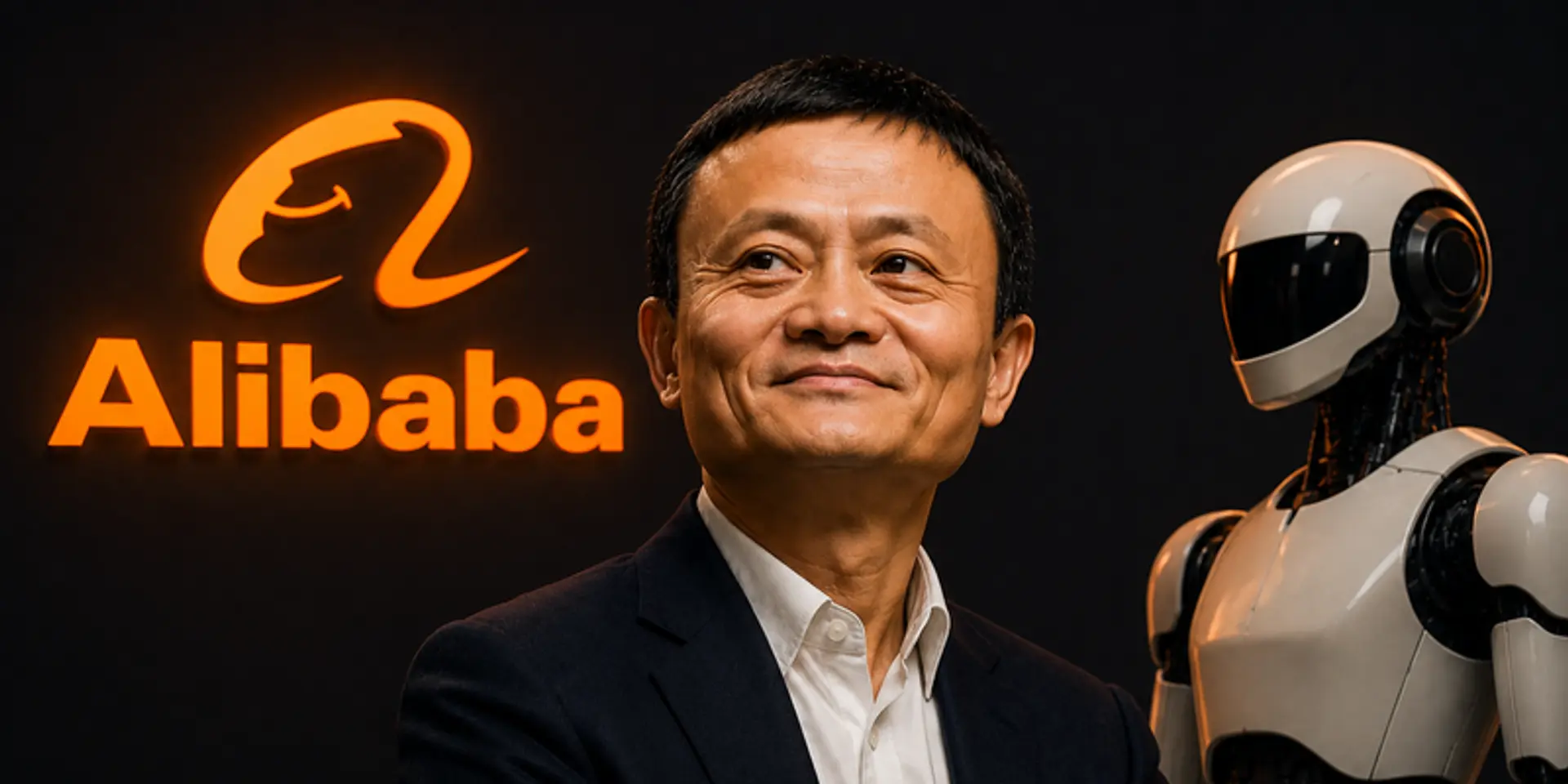

Alibaba Group has unveiled its first suite of artificial intelligence models built specifically for robots, marking a significant step in the company’s wider push beyond chatbots. The launch, reported on June 16, 2026, places Alibaba more firmly in the race to develop AI systems that can support machines operating in the physical world.
The new models extend Alibaba’s Qwen family, which has become one of the company’s key AI brands. Until now, much of the public focus around generative AI has been on chatbots, search tools and software assistants.
What makes these models different?
Alibaba’s robot-focused models are linked to the growing field of agentic AI. In simple terms, agentic AI refers to systems that can plan, use tools and carry out multiple steps with less human input. For robots, this can mean interpreting visual information, understanding spatial relationships, deciding what action to take and guiding movement.
This area is also often called embodied AI or physical AI. Unlike a chatbot that works inside a screen, embodied AI is designed for machines that interact with the real environment. That makes the challenge more complex, as robots must respond to changing spaces, objects and instructions safely and accurately.
Qwen expands into robotics
The launch builds on Alibaba’s recent work around Qwen, including models designed for the agentic AI era. The company has been positioning Qwen as more than a chatbot platform, aiming it at developers, enterprises and software agents that can perform advanced digital tasks.
Alibaba’s research arm, DAMO Academy, had earlier introduced RynnBrain, an open-source embodied foundation model for robotics based on Qwen3-VL. The model was described as supporting environmental understanding, spatial reasoning and task planning.
Alibaba Cloud also said RynnBrain would be available in dense versions with 2 billion and 8 billion parameters, along with a mixture-of-experts version and specialised models for manipulation planning, navigation and spatial reasoning.
Why this launch matters
Alibaba’s move comes as China’s major technology companies intensify efforts in AI agents and robotics. Rivals such as ByteDance, Baidu, Tencent and DeepSeek are also competing to build stronger AI models for consumers, developers and businesses.
The evolution from chatbots to robot-ready AI suggests that the next phase of competition may be less about who can generate the best text and more about who can help machines act intelligently in the real world. For Alibaba, the launch strengthens its ambition to make Qwen a broader AI foundation, not just a conversational tool.