



China proposes global AI pact: Report
The announcement, made during the opening of the World Artificial Intelligence Conference in Shanghai, marked China's most explicit push yet to position itself as a leader in setting global norms for AI.

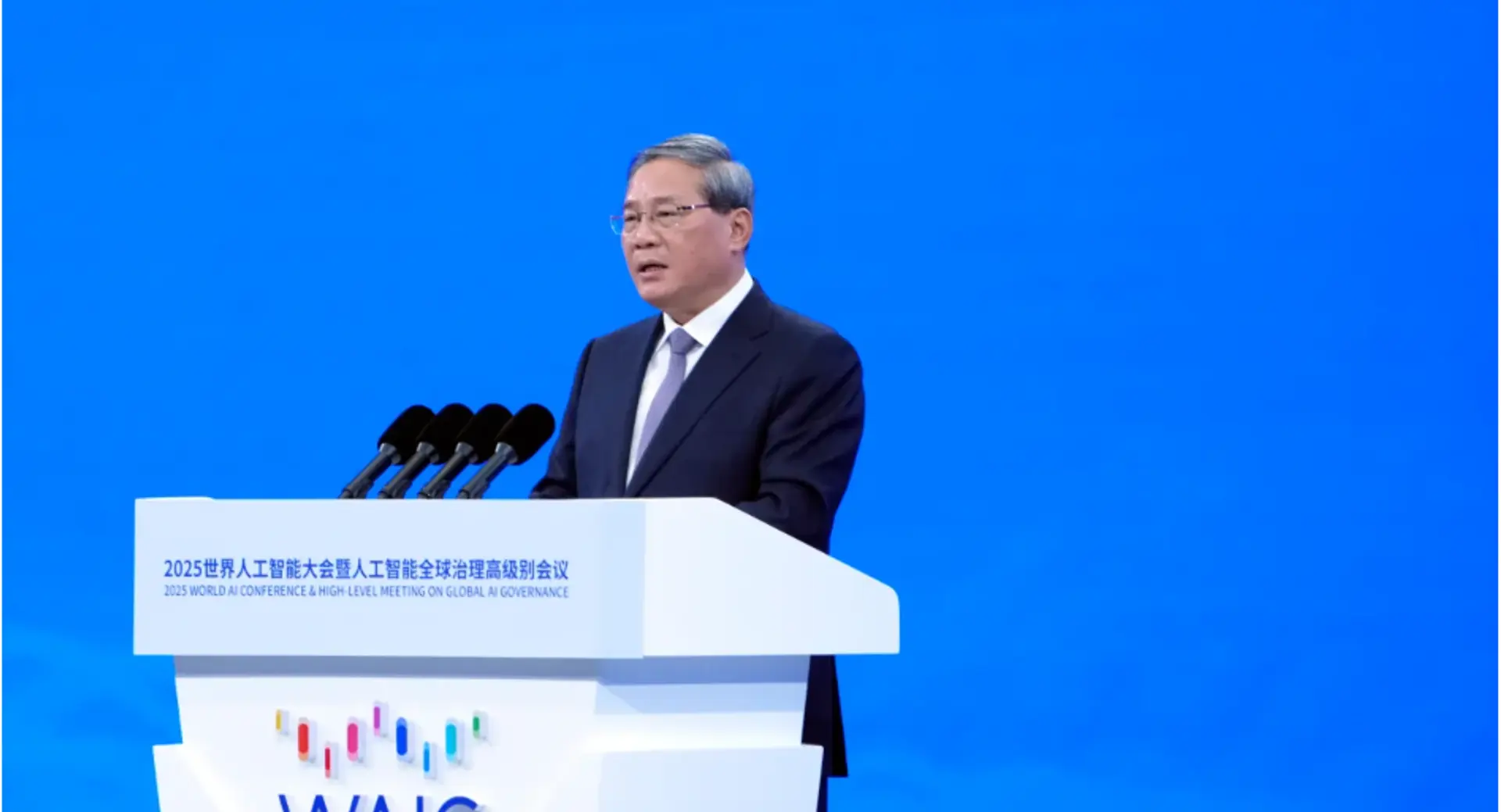

China on Saturday unveiled a sweeping international action plan on artificial intelligence, proposing the creation of a global AI cooperation organisation and calling for deeper multilateral coordination around emerging technologies, according to a CNBC report.
The announcement, made during the opening of the World Artificial Intelligence Conference in Shanghai, marked China's most explicit push yet to position itself as a leader in setting global norms for AI, the report said.
According to CNBC, Chinese Premier Li Qiang, in a keynote address, emphasised the country’s "AI Plus" strategy to integrate artificial intelligence across traditional industries, and offered support to countries in the Global South seeking to adopt the technology.
The move comes just days after US President Donald Trump laid out a contrasting American AI strategy. His plan includes calls to root out perceived ideological bias in AI models and expand the global reach of US technologies, signalling a more unilateral and values-driven approach.
Premier Li’s remarks reflect China’s growing efforts to court developing nations, many of whom are already aligned through Beijing’s Belt and Road Initiative. In contrast, the US is expected to deepen AI collaboration with long-time allies such as Japan, Australia, and the United Kingdom.
Tensions between the two countries have mounted since the US began imposing export restrictions on advanced semiconductors used to train AI systems. While it blocked Nvidia from selling its most powerful chips to Chinese firms, the California-based company recently resumed shipments of its less advanced H20 chip after a three-month pause.
Nvidia CEO Jensen Huang, during his third visit to China this year, acknowledged the strength of China’s domestic AI ecosystem, calling local efforts “formidable.”
Despite the sanctions, Chinese companies have ramped up development of homegrown chips and models, which they showcased during the conference.
As the US and China advance divergent frameworks for AI governance, analysts say the world may be headed toward a bifurcated system—one shaped by US-led alliances and another by Chinese-led multilateralism, the report added.
Edited by Suman Singh