



Claude AI maker Anthropic to open India office in Bengaluru
Opening in early 2026, the Bengaluru office will anchor Anthropic’s India strategy with local hiring, language localisation, and partnerships with startups, nonprofits and government agencies across education, health and agriculture.

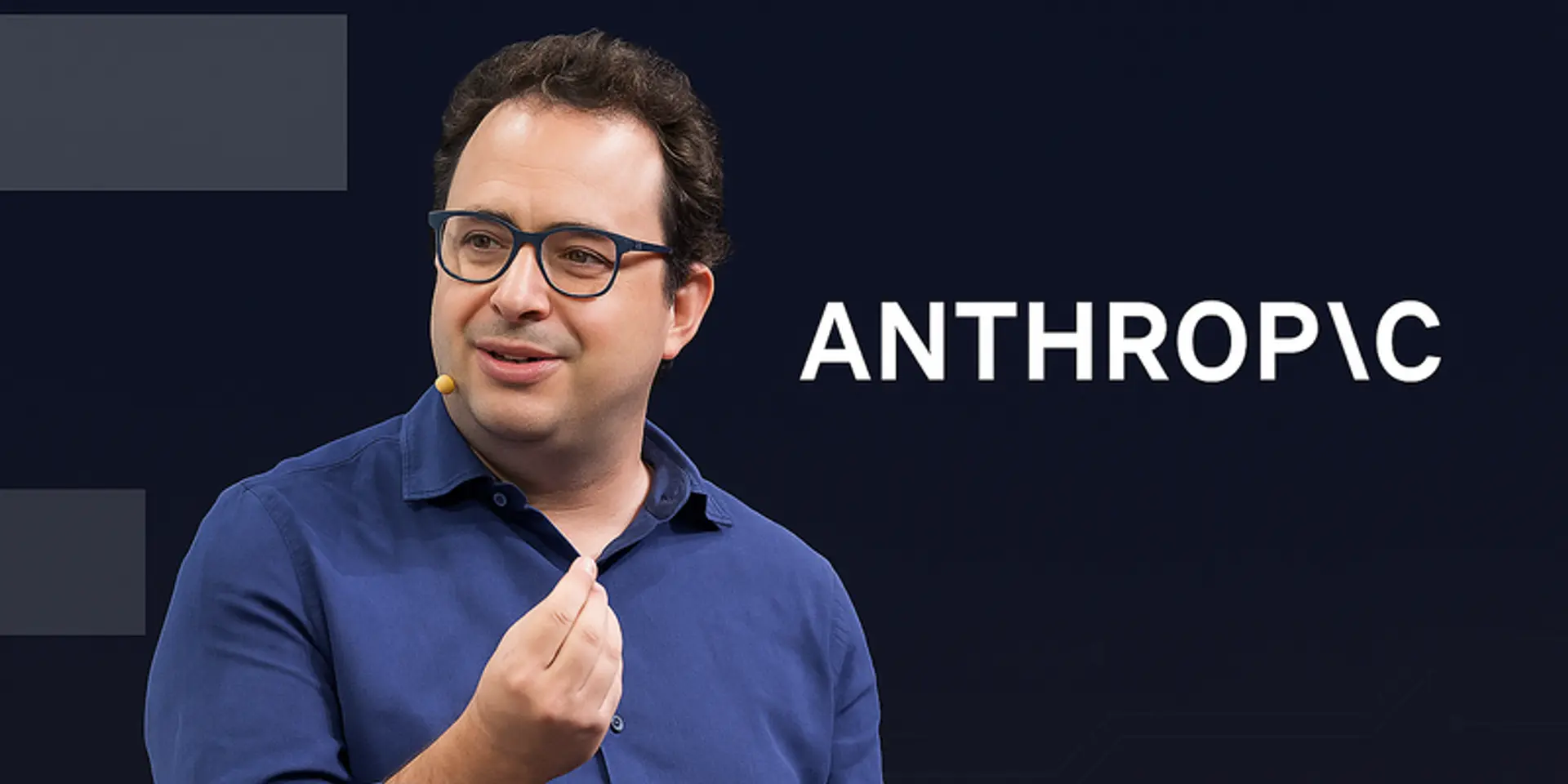

Anthropic, the AI research firm behind the Claude models, said on Wednesday that it will open an office in Bengaluru in early 2026 as part of a wider push into India.
“India is compelling because of the scale of its technical talent and the commitment from the Indian government to ensure the benefits of artificial intelligence reach all areas of society, not just concentrated pockets,” remarked Dario Amodei, co-founder and CEO of Anthropic.
The AI company said the Bengaluru hub will be its second office in the Asia Pacific region after Tokyo and that Amodei is visiting India this week to discuss partnerships and local initiatives.
The move is intended to create a local team that can build AI for India-specific uses and to strengthen ties with Indian enterprises, startups and non-profit organisations.
“We’re looking forward to working with organisations in India to pave a path for how beneficial AI can be scaled in a way that serves everyone,” Amodei noted.
Anthropic said it will prioritise work on Indic language support and on deployments aimed at education, healthcare and agriculture, and that it chose Bengaluru for its talent density and proximity to the enterprise ecosystem.
The California-based firm noted that Indian users can already access Claude through the Anthropic API and via Amazon Bedrock and Google Cloud Vertex AI, and that developers in India can use Claude Code, the firm’s agentic command line tool.
The company also plans to expand model support for a range of Indic languages, with enhanced Hindi performance planned and training underway for Bengali, Marathi, Telugu, Tamil, Punjabi, Gujarati, Kannada, Malayalam and Urdu.
“There is deep alignment between the challenges India is tackling and our mission as a company, from deploying AI across diverse languages and contexts, to building frameworks for responsible governance,” Amodei remarked.
Anthropic’s own usage data shows India as its second-largest market by share of Claude use behind the United States, and it reported that a relatively high proportion of Claude activity in India is for technical and software development tasks.
“Our expansion comes at a pivotal moment when Indian enterprises and startups are seeking AI models they can trust,” said Paul Smith, Anthropic’s chief commercial officer. He added that customers require systems that pair advanced performance with the safety and reliability needed for large-scale business operations.
The move comes as other major AI players increase their footprint in India. OpenAI has said it will open its first India office in New Delhi later this year, a step the company frames as deepening its presence in one of its largest user markets.
Startups that began elsewhere are also pushing into the Indian market. Perplexity has pointed to India as a rapidly growing user base and has rolled out products aimed at productivity, including its Comet AI browser, which the company has been promoting in recent weeks. Perplexity executives have spoken publicly about plans to invest locally and to support Indian developers and entrepreneurs.
“We see remarkable promise in India’s innovation ecosystem,” Smith said. “The vibrant startup and developer communities alongside Indian enterprises are building solutions that impact millions of lives globally.”
The combined expansion of Anthropic, OpenAI and others is likely to sharpen competition for talent and enterprise contracts, and will accelerate localisation of models and tools for Indian languages and domestic use cases.
Anthropic said further regional announcements are planned later this year and that it will seek partnerships with government bodies and non-profit organisations to pilot AI projects in public health and education.
The California-based company also officially announced the appointment of Rahul Patil as its chief technology officer. There have been reports about Patil joining the firm since the last few days.
Patil will oversee the AI firm’s engineering across product, compute, infrastructure, inference, data science, and security. He brings over 20 years of experience and recently served as CTO of Stripe. Before that he held senior engineering leadership roles at AWS, Microsoft, and Oracle Cloud Infrastructure.
Meanwhile, Sam McCandlish, one of Anthropic’s co-founders and previously CTO, has taken on a new role as chief architect, wherein he will deepen his focus on large-scale model training, continuing to lead pretraining while expanding his scope to include research productivity and reinforcement learning infrastructure.