



Elon Musk’s xAI raises $20B in Series E
The AI company’s funding round saw participation from Valor Equity Partners, StepStone Group, Fidelity Management & Research, the Qatar Investment Authority, MGX, Baron Capital Group, Nvidia and Cisco Investments.

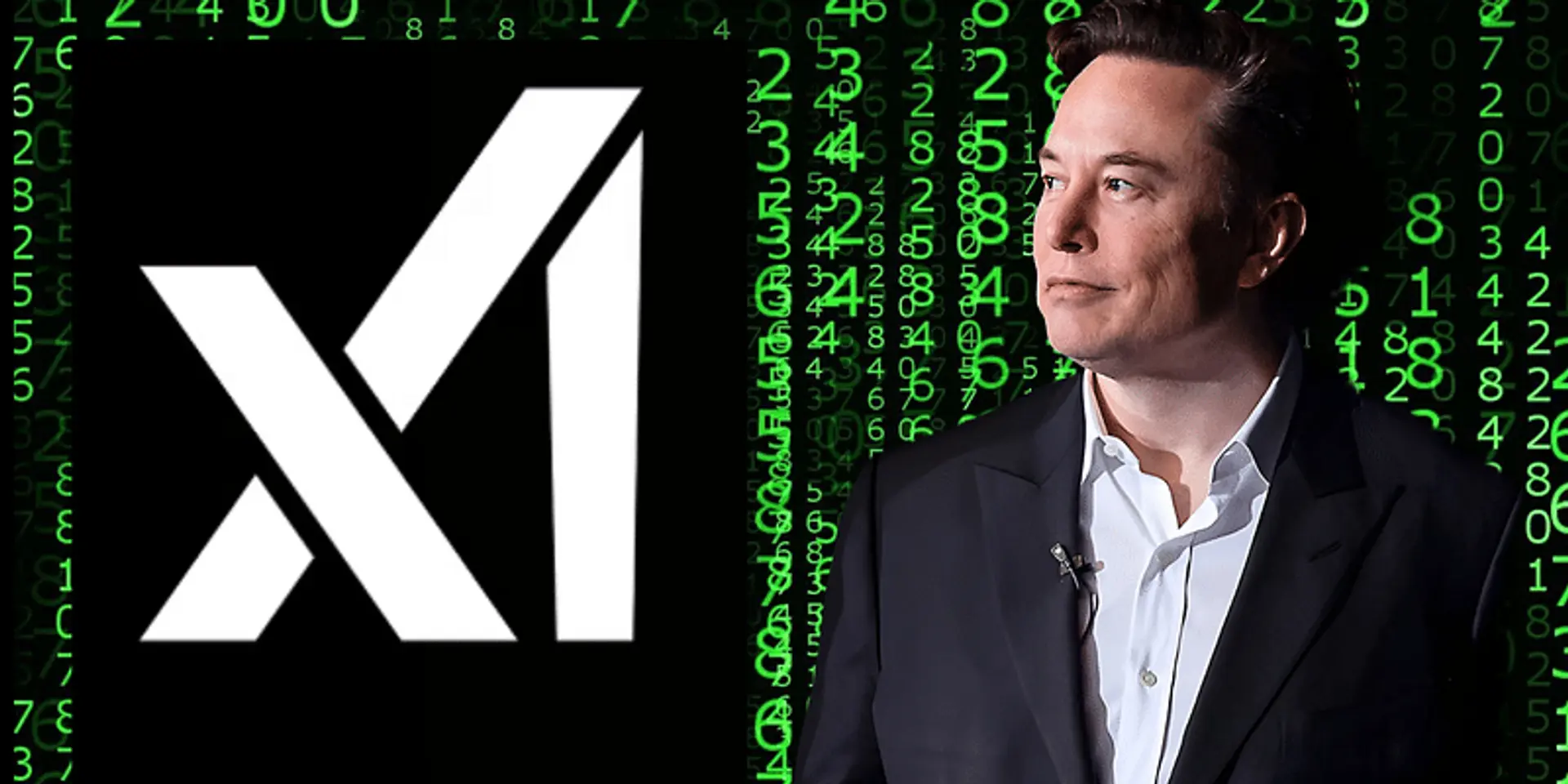

Billionaire entrepreneur Elon Musk-founded xAI has confirmed it completed an upsized Series E funding round, raising $20 billion and surpassing an original $15 billion target in a deal that drew sovereign, institutional and strategic backers.
The artificial intelligence (AI) company’s funding round saw participation from Valor Equity Partners, StepStone Group, Fidelity Management & Research, the Qatar Investment Authority, MGX and Baron Capital Group.
The AI firm highlighted strategic investors Nvidia and Cisco Investments for their role in supporting xAI’s rapid compute expansion.
Before this round the company had already raised a string of large tranches. Adding the $20 billion Series E takes primary funding well into the tens of billions, a scale that places xAI among the best capitalised private players in the generative-AI space.
The firm has also used a mix of debt and equity in 2025 to further bolster resources, signalling strong investor appetite for compute-heavy AI ventures.
xAI noted that the financing will act as ammunition for an aggressive infrastructure and product push. In 2025 the company said it had ended the year with more than one million H100 GPU equivalents powering its Colossus I and II supercomputers, and it credited that capacity with improvements across the Grok family of models.
Product highlights by xAI include the Grok 4 series, real-time Grok Voice for multilingual, low-latency speech interactions and Grok Imagine for rapid image and video generation. The company also reported roughly 600 million monthly active users across the X and Grok apps, and it said Grok 5 is currently in training.
On one hand the funds will help accelerate research and permit deployment of compute-intensive techniques such as pretraining-scale reinforcement learning that xAI says it used to refine Grok’s reasoning and agency.
On the other hand Grok has been at the centre of public controversy over problematic outputs, with reports alleging the model has generated non-consensual or sexualised deepfake images and other harmful content. Those episodes have prompted criticism from civil-society groups and calls for regulatory scrutiny in some jurisdictions, including in India, underscoring the governance challenges that accompany rapid model scaling.
xAI’s stated mission of advancing scientific understanding gives the company a long-range narrative, but monetisation, content safety and regulatory compliance will be immediate tests as Grok evolves.
Edited by Megha Reddy