


'Godfather of AI' Geoffrey Hinton reveals which jobs are at risk from AI and which are safe
AI pioneer Geoffrey Hinton has warned that jobs like translation, legal research, and customer support may be among the first to be automated.

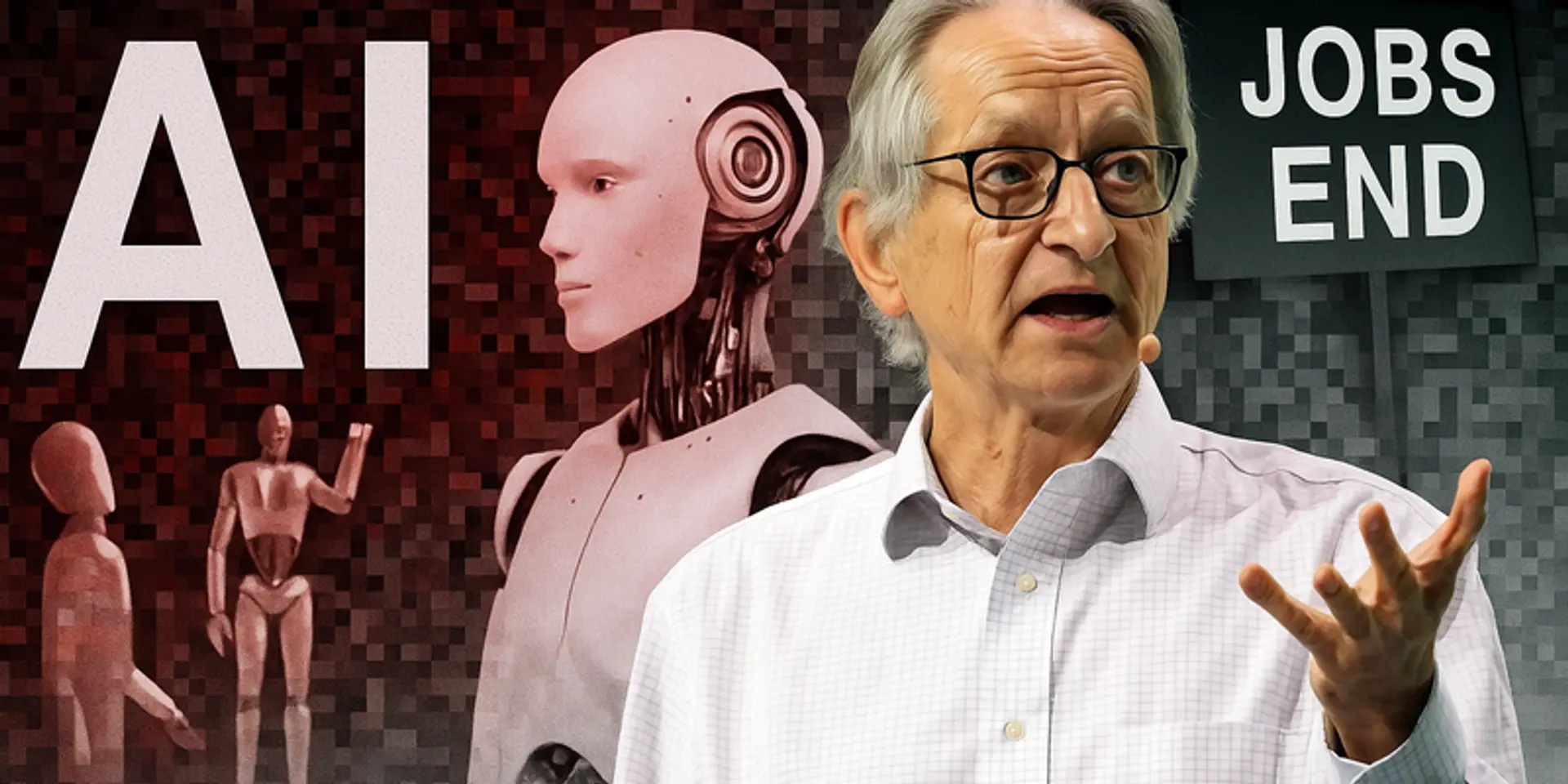

Geoffrey Hinton, widely known as the “Godfather of AI”, has issued a fresh warning about how artificial intelligence may soon disrupt white-collar jobs, especially those that rely on repetitive or pattern-based thinking. His comments, made during a recent online interview, reflect growing concern that AI’s impact is moving far beyond traditional blue-collar roles.
Hinton, who resigned from Google in 2023 to speak more freely about the risks of AI, said that jobs in translation, customer service, legal research, and even financial analysis could be significantly affected or outright replaced in the near future.
Beyond factory floors
For years, the conversation around automation centred on assembly line work, warehouse roles, and driverless transportation. But Hinton says that AI is evolving past physical tasks and now excels at tasks that require reading, interpreting, and generating text — putting white-collar professionals at risk.
“AI systems can already read legal documents and summarise them faster than a paralegal,” Hinton explained in the interview. “That kind of repetitive intellectual work is going to be one of the first things to go.”
Jobs most likely to be replaced
Here are the roles Hinton predicts could be most vulnerable in the short term:
- Customer support representatives: AI chatbots are now capable of managing multiple queries simultaneously, offering 24/7 service, and even detecting sentiment.
- Translators and interpreters: With models like Google’s Gemini and OpenAI’s GPT handling real-time multilingual translation, human translators may only be needed for nuance-rich, cultural contexts.
- Paralegals and junior legal researchers: Tools like Harvey AI are already being used by major law firms to sift through case law and summarise findings in seconds.
- Data entry clerks and financial analysts: AI can process large data sets, extract insights, and even generate reports with minimal human intervention.
Not just doom and gloom
While the tone of Hinton’s comments is cautionary, he also pointed out that many new opportunities will emerge — especially for those who learn how to use AI as a productivity enhancer.
He believes human-AI collaboration is the way forward, where professionals use AI tools to amplify their output rather than compete with them.
“People who learn how to direct AI effectively will thrive,” Hinton said. “It’s not about competing with machines but about working alongside them.”
Reskilling is key
The key takeaway from Hinton’s remarks is that reskilling and adaptability are critical. Education systems and employers must begin preparing for a world where critical thinking, creativity, emotional intelligence, and AI tool mastery will matter more than ever.