



Forget Apps, Google Wants Android Powered By AI Agents
Google is bringing agentic AI to Android, aiming to automate tasks, generate widgets, and reshape how users interact with apps.

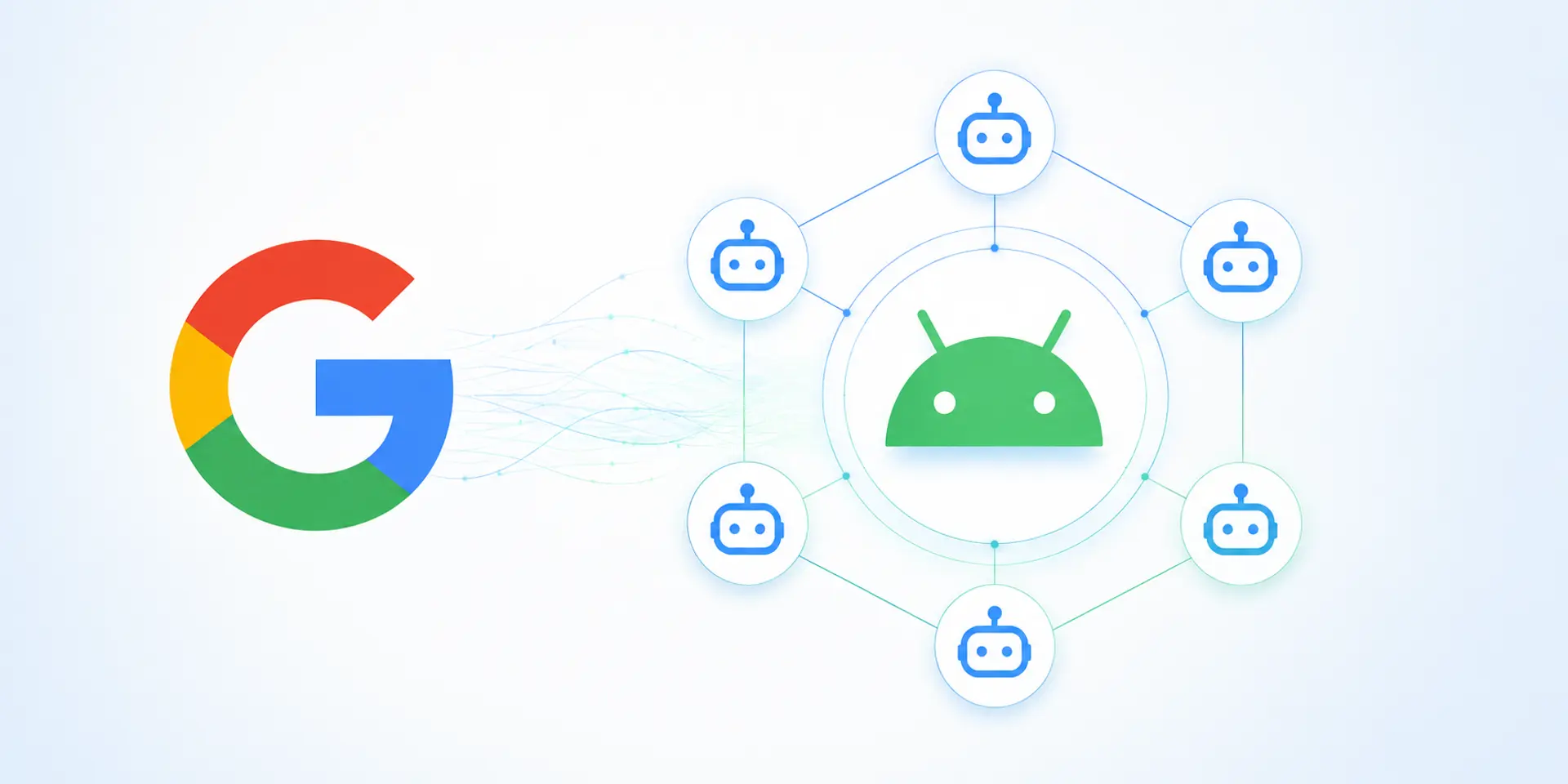

Google wants Android users to stop opening apps and start delegating tasks to AI instead.
At its Android Show: I/O Edition event on 12 May 2026, the company unveiled a broad set of Gemini Intelligence features designed to make Android more “agentic”, meaning capable of taking actions, automating workflows, and understanding user intent across apps and services.
The announcements suggest Google sees AI agents, rather than standalone mobile apps, as the next major interface layer for smartphones. The update spans AI-powered automation, Gemini-based voice interaction, context-aware actions, and a new “Create My Widget” feature that lets users generate Android widgets using natural-language prompts.
Android is becoming an AI system
Google framed the shift as a transformation of Android from a traditional operating system into what it calls an “intelligence system” powered by Gemini. According to sources covering the event, the company wants AI to operate across apps, workflows, and interfaces rather than remain confined inside a chatbot window.
The broader goal is to make Android proactive instead of reactive. Rather than manually opening multiple apps to complete tasks, users would increasingly rely on Gemini to understand requests, navigate apps, fill forms, retrieve information, and execute actions automatically.
Industry analysts say the strategy reflects a growing belief inside Silicon Valley that AI agents could eventually replace large parts of the traditional app-centric mobile experience.
Gemini agents take over workflows
One of the biggest themes of the event was “agentic AI”, which Google described as AI capable of handling multi-step tasks across Android and connected services.
According to TechCrunch, Gemini Intelligence can now automate activities such as ordering groceries, managing travel tasks, interacting with apps, and completing forms across Android experiences.
Google also introduced new contextual AI features that allow Gemini to work across Chrome, autofill systems, Gboard, and app interactions. The idea is to reduce the amount of manual navigation users perform throughout the day. The firm is effectively positioning Gemini as a persistent operating layer sitting above Android itself.
Google wants users to “vibe-code” widgets
One of the more unusual announcements was “Create My Widget”, a feature that allows users to generate Android home-screen widgets through plain-language prompts. Users can describe the type of widget they want, and Gemini automatically builds the interface and functionality.
Google described this as a form of “vibe coding”, a term increasingly used to describe generating software or interfaces through natural-language instructions instead of manual coding. The feature will initially launch on newer Samsung Galaxy and Google Pixel devices later this year.
Analysts say this marks a broader change in how software is being designed. If AI systems can dynamically generate lightweight interfaces on demand, users may no longer need dedicated apps for every small task.
Voice is becoming central again
Google also introduced “Rambler”, a Gemini-powered dictation system built into Gboard. This feature can handle more conversational voice input while automatically cleaning filler words and restructuring speech into polished text.
The emphasis on voice interaction suggests Google increasingly views conversational AI as the primary way users will interact with future Android devices. Combined with agentic workflows, the company appears to be building toward an ecosystem where users speak requests naturally while Gemini coordinates the underlying apps and actions invisibly in the background.
Why Google is shifting beyond apps
The move comes as AI companies increasingly argue that traditional apps may become less important in the AI era. If \ can retrieve information, complete bookings, generate interfaces, and interact with services directly, users may spend less time manually opening apps and navigating menus.
OpenAI, Meta, and several startups are pursuing similar ideas around AI-native operating systems and agent-driven interfaces. For Google, the stakes are particularly high because Android remains the world’s largest mobile operating system. Embedding Gemini deeply into Android gives the company a massive distribution advantage in the race to define how AI agents operate on consumer devices.