



Google AI chips head to orbit in Project Suncatcher test
Google AI chips are set to fly into low Earth orbit as Project Suncatcher tests whether solar-powered satellites can one day support AI computing beyond Earth.

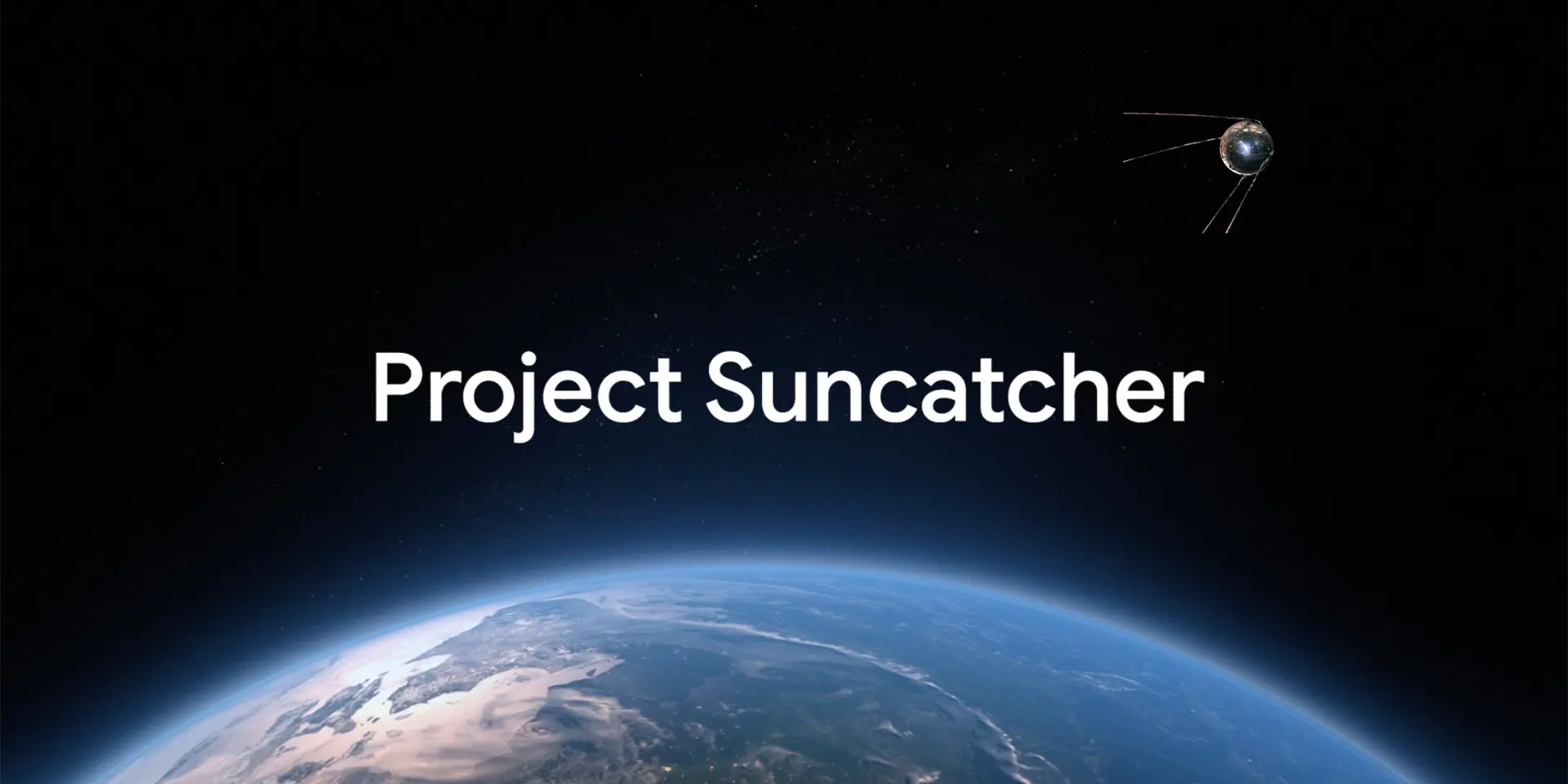

AI may be running out of room on Earth. Google is now exploring whether the next place to put its computing infrastructure could be above it.
The company is preparing to launch the first prototype for Project Suncatcher, a research programme exploring whether AI computing could eventually operate in orbit. The satellite, called MVP, is scheduled to launch on October 1, 2026, aboard SpaceX’s Transporter-18 rideshare mission from Vandenberg Space Force Base in California.
Google’s orbital AI experiment
The idea is that AI needs enormous computing power, and that means more electricity, cooling and data centre infrastructure on Earth. Google is studying whether satellites carrying its custom Tensor Processing Units, or TPUs, could process AI workloads in low Earth orbit.
The chips are designed to accelerate machine learning tasks. Four TPUs will be sent into orbit as part of the first test. But this is not an attempt to build a data centre in space just yet.
Developed with space and Earth-imaging company Planet Labs, the MVP satellite will help Google understand how its AI hardware performs outside a conventional data centre. That includes surviving launch, operating through radiation and managing heat in the vacuum of space.
The biggest attraction is sunlight
Power is at the centre of Google’s argument for moving AI infrastructure into orbit. Satellites in suitable orbits can receive sunlight more consistently than solar panels on Earth. Google has said orbital solar systems could potentially capture up to eight times more energy than comparable panels on the ground.
The long-term idea is to combine that power with clusters of AI satellites. Google envisions connecting them using high-speed laser links so they can share computing workloads.
If the technology can eventually scale, such a system could reduce some of the pressure on electricity grids and land needed for large AI data centres. But that is still a big “if”.

Space has its own data centre problems
Putting AI hardware in orbit does not remove the engineering challenges. It replaces some of Earth’s problems with entirely different ones. Satellites must withstand the violent forces of launch, radiation can affect electronic components, and cooling becomes harder because there is no air to carry heat away.
Google is planning further prototype missions in 2027, including tests of high-bandwidth laser communication between satellites. Those experiments will help determine whether the concept can move beyond a research project.
For now, Project Suncatcher is a bet on what AI infrastructure could look like several years from today. The first satellite will not create an orbital data centre, but it could provide Google with something more important at this stage: evidence of whether AI computing can actually work in space.