



How Sundar Pichai-led Google went from AI laggard to leader in 2 years
Gemini’s rapid rollout across Search, Android, Chrome, YouTube and Workspace, plus DeepMind’s breakthroughs and a viral “Nano Banana” moment, have quietened doubts about Sundar Pichai’s AI strategy.

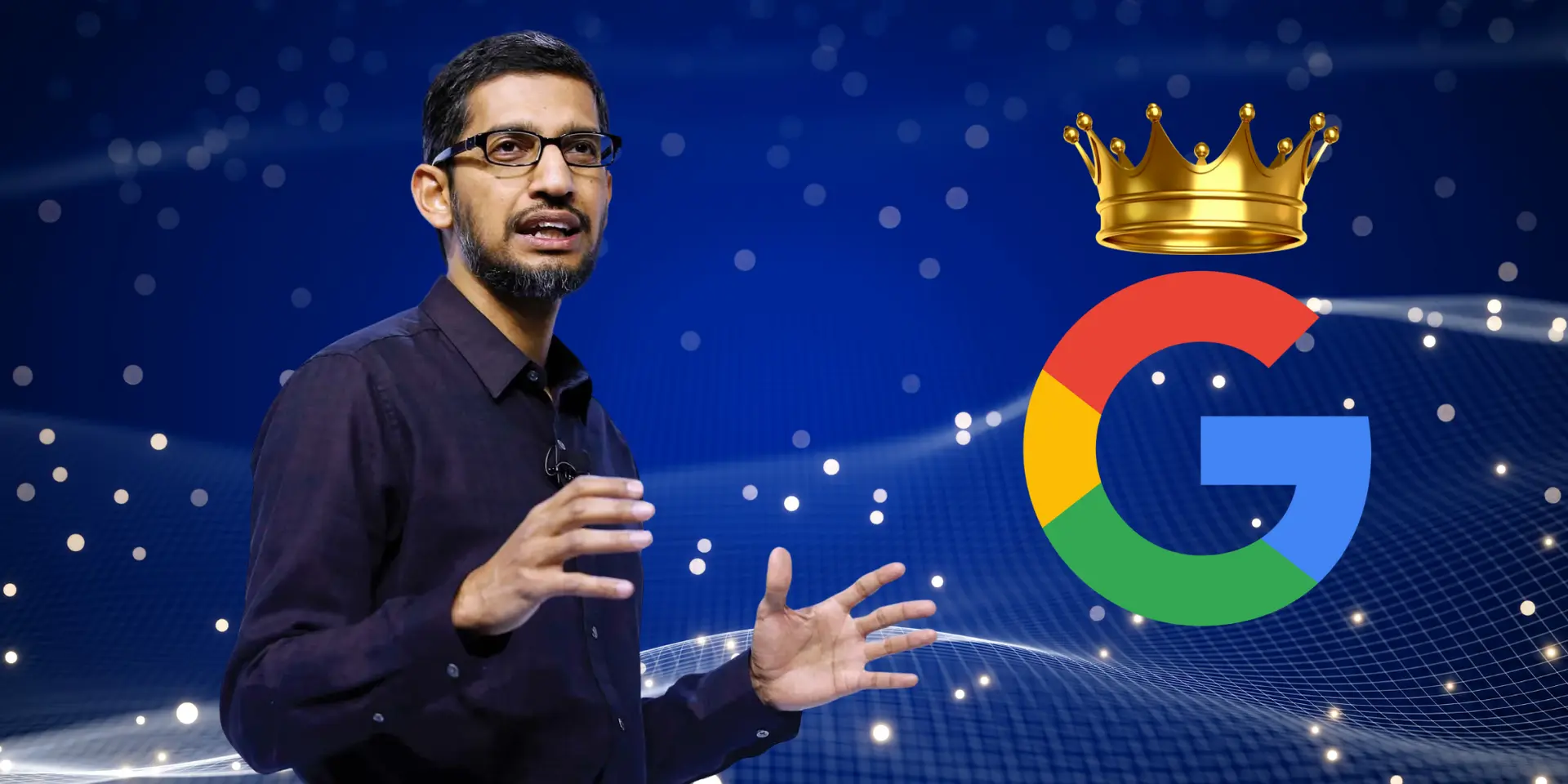

Two years ago, Google’s missteps with Bard led critics and employees to question whether CEO Sundar Pichai was the right leader to lead and possibly win the AI race.
In 2025, Google has answered with products, distribution and numbers.
Gemini is now infused across Search, Android, Chrome and Cloud; DeepMind has delivered breakthrough research; and Alphabet has posted record revenue and a $3 trillion market value.
Google said AI Overviews in Search have reached around 2 billion monthly users, while the Gemini app has grown into the hundreds of millions of monthly actives.
Internal backlash over Bard’s rushed unveiling in 2023 now contrasts sharply with this year’s cadence of launches and scale.
Google’s distribution advantage
- Search: AI Overviews have rolled out at global scale, with Google citing 2 billion monthly users.
- Android and devices: Google has started upgrading mobile users from Assistant to Gemini and has begun rolling Gemini out to Android Auto globally.
- Chrome and web: Gemini features are now embedded in Chrome, bringing summarisation and task automation into the browser.
- Workspace and Cloud: Google reported over two billion AI assists per month in Workspace and a 20× surge in Vertex AI usage year on year.
- YouTube and media: Veo 3 video generation is integrated into YouTube Shorts and has added vertical video support, with watermarking via SynthID.
Technical step‑ups from DeepMind and Gemini
On capability, Google has moved from catch‑up to out‑in‑front claims in several areas.
The Gemini 2.5 Pro line is described by Google as its best “reasoning” model yet and has topped common public leaderboards, while long‑context Gemini 1.5 has introduced up to a 1 million‑token window for complex multimodal work.
On the research front, DeepMind’s AlphaFold 3 has pushed structural biology forward by predicting interactions across proteins, DNA, RNA and ligands with substantial accuracy gains.
In generative media, DeepMind’s Veo 3 has generated video with synchronised sound and is widely available through the Gemini API and Flow tooling, signalling a maturing pipeline from research to creator products.
‘Nano Banana’: a viral on‑ramp to Gemini
Google’s image‑editing model, “Nano Banana” (officially Gemini 2.5 Flash Image), is a quirky codename which originated as a placeholder, but stuck during public testing.
Today, it has become a mainstream moment, driving more than 10 million first‑time Gemini app users within a week and significantly shifting the app’s demographics, as per Google.
Google is threading “Nano Banana” across services, surfacing in the Gemini app, appearing in AI Studio, and preparing for integration in Google Messages, showcasing how the company has leveraged its existing product and distribution to turn technical AI novelty into daily use.
The money has followed
Alphabet reported its first‑ever $100 billion quarter, with Q3 2025 revenue of about $102.3 billion, up roughly 16% year on year, and strong growth in Google Cloud.
The stock set fresh record highs in November and Alphabet’s market capitalisation crossed $3 trillion for the first time this year.
Management paired those results with aggressive capital expenditure plans to fund AI infrastructure, a move that reflected confidence in demand even as Pichai warned publicly about “irrationality” in AI investment cycles.
The 2023 Bard stumble and subsequent criticism of leadership were part of Google’s recent history, but the company has since demonstrated breadth, through research, models, distribution and monetisation.