



Google Launches AI Immersion Program for Startups in India
Google and Antler India have launched a new AI immersion program to help Indian startups build stronger AI-first products and scale faster.

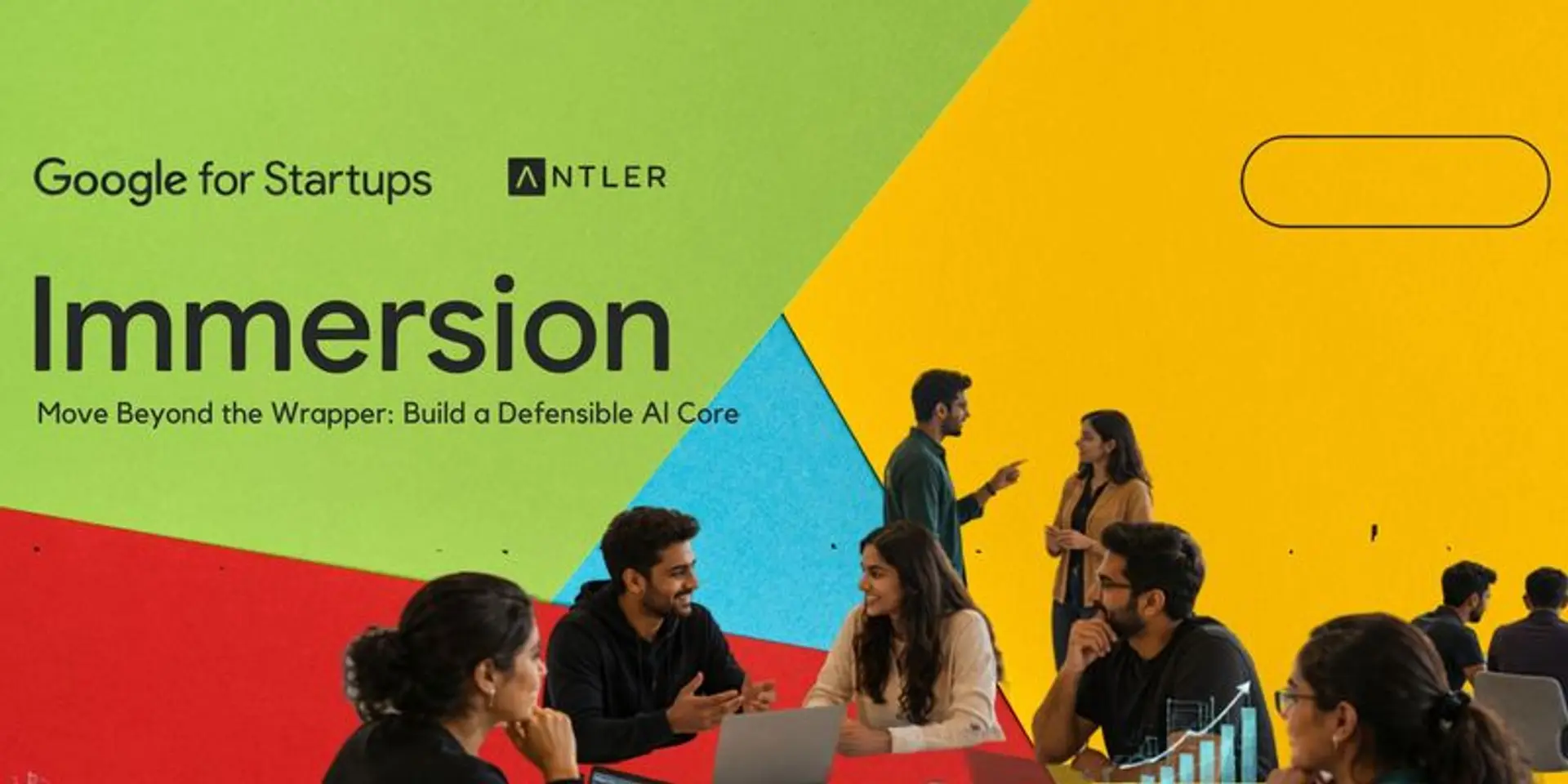

Google for Startups has launched a new AI-focused immersion program in India in partnership with Antler India, aiming to help founders build stronger AI-first products and scale their businesses faster.
The initiative, called Google for Startups Immersion, was announced as a two-phase hybrid program designed specifically for startups that already have a live product and early traction. The program targets founders, CTOs, and technical leaders building AI-led companies across India.
According to Google, the initiative is focused on helping startups deepen implementation capabilities around AI infrastructure, product development, and go-to-market readiness rather than supporting idea-stage experimentation. Here's how you can apply!
A two-phase program structure
The immersion program will run in two stages. The first phase, called the Online Immersion, will take place across four virtual sessions scheduled for June 2, 4, 9, and 11, 2026. Google said this stage could bring together up to 5,000 founders from across India.
Google for Startups will lead the technical curriculum, while Antler India will manage the business and venture-focused track. The sessions are expected to cover practical implementation of tools such as AI Studio, Antigravity, and the Gemini Enterprise Agent Platform.
On the business side, founders will receive guidance around unit economics, investment readiness, defensibility, and scaling AI-native businesses.
Bengaluru residency for shortlisted startups
The second phase will move offline. Google said 25 startups will be shortlisted for an in-person immersion day at Google’s Bengaluru office on June 26, 2026. The selection process includes evaluations and rapid interviews after the online sessions conclude.
This residency is expected to include architecture reviews with Google Cloud engineers, hands-on technical workshops, and one-on-one sessions around pricing, fundraising, and go-to-market strategy. Google described the residency as a “maker-only” environment focused on startups with working products and verifiable traction.
Focus on implementation over theory
Ragini Das, Head of Google for Startups India, said the initiative is designed for teams that are already building and want to go deeper on implementation. According to Google’s announcement, the goal is to help strong technical teams work more closely with Google’s AI tools and infrastructure while also exposing them to the business frameworks required for scaling.
Antler India partner Nitin Sharma said the program will focus on helping founders align technical capability with sustainable business growth in an increasingly competitive AI market.
Applications and eligibility details
Applications for the program opened on May 8 and will close on May 22, 2026. Google said the immersion is open only to startups with a live minimum viable product and measurable traction, effectively excluding idea-stage ventures.
The company positioned the initiative as part of a broader push to strengthen India’s AI startup ecosystem, especially as competition intensifies around AI-native products and enterprise adoption. Google for Startups has increasingly expanded its India-focused AI efforts in recent months through accelerator programs, mentorship initiatives, and cloud partnerships.
Why this matters for India’s startup ecosystem
The launch reflects how major technology firms are moving beyond generic startup support and toward specialised AI implementation and deployment programs. As more startups race to build AI-native products, practical access to tooling, compute resources, and technical expertise is becoming a major differentiator.
For Indian founders, the immersion program offers direct exposure to Google’s AI stack alongside venture and scaling guidance at a time when investors are increasingly looking for defensible AI products with real-world traction. The focus on live products and technical execution also signals how the AI startup ecosystem is maturing from experimentation into production-oriented deployment.