



Google brings cheaper AI video model amidst Sora changes
Google’s cheaper video model arrives as OpenAI plans to pull the plug on Sora and the AI video industry moves from hype towards cost, scale and practical use.

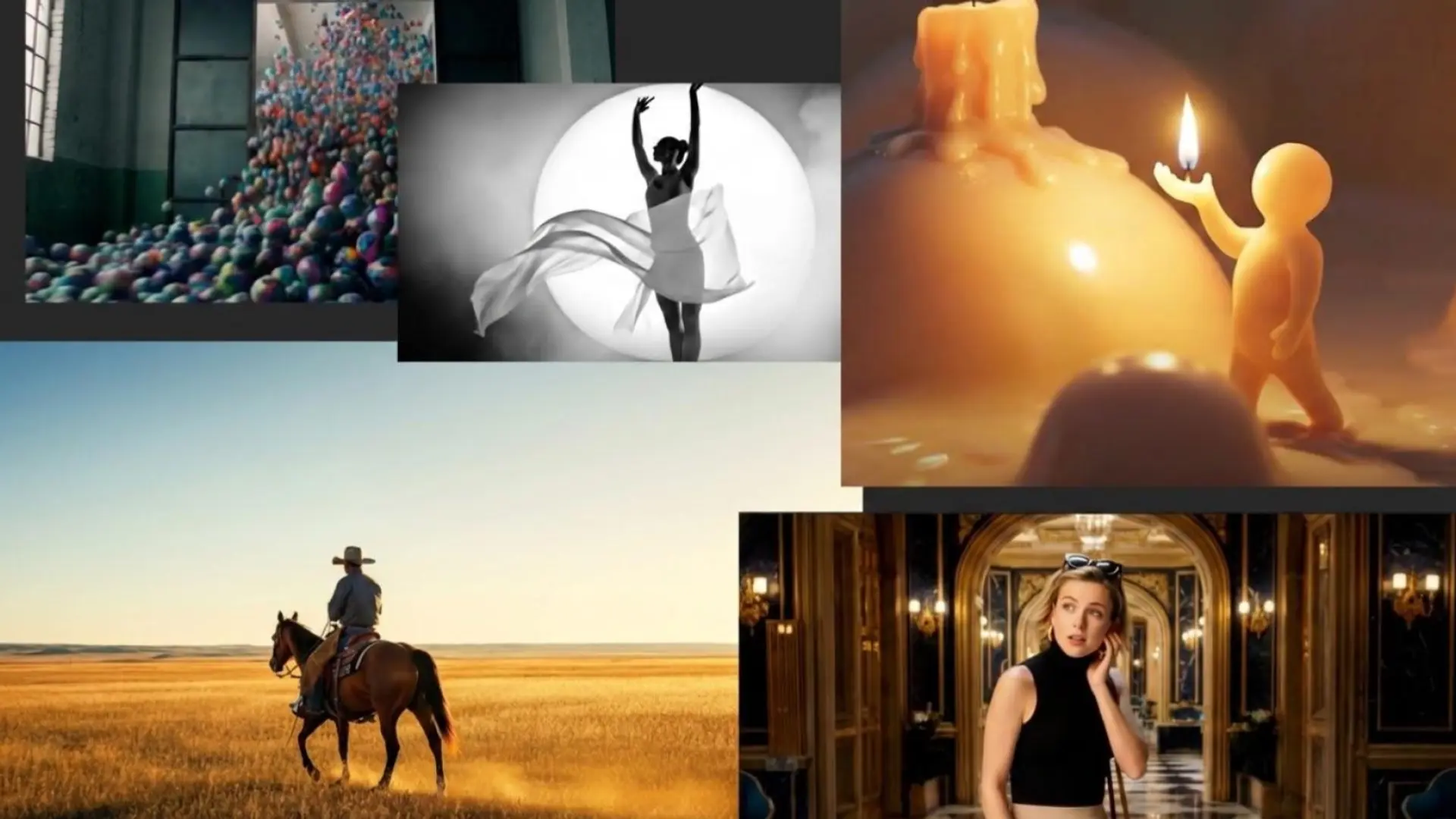

Google has launched Veo 3.1 Lite, its most cost-effective video generation model, in paid preview through the Gemini API and Google AI Studio.
The model is aimed at developers who need to make video generation faster and cheaper at scale, rather than squeeze out the most cinematic result every time.
It supports text-to-video and image-to-video, with landscape and portrait formats, 720p and 1080p output, and clip lengths of 4, 6 or 8 seconds. Google said it is priced at less than half the cost of Veo 3.1 Fast while keeping the same speed.
This comes as OpenAI announced the shut down of Sora, its video generation tool that was launched at the end of 2024. “We’re saying goodbye to Sora,” the Sora team wrote in a X post on March 25.
Google’s Veo timeline
Google’s video model rollout has been very quick. It introduced Veo in May 2024 as its most capable high-definition video model, then updated it to Veo 2 in December 2024. Veo 3 followed in May 2025, bringing native audio and stronger creative controls, and Veo 3.1 and Veo 3.1 Fast arrived in paid preview in October 2025. Veo 3.1 Lite is the latest addition.
In less than two years, Google has moved from a first-generation video model to a family with different price and speed tiers.
Lite is built for practical use. It keeps the core Veo 3.1 strengths, such as text-to-video and image-to-video, but trims the cost so developers can iterate more freely. The model also supports native audio, which means sound is generated with the video rather than added later, and it is designed to handle short clips with enough control for everyday creative workflows.
Google said Veo 3.1 Lite is available in paid preview through the Gemini API and for testing in Google AI Studio. That matters because the model is being positioned first as a developer tool, not as a broad consumer feature. The wider Veo 3.1 family is also being pushed through Google products such as the Gemini app, Flow, YouTube Shorts, Vertex AI and Google Vids, which shows Google trying to thread the model through both creator tools and developer infrastructure.
AI video competition
The competitive field is still crowded. OpenAI’s Sora 2, Runway’s Gen-4.5, Kling, Pika and Luma AI are among the main names in AI video, each leaning into different strengths such as realism, control, speed or editing flexibility.
OpenAI’s Sora 2 was its latest video and audio model, while Runway highlights Gen-4.5’s motion quality and creative control, and the other tools continue to push video generation in different directions. The market is not yet settled, but it is clearly maturing.
Meanwhile, the clearest reading of OpenAI’s Sora decision is that video generation is proving expensive to run and hard to prioritise against more commercially direct products.
OpenAI is said to be concentrating more on coding tools, enterprise customers and AGI, while Sora required substantial compute resources. That suggests the race is moving away from simply having the flashiest model and towards having the model that is cheap enough, fast enough and easy enough to fit into real products.
Last month, Microsoft introduced MAI-Image-2, its latest in-house text-to-image model, as part of a broader strategy to develop proprietary AI systems.