



Google brings Intrinsic under its fold to scale robotics and physical AI
Intrinsic was originally founded inside Alphabet’s 'Other Bets' segment. Moving its assets into Google promises tighter integration with Google DeepMind, the Gemini family of models, and Google Cloud infrastructure.

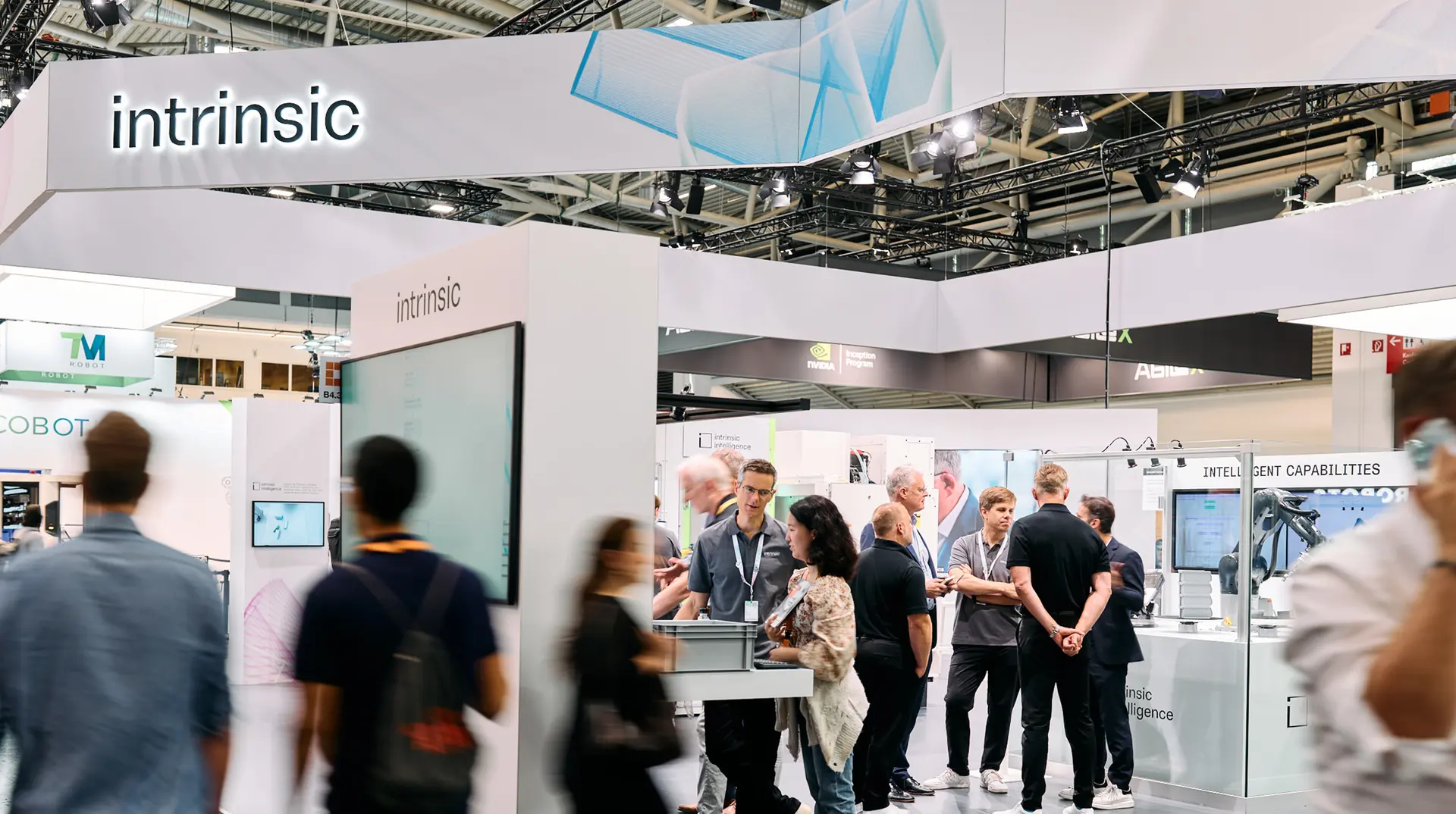

Intrinsic, a software and AI robotics company under Alphabet, has come under Google’s fold. This move aims to strengthen the link between large language models and physical machines on the factory floor.
The company announced that it will become a distinct group inside Google while continuing to develop its Flowstate tools, skills framework, and simulation-to-production pipeline.
Alphabet Inc is the parent company of Google. Intrinsic was originally founded inside Alphabet’s 'Other Bets' segment in 2021.
Last month, Sundar Pichai, CEO of Google and Alphabet, spoke about strategic investments in Other Bets during the company’s earnings call.
Intrinsic builds software and AI models that make industrial robots far easier to programme, reprogramme and operate, thereby reducing the hours and expertise traditionally needed to automate complex tasks.
Moving these assets into Google promises tighter integration with Google DeepMind, the Gemini family of models, and Google Cloud infrastructure.
“Combined with Google’s incredible AI and infrastructure, we are going to unlock the promise of physical AI for a much broader set of manufacturing businesses and developers,” said Wendy Tan White, CEO of Intrinsic, in a post.
“We are excited to welcome the Intrinsic team to Google, so we can bring breakthrough AI to more businesses and industries, at scale,” said Hiroshi Lockheimer, Chief Product Officer of Other Bets, stressing on scale and production.
The development moves Intrinsic from being an independent Alphabet company into Google’s organisational domain. Intrinsic will, however, remain a distinct group that will collaborate with DeepMind and use Gemini and Cloud.
The move shows intent to convert research advances into commercial products and cloud offerings that customers can actually deploy. It can also be seen as part of a wider industry push to combine foundation models with robotics systems.

Last month Microsoft announced Rho-alpha, which combines vision and tactile sensing. It is part of an industry move towards foundation-style robotics models that can generalise across tasks, hardware, and various real-world industrial environments.
The industrial case for physical AI rests on three linked improvements.
First, perception and reasoning powered by vision models and multimodal systems reduce the need for handcrafted sensors and brittle scripts. Second, higher-level planning and code generation shorten the time it takes to teach a robot a new task. Third, cloud-native deployment and simulation let integrators test at scale before committing to physical hardware.
The Intrinsic platform claims to offer all three building blocks within a single workflow, which runs from simulation to live production. Intrinsic is partnering with industry leaders such as Foxconn, indicating that its platform is being tested on real, high-volume production use cases.
Edited by Swetha Kannan