



Google Gemini launches Deep Research and Max for real research at scale
Google Gemini Deep Research and Deep Research Max help build AI research workflows. Here’s all that you should know.

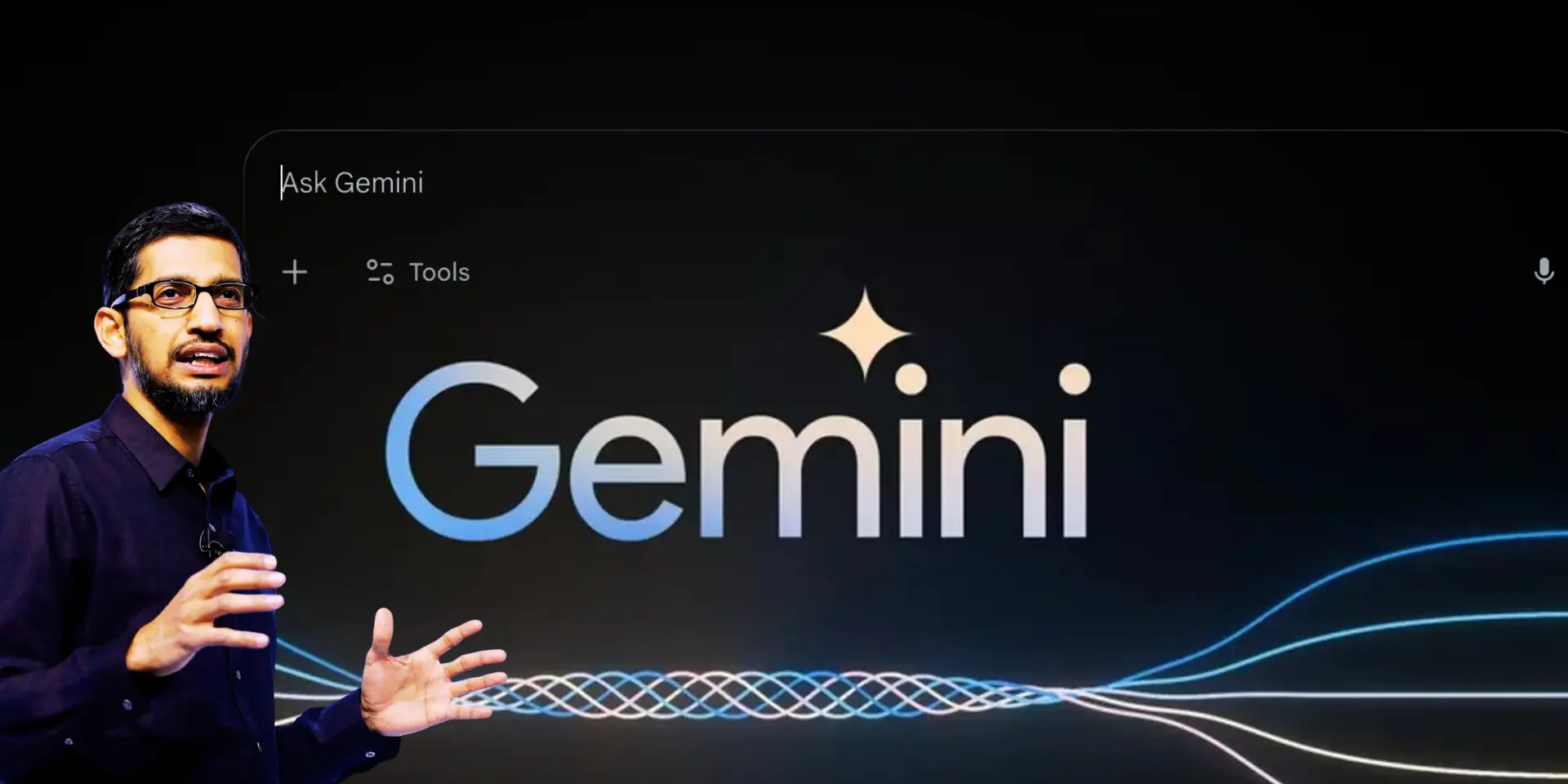

Research is now becoming something you run. On 21 April 2026, Google introduced two new agents inside its Gemini developer platform, Deep Research and Deep Research Max.
These are not just tools that fetch information, but systems that plan, analyse and deliver full research outputs with citations. For developers, this marks a shift from search-based workflows to autonomous research pipelines.
Two modes, two very different use cases
Google has split the offering into two versions, each designed for a specific kind of workload. Deep Research focuses on speed and efficiency. It is built for applications where quick responses matter, such as user-facing tools or real-time queries.
Deep Research Max takes a different approach. It prioritises depth and completeness, iterating across multiple sources to produce more detailed and refined outputs. In short, one is for fast answers. The other is for thorough reports.
How do these agents actually work?
Both agents operate within the Gemini Interactions API and are designed to handle multi-step tasks. They can plan a research process, search across the open web and private data sources, and then synthesise findings into structured reports. These reports include citations, which are critical for enterprise use.
The system also introduces collaborative planning. This allows developers or product teams to define scope, sources and structure before the agent begins execution. Another important feature is real-time streaming of intermediate steps. Instead of waiting for a final output, users can see how the agent is progressing.
Connecting public and private data
One of the biggest upgrades is integration with proprietary data. Through support for the Model Context Protocol, or MCP, developers can securely connect internal databases, file systems and enterprise tools. This allows the agent to combine public information with private datasets in a single workflow.
For industries like finance, healthcare and market research, this is a major step. It removes the need to manually merge data from different sources and ensures that outputs are both comprehensive and relevant.
Built for developers, not just users
Access to Deep Research and Deep Research Max is available through paid tiers of the Gemini API. Developers can invoke these agents using the Interactions API, combining features like Google Search, file retrieval and even code execution in one run.
The update also introduces native visual outputs. Agents can generate charts and infographics directly within reports, reducing the need for separate visualisation tools. This makes the output closer to something that can be used immediately, rather than something that needs further processing.
Why this matters for startups and enterprises
For product teams, research is often fragmented. Data comes from multiple sources, analysis happens in separate tools, and final outputs are stitched together manually. This process is time-consuming and prone to errors.
Deep Research aims to simplify that. By combining planning, retrieval and synthesis into one workflow, it reduces the time needed to produce high-quality insights. Tasks like competitor analysis, market research or policy tracking can be automated to a significant extent.
For Indian startups, this could mean faster decision-making. Teams can move from idea to insight without building complex internal pipelines.
Early signals and performance claims
Google has indicated that the Max version is backed by higher compute and shows improved performance on retrieval and reasoning benchmarks. These include tests like DeepSearchQA and Humanity’s Last Exam, which measure how well AI systems handle complex, multi-step questions.
However, benchmarks are not the full picture. Real-world performance depends on data quality, domain complexity and how the system is configured.

The trend in AI workflows
This update reflects a broader shift. AI is moving from answering questions to executing workflows. Instead of acting as an assistant, systems like Deep Research function more like autonomous agents. They take a goal, break it into steps and deliver a finished output.
Leaders like Sundar Pichai and Demis Hassabis have been pushing this direction, focusing on long-horizon reasoning and applied research capabilities.