



IIT Madras and CMC Vellore Build AI Tools to Catch Kidney Disease Earlier
Three systems, spanning risk prediction, CT image classification and 3D tumour mapping, aim to give clinicians faster and better-informed kidney assessments, with a patient-specific Digital Twin as the longer-term goal.

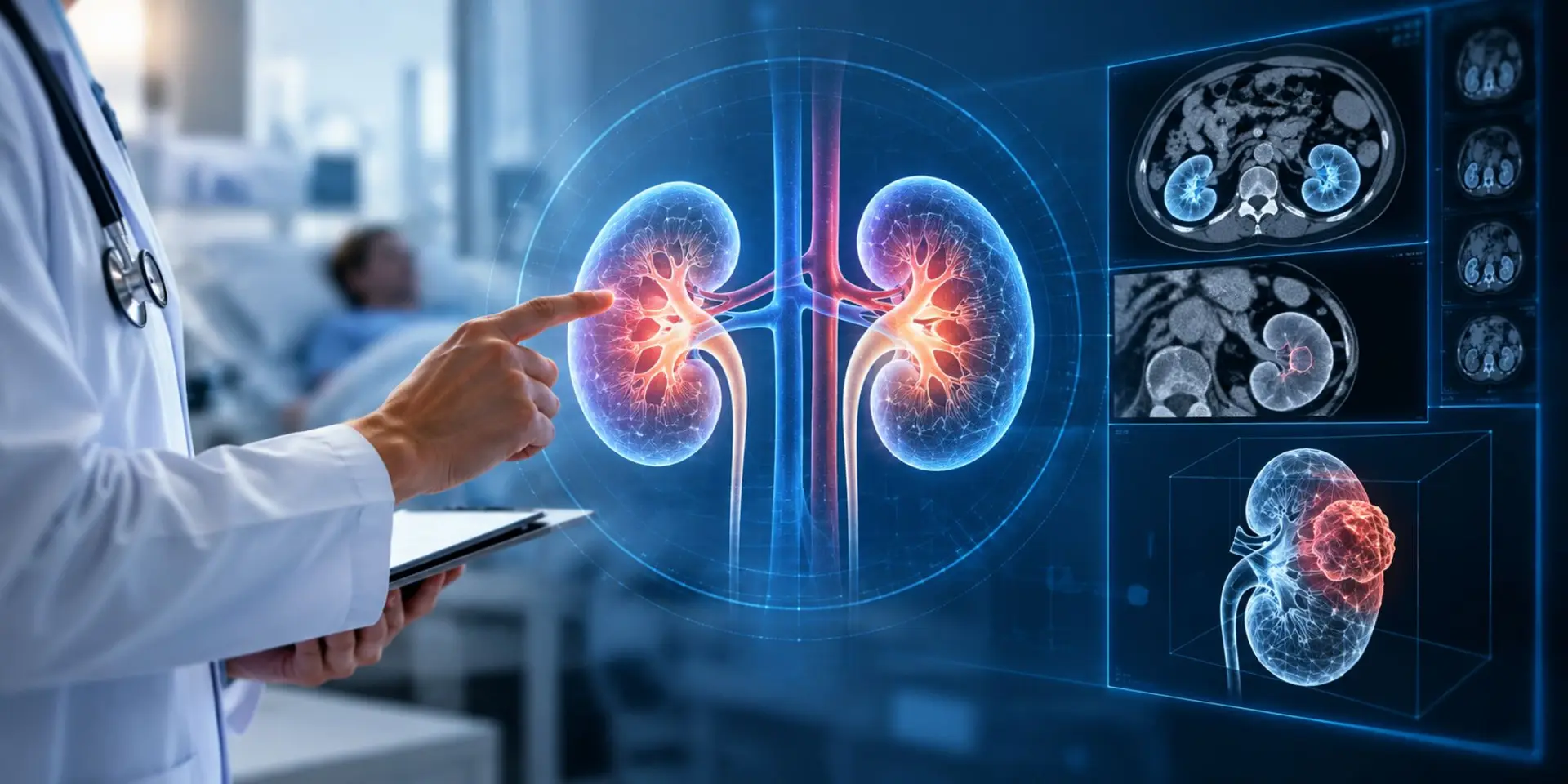

Researchers from the Indian Institute of Technology Madras (IIT Madras) and Christian Medical College (CMC) Vellore have developed three AI-based technologies designed to help clinicians assess kidney disease faster and with more information at hand. The work targets one of the quieter problems in nephrology: kidney conditions are often detected late, when treatment options have already narrowed.
The project is led by Prof. G.L. Samuel and Ms Jennifer Delighta from IIT Madras, in collaboration with Prof. Santosh Varughese of CMC Vellore. It is supported by IIT Madras and the SPARC project.
Three tools, one workflow
The first is a machine learning model that predicts an individual's risk of Chronic Kidney Disease (CKD). CKD frequently progresses without obvious symptoms, so a risk score that flags patients earlier could bring forward testing and lifestyle or clinical intervention before significant loss of kidney function.
The second is a deep learning system trained on more than 12,000 CT images. It classifies kidneys as normal or identifies cysts, stones and tumours from the scans. In practice, this is meant to act as a second pair of eyes for radiologists and nephrologists, speeding up triage and reducing the chance that a subtle finding is missed.
The third is a 3D imaging platform that assesses kidney tumour volume and how much of the organ is involved. Surgeons and oncologists rely on this information to decide between removing the whole kidney or only the affected portion, and a precise volumetric view can sharpen that call.
Towards a kidney Digital Twin
Beyond the three standalone tools, the team says the research is a step towards a kidney Digital Twin: a virtual, patient-specific model of the organ that could be used to simulate how a condition or treatment might play out for that individual. If realised, it would move kidney care from population-level guidelines towards decisions tailored to a single patient's anatomy and disease history.
What comes next
The models have been built and tested on existing data, but clinical use will depend on how well they hold up across more diverse patients, scanners and hospitals. The team plans further validation using additional patient datasets before the tools can move closer to routine deployment.
The collaboration reflects a broader pattern in Indian deeptech, where engineering institutes pair with large teaching hospitals to turn clinical data into decision-support tools. Whether these systems reach the clinic will hinge on the validation work ahead, but the goal is clear: catching kidney disease early enough for treatment to make a difference.