


India’s AI Winners: Why Infrastructure Stocks Are Surging
India's AI boom is creating unexpected winners. Here's how Sterlite, HFCL and other infrastructure firms are benefiting from growing demand for data centres, fibre networks and power systems.

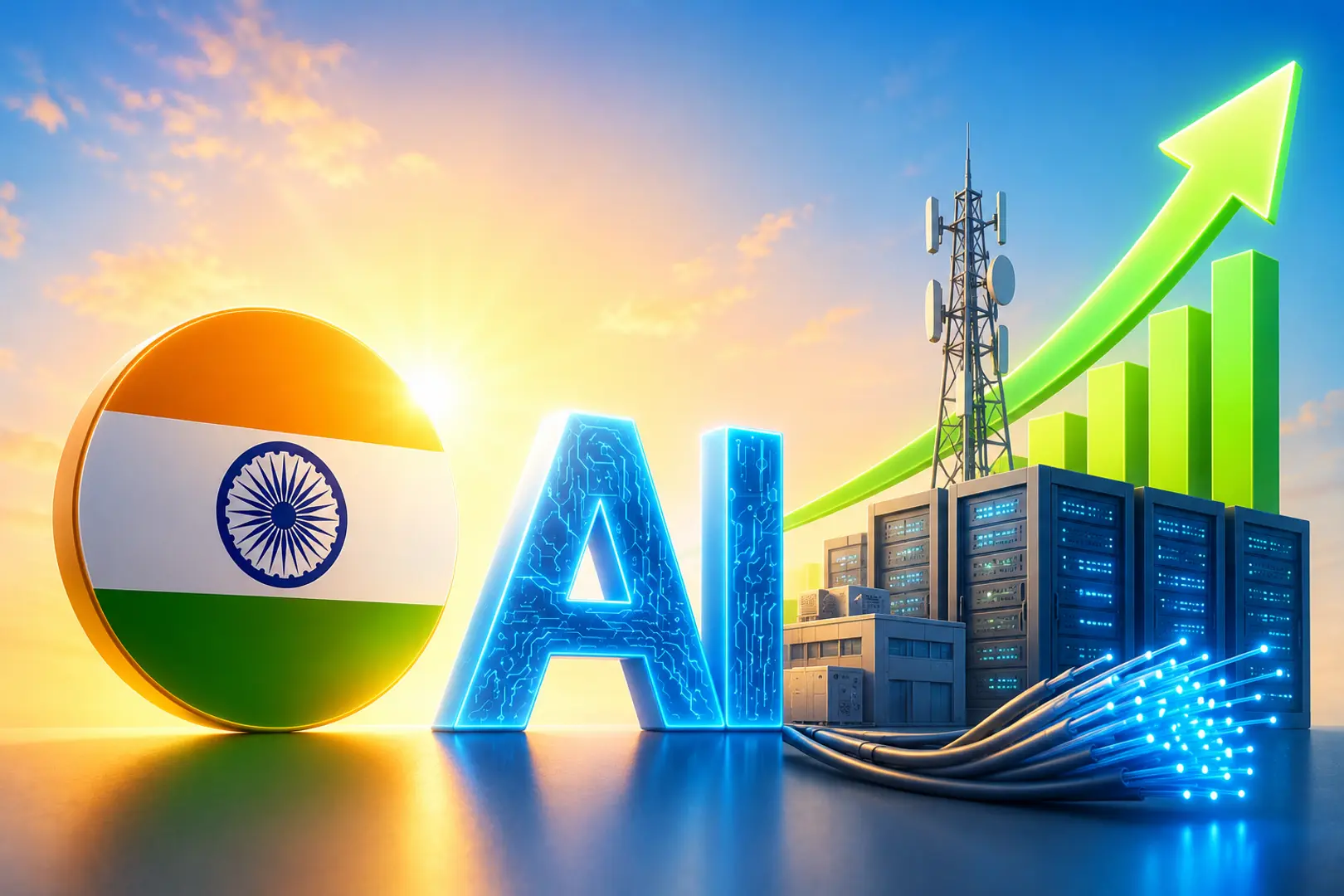

The biggest winners from the AI boom in India are not necessarily building AI models. While headlines often focus on chatbots, AI assistants, and semiconductor giants, a different group of companies is quietly enjoying the rewards of the artificial intelligence revolution.
These are the firms supplying the infrastructure that powers AI behind the scenes, and investors are taking notice. Here's what's happening!
The unexpected stars of India’s AI rally
One of the most striking examples is Sterlite Technologies. The company's shares have surged more than 530% this year after securing a multi-year $1.1 billion contract with a major US hyperscaler, a large cloud provider that operates massive data centres and computing networks.
The momentum has spread across the sector. HFCL has gained roughly 191%, while MTAR Technologies has more than tripled in value as investors look for businesses directly connected to the growing demand for AI infrastructure.
Rather than betting solely on software companies, investors are increasingly backing the businesses that provide the physical foundations needed to run AI systems.
The rise of the AI infrastructure trade
The numbers tell a compelling story. A Bloomberg equal-weighted basket of 28 Indian companies linked to the data centre ecosystem has added approximately $47 billion in market value this year. That represents a gain of nearly 50% during a period when the NSE Nifty 500 has lost more than $300 billion in value.
This trend has earned a nickname among traders: the AI capex trade. Capex, short for capital expenditure, refers to money spent on building and upgrading physical assets such as equipment, facilities, and infrastructure.
Why fibre, power and cooling matter
Every AI query requires enormous computing power. Behind every chatbot response sits a network of data centres consuming vast amounts of electricity and relying on specialised equipment to operate efficiently.
These facilities need high-quality optical fibre, transformers, switchgear, cooling systems, and power management technologies. According to broker research, this has created a classic "picks and shovels" opportunity, similar to the businesses that supplied miners during historical gold rushes.
Analysts at Nomura note that critical components often face lead times of two to four years. This supply constraint has created strong demand, growing order books, and the potential for sustained revenue growth between 2027 and 2029.

Billions of dollars are flowing into India's AI build-out
Global technology companies are accelerating investments in India's digital infrastructure. Amazon plans to invest $12.7 billion in cloud infrastructure by 2030.
Alphabet has outlined around $15 billion for an AI-focused hub in Visakhapatnam, while a Reliance-backed joint venture has announced a $11 billion agreement to develop local data centres. Meanwhile, AdaniConnex is collaborating with Google and Uber on facility development projects, signalling that infrastructure spending is likely to remain strong for years.
Opportunity comes with valuation risks
The sector's rapid rise has also pushed valuations higher. Sterlite Technologies trades at around 70 times forward earnings, significantly above the NSE 500 average of roughly 19 times. That leaves little room for disappointment. Investors are rewarding companies with clear AI-linked revenue streams, but execution challenges or slower-than-expected growth could quickly affect sentiment.
Still, the broader message remains clear. India's AI opportunity today extends far beyond software. The real beneficiaries are increasingly found in fibre networks, power systems, cooling technologies, and industrial infrastructure. As AI adoption expands, these behind-the-scenes players may continue to power the next phase of growth.