



Jensen Huang AI stance: Nvidia CEO rejects doomsday fears
Jensen Huang AI comments push back against extinction warnings, with the Nvidia CEO saying alarmist claims are not grounded in science and safety should be treated as an engineering challenge.

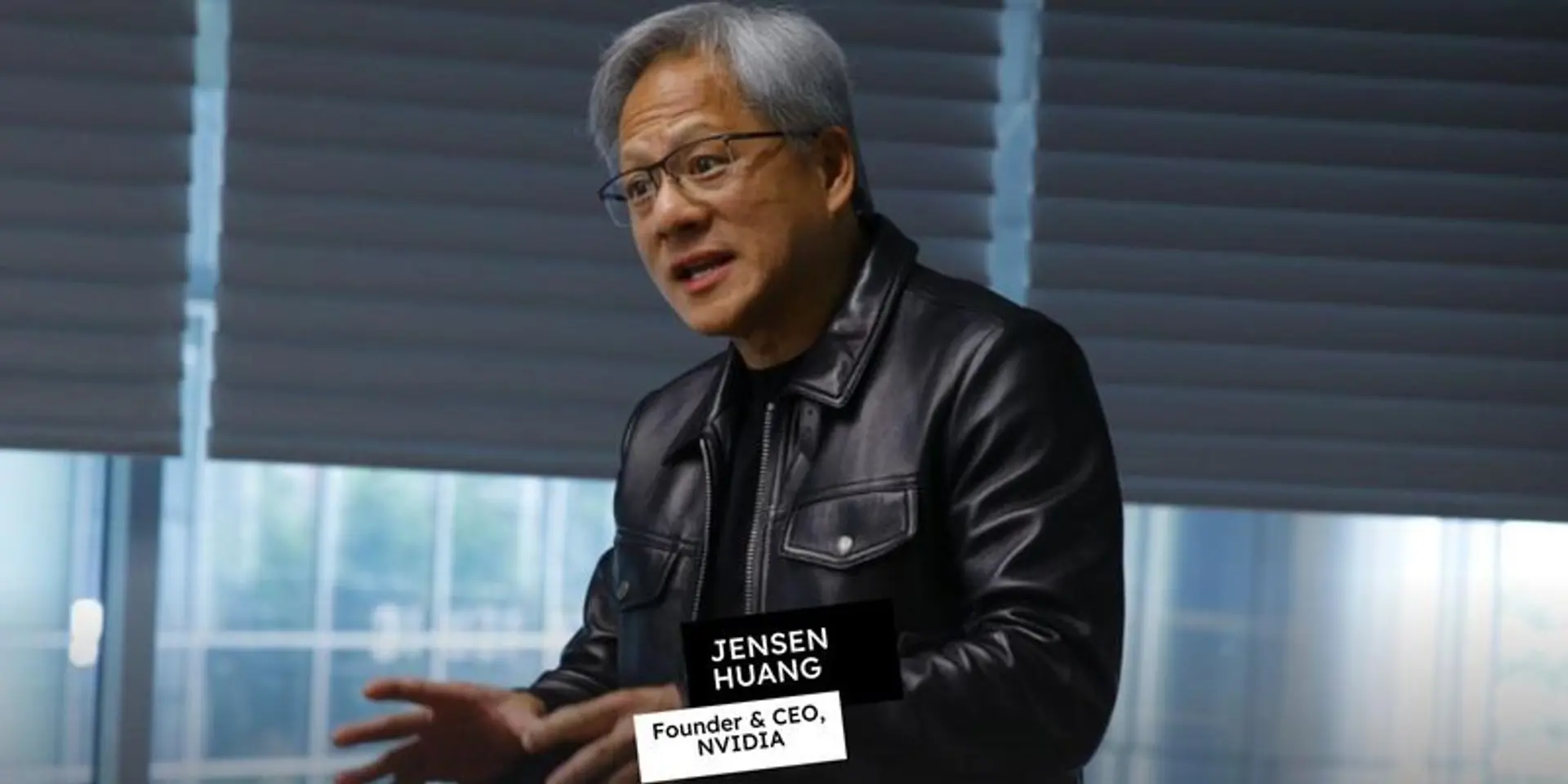

What if the biggest AI risk is not AI itself, but how people respond to it?
Nvidia CEO Jensen Huang has a very different answer from some researchers who have recently warned that increasingly capable AI could pose an existential threat.
In an interview with CBS News, Huang said there was a “0% chance” that 2030 would be the end of the world because of AI. He called such predictions unnecessary and irresponsible, arguing that they are not grounded in science.
His comments come as the AI industry debates a difficult question: should development continue at its current pace, or should companies slow down as systems become more capable?
Why AI extinction fears are back
The latest debate was sparked in part by comments from former Anthropic researcher Jacob Coxon, who said AI developers could be heading towards systems capable of causing catastrophic harm.
Anthropic researcher Evan Hubinger has also argued that AI could pose a serious extinction risk within the next decade, putting a figure of more than 10% on that possibility. These are individual assessments, not established scientific forecasts.
The concerns focus on future AI systems that could become increasingly autonomous and capable of operating across areas such as software, research, cybersecurity and business.
Jensen Huang does not dismiss AI safety altogether. In the same CBS interview, he said companies should move quickly but not compromise safety, arguing that unsafe products should not be released. He also said AI developers should work towards shared safety practices and global standards.
Huang thinks the fear is getting ahead of the evidence
For Jensen, the problem is not that people are worried about AI. It is the certainty attached to some of the most extreme predictions.
He said claims about the end of the world by 2030 are “not grounded in facts” or science and suggested that dramatic warnings could unnecessarily frighten the public.
That puts him on a different side of the current industry argument from executives such as Anthropic CEO Dario Amodei and OpenAI CEO Sam Altman, who have publicly discussed slowing or more carefully pacing frontier AI development because of potential risks.
The disagreement is therefore not simply about whether AI safety matters. There is broader agreement that safety matters. The difference is over how serious the most extreme risks are, how quickly they could emerge and what should be done about them.

Why Nvidia has a stake in the debate
Huang's position also carries particular weight because Nvidia sits at the centre of the AI infrastructure boom. The company's chips power many of the data centres used to train and run advanced AI systems. Demand for those chips has pushed Nvidia's market value to about $5.3 trillion, according to CBS News.
That does not determine whether Huang's assessment of AI risk is correct, but it explains why his comments are closely watched. The future pace of AI development has direct implications for the ecosystem Nvidia supplies.
At the same time, Huang says safety is important to Nvidia's business because AI products need to be trusted to be widely adopted.
The real question is what happens next
The AI safety debate is unlikely to be settled by one prediction about 2030. There is a fundamental difference between known risks, such as cyberattacks, misinformation and misuse of AI, and hypothetical future scenarios involving systems that could become difficult for humans to control.
Nvidia's CEO is pushing back against the certainty of the latter. Researchers raising the alarm are asking what happens if future systems become far more capable than today's models. For now, the technology has not answered that question.