



Meta launches Muse Code to take on OpenAI and Anthropic
Meta has launched Muse Code, a terminal-based AI coding agent powered by Muse Spark 1.2 for complex software development.

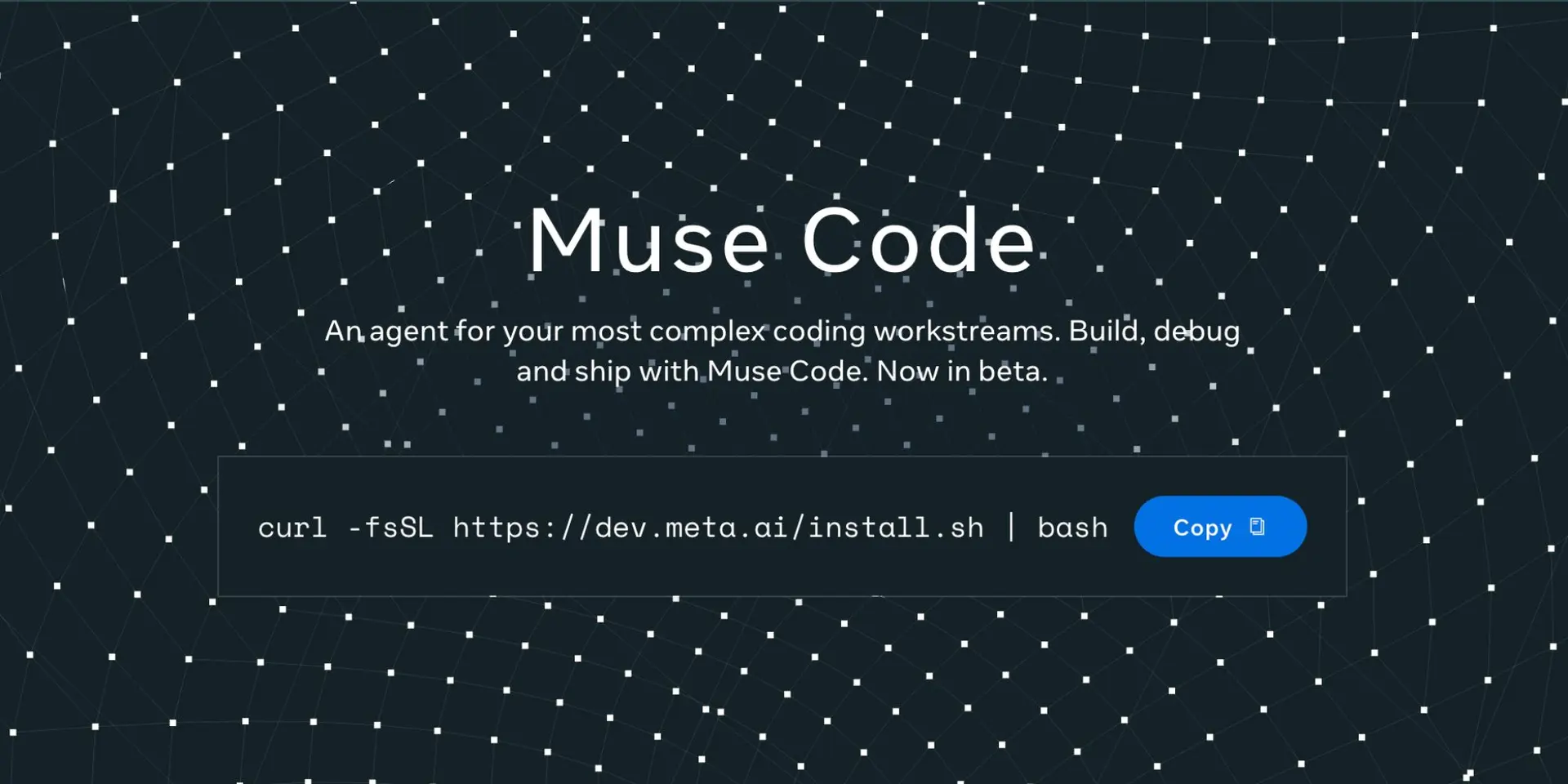

The race to build the best AI coding assistant is heating up. Meta has introduced Muse Code, a new AI-powered coding agent that helps developers complete software engineering tasks directly from the terminal.
The beta tool is powered by Meta's Muse Spark 1.2 model and is designed to handle everything from planning code changes to running tests across large projects.
With Muse Code, Meta is taking a bigger step into a market already dominated by OpenAI, Anthropic and other AI companies building tools for software developers.
What is Muse Code?
Muse Code is a terminal-based AI coding assistant. Unlike chatbot-style coding tools that mainly answer prompts or generate snippets, Muse Code works inside the command-line environment that many developers use every day.
Meta describes it as an AI agent because it can take a high-level task, break it into smaller steps, use development tools and verify whether its work is successful. The goal is to help developers with complete engineering tasks rather than isolated coding suggestions.
Built for large software projects
Meta says Muse Code is designed for complex software development. The tool can plan code changes, edit files, run tests and validate results across large code repositories.
These are tasks that usually require developers to move between multiple tools and spend time understanding a project's structure. By handling more of that workflow, Muse Code aims to reduce repetitive work and speed up development.
Powered by Muse Spark 1.2
Behind the coding agent is Muse Spark 1.2, Meta's latest AI model for software engineering. The model is designed for what the company calls "agentic" workflows. Instead of simply responding to prompts, it can plan tasks, use external tools, monitor progress and adjust its approach as work continues.
Muse Spark 1.2 builds on the earlier Muse Spark 1.1 model, which focused on coding, long-context reasoning and tool use. The newer version is more closely integrated with the development environment, allowing it to work more effectively on real software projects.
Why persistent AI agents matter
One of Muse Code's standout features is support for persistent AI agents. Rather than starting from scratch with every request, these agents remain active during a coding session. They can gather context, work on different tasks in parallel and return updates as they progress.
Meta also uses isolated worktrees, which allow multiple agents to work on separate parts of a project without interfering with the main codebase. This makes it easier to explore different changes while reducing the risk of conflicts.
A bigger challenge to OpenAI and Anthropic
AI coding assistants have become one of the fastest-growing segments of the generative AI market. OpenAI and Anthropic have both invested heavily in tools that help developers write, review and debug code.
Anthropic's Claude models have gained popularity among programmers, while OpenAI continues to expand coding capabilities across ChatGPT and its APIs. Meta's approach is different because it combines its latest coding model with a dedicated terminal-based agent.
Instead of offering only AI-generated code, the company is trying to automate larger parts of the software development process. If Muse Code performs well in real-world projects, it could strengthen Meta's position in a market where reliability and workflow integration matter as much as model performance.
What developers should watch
Muse Code is currently available in beta, so its long-term success will depend on how it performs outside internal testing. Developers are likely to evaluate its coding accuracy, safety features, data handling policies and how well it integrates with existing development workflows.
The launch shows how coding tools are moving beyond autocomplete and code generation towards systems that can manage longer, multi-step engineering tasks with less human intervention.