



Meta unveils Muse Spark, scaling towards personal superintelligence
Meta introduces Muse Spark, a new AI step toward personal superintelligence, aiming to make AI more personalised and part of your daily life.


Meta is building something big. With the launch of Muse Spark on 8 April, Meta has introduced the first model from its new AI division, signalling a deeper push into what it calls “personal superintelligence”.
The model already powers the Meta AI app and website, with plans to expand across platforms like Instagram, WhatsApp, and Messenger. But Muse Spark is not the end goal; it is an early step.
A smaller model built for speed and real use
Unlike the industry’s focus on ever-larger models, Meta is taking a slightly different approach here. Muse Spark is designed to be relatively lightweight and fast, while still handling complex reasoning tasks across domains like maths, science, and everyday problem-solving.
The company says it rebuilt its AI stack over the past nine months to optimise for performance rather than just scale. By function, the LLM model is also multimodal.
It can interpret images, analyse charts, and even assist with tasks like generating simple games or dashboards from prompts. This moves it closer to being a practical assistant rather than a purely conversational tool.
From one assistant to many working together
One of the more interesting features is how Muse Spark handles tasks. Instead of relying on a single response loop, the system can launch multiple sub-agents in parallel. Each agent works on a different part of a task, and the results are combined into a final output.
For users, this shows up as two modes. An “Instant” mode for quick responses and a “Thinking” mode for more complex, multi-step tasks. This structure reflects a broader shift in AI design, where systems are moving from single interactions to coordinated workflows.
Rolling out across Meta’s ecosystem
For now, Muse Spark is available through the Meta AI app and website. But the real scale comes from integration. Meta plans to roll the assistant out across its entire ecosystem, including WhatsApp, Instagram, Facebook, Messenger, and even its AI-enabled glasses.
This gives the company a distribution advantage that few competitors can match. The rollout is starting in the United States, with a phased expansion to other markets expected over time.
The real race: Personal superintelligence
Meta is positioning Muse Spark as part of a larger roadmap. The idea of “personal superintelligence” goes beyond answering queries. It involves building an assistant that understands context, relationships, and user behaviour across platforms to deliver more personalised and proactive support.
This could include features like discovery-driven shopping, contextual recommendations, and deeper integration with social content. It is a long-term vision, and it comes with trade-offs.

Strategy, leadership, and the road ahead
The launch is also significant internally. Muse Spark is the first major release from Meta Superintelligence Labs, led by Chief AI Officer Alexandr Wang. The move follows Meta’s substantial investment in Scale AI and signals a more focused approach to building next-generation AI systems.
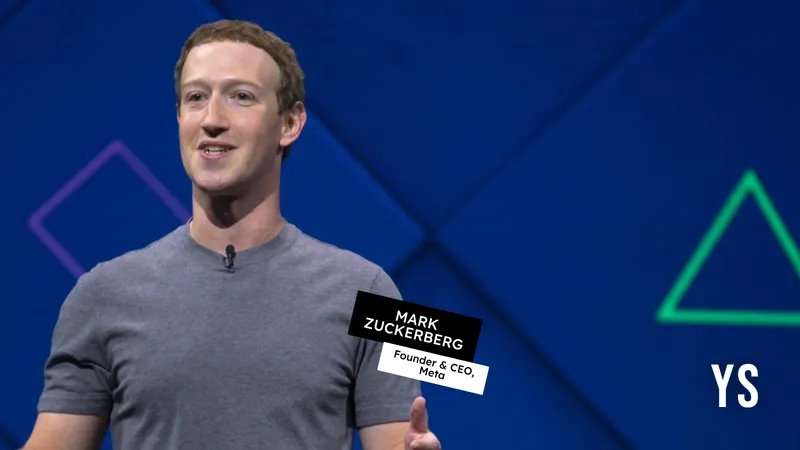
CEO Mark Zuckerberg has repeatedly emphasised this shift, positioning AI as central to Meta’s future products and platforms. At the same time, the company is continuing to develop larger models, suggesting that Muse Spark is just one point in a broader scaling strategy.
Muse Spark is not Meta’s final answer to AI. It is a starting point. By focusing on speed, multimodal capabilities, and deep integration across its platforms, Meta is building towards a more personalised form of AI. Whether that vision of “personal superintelligence” becomes practical will depend on execution, trust, and how users respond.