



OpenAI CTO Srinivas Narayanan Quits to Care for Ageing Parents
Indian-origin OpenAI CTO Srinivas Narayanan resigns, choosing family over one of tech’s top roles. Here’s what happened.

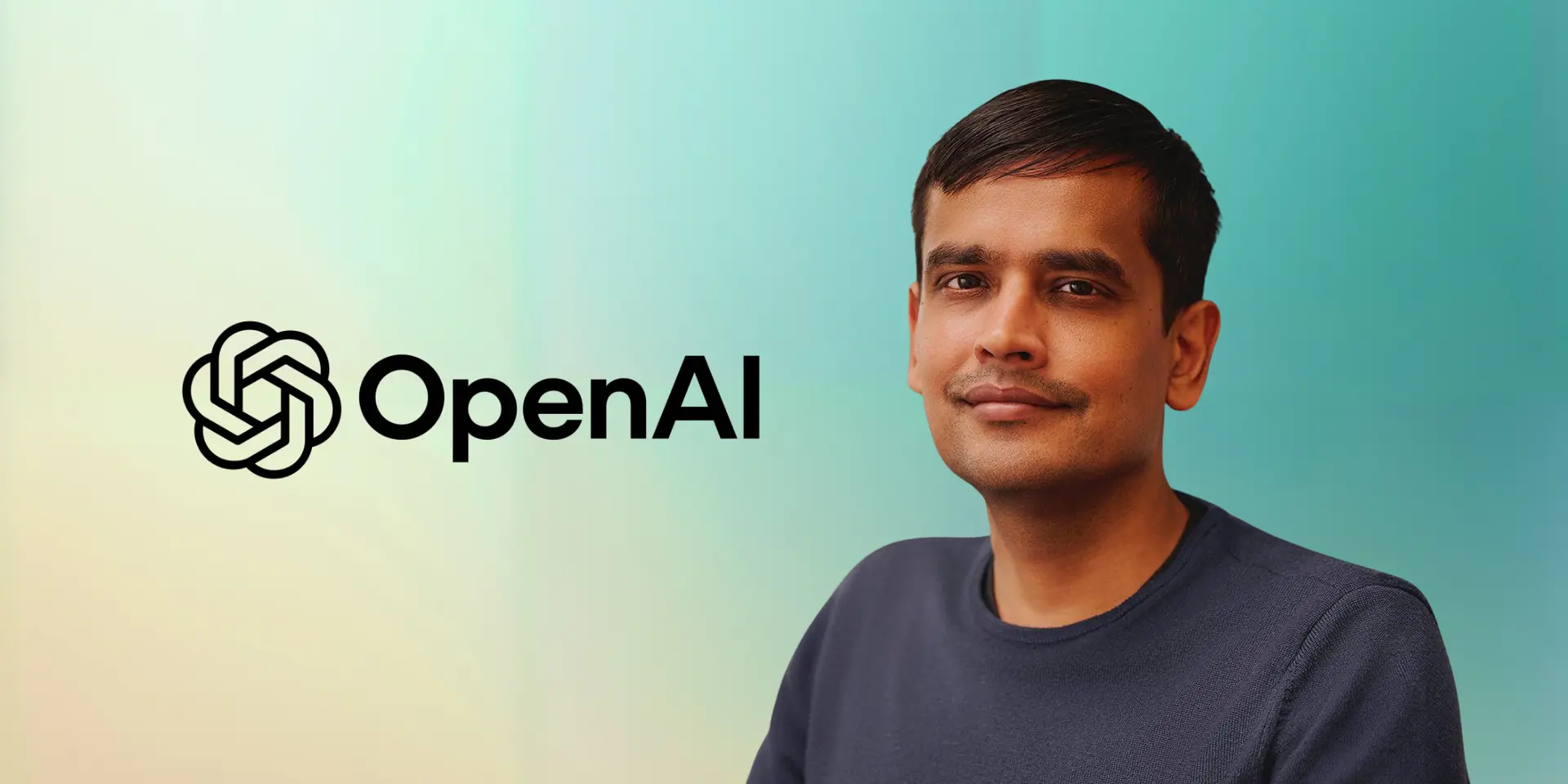

Sometimes, the biggest tech stories are not about products. They are about people. Srinivas Narayanan, the Chief Technology Officer for B2B applications at OpenAI, has announced that he will step down at the end of next week.
The reason is not a new startup or a rival offer. It is personal. He plans to spend time with his ageing parents in India before deciding what comes next.
A quiet exit, but not a small one
The news became public on 19 April 2026, after Narayanan shared updates on X and LinkedIn. He mentioned that he had informed leadership earlier in the month and felt the timing was right, especially with recent and upcoming product launches in place.
The tone of the announcement was reflective. There was no hint of the next move. Just a pause. In an industry that rarely slows down, that alone stood out.
3 years that shaped OpenAI’s products
Narayanan joined OpenAI in April 2023 as Vice President of Engineering. By 2025, he had moved into the role of CTO for B2B applications. During this period, OpenAI was not just building models. It was turning them into products. Narayanan played a key role in that transition.
His work focused on scaling platforms like ChatGPT, expanding the developer API ecosystem and building enterprise-grade solutions for businesses, education and creators. So, he helped bridge the gap between research and real-world use. That is often the hardest part of AI.
Will this impact OpenAI’s enterprise roadmap?
In the short term, probably not in a dramatic way. OpenAI’s engineering structure is built around multiple senior leaders and cross-functional teams. This allows continuity even when key executives step away.
Leadership at the top remains stable. CEO Sam Altman continues to drive strategy and research direction, while President and co-founder Greg Brockman oversees execution and platforms. This setup reduces dependency on any single individual. However, execution details matter.
Enterprise AI is not just about models. It involves onboarding, integrations, security and reliability. These are areas where leadership transitions can have subtle effects. In the coming months, observers will watch closely for changes in product timelines, customer experience and developer tooling.
A decision that resonated in India
Narayanan’s reason for stepping down struck a chord, especially in India. Balancing global careers with family responsibilities is a reality for many professionals. His decision highlights something often overlooked in tech narratives. Behind every high-profile role is a personal life that does not pause.
India also remains a key market for AI adoption. From IT services to startups and higher education, the country plays a growing role in how AI products are built and used. Leaders of Indian origin have been central to that story. Narayanan’s pause is being seen less as an exit and more as a reset.

A career built on scale
Before joining OpenAI, Narayanan had already built an impressive track record. He is an alumnus of IIT Madras and later completed a master’s in computer science at the University of Wisconsin–Madison. He began his career at IBM’s Almaden Research Centre and went on to spend over a decade at Meta.
At Meta, he worked on large-scale systems including Facebook Photos and AI models for language, vision and recommendations. Across roles, one theme stands out. Building systems that operate at massive scale. That experience made him a natural fit for OpenAI during its growth phase.
Recent reports suggest that other senior figures at OpenAI, including Kevin Weil and Bill Peebles, are also planning to move on. This is not unusual for companies operating at the frontier of technology.
Rapid product cycles, organisational shifts and intense workloads often lead to leadership changes. In many ways, it reflects the pace at which the AI industry is evolving.
As of now, OpenAI has not announced a successor for the B2B applications CTO role. There has also been no formal company statement beyond the public posts. For stakeholders, the focus will remain on execution. Will enterprise features continue to roll out on schedule?
Will developer tools improve at the same pace? Will customer onboarding remain smooth? These are the questions that matter more than titles.