



OpenAI unveils ChatGPT Health to centralise personal medical and wellness data
OpenAI promises a secure environment for interpreting medical history and says sensitive data will not be used to train foundation models.

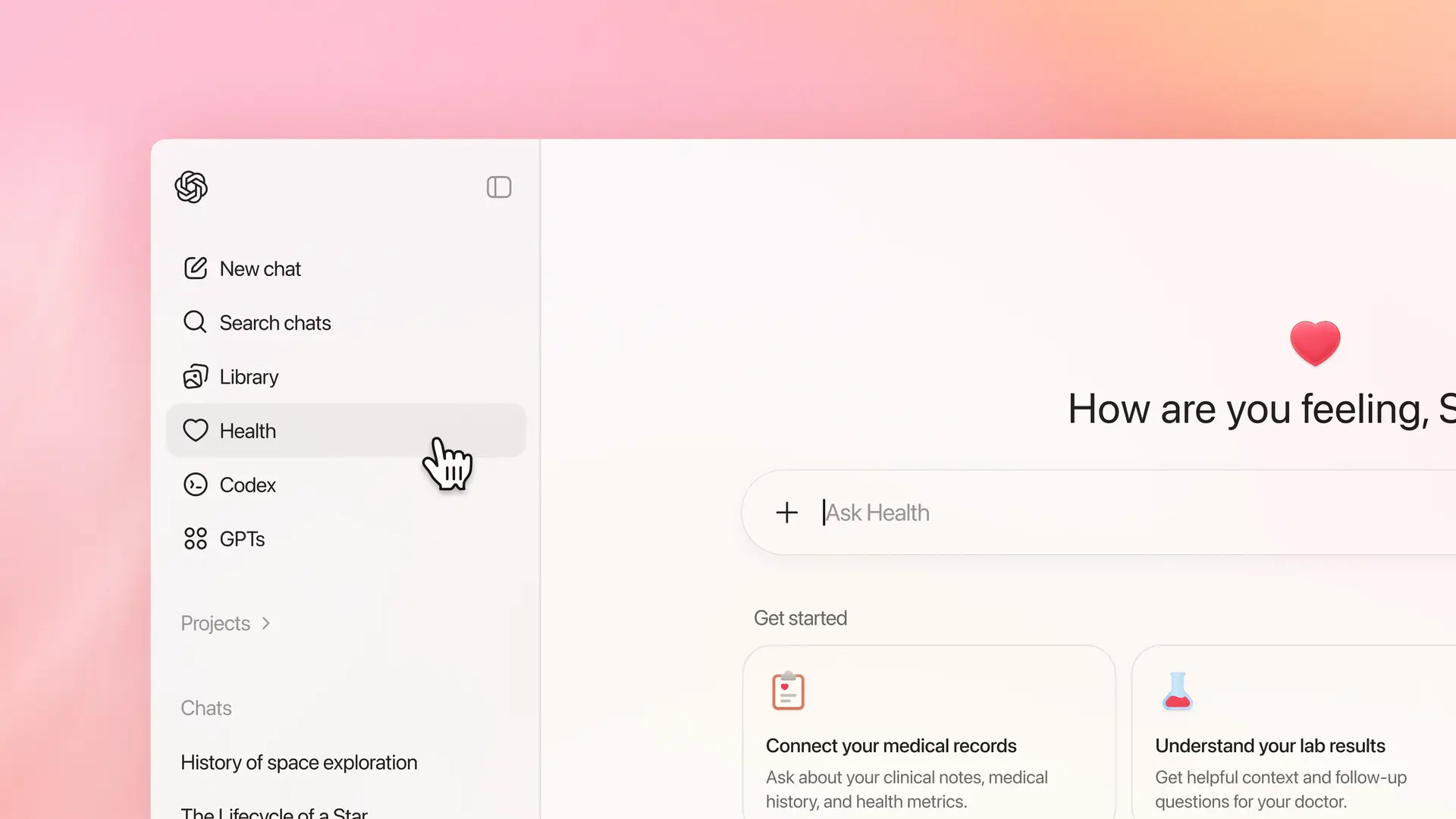

OpenAI has launched a new dedicated experience called ChatGPT Health to centralise personal medical and wellness data.
This move aims to provide a more informed and confident way for users to navigate their personal health journeys by bringing together scattered information from various sources, the company said.
The tool addresses a significant trend in AI usage: according to the company, roughly 230 million people worldwide already ask wellness questions on the platform every week.
The new platform wants to solve the problem of fragmented health data. Currently, many individuals find their medical history and fitness tracking spread across different portals, wearables, and digital notes.
By allowing users to securely connect medical records and wellness applications such as Apple Health, MyFitnessPal, and Weight Watchers, AI can provide responses that are grounded in the specific context of the user. This allows for a variety of practical applications, such as interpreting recent bloodwork results, preparing specific questions for a doctor, or understanding how different insurance options align with a person’s healthcare patterns, said the company.
According to OpenAI, a significant portion of the development has focused on privacy and data security. ChatGPT Health operates within a dedicated space that is separate from standard chat interactions. To protect sensitive information, OpenAI has implemented purpose-built encryption and isolation to ensure that health-focused conversations remain compartmentalised.
Crucially, the company has stated that conversations within this health-specific space are not used to train their foundation models. While the AI may use general lifestyle context from non-health chats to improve relevance, medical data and memories from the health space never flow back into the main platform, it said.
The tool was developed through a two-year collaboration with over 260 physicians from 60 different countries. This medical network provided feedback on more than 600,000 model outputs to refine how the AI communicates and how it prioritises safety during critical moments.
The system is evaluated using a framework called HealthBench. This assessment uses physician-written rubrics to judge the quality of responses based on clinical standards such as the appropriate escalation of care. The system is explicitly designed to support rather than replace professional medical care. It is not intended for the diagnosis or treatment of illnesses, said OpenAI.
Access to the service is currently being managed via a waitlist for users on Free, Go, Plus, and Pro plans. However, early access is restricted to those outside the United Kingdom, Switzerland, and the European Economic Area. The integration of medical records and certain wellness applications is currently limited to users in the United States.
Edited by Swetha Kannan