



Qualcomm lays out AI infra ambitions with data centre push, Meta deal
Qualcomm has unveiled an ambitious AI strategy centred around data centres, software, and custom computing, as it seeks to diversify beyond smartphone chips.

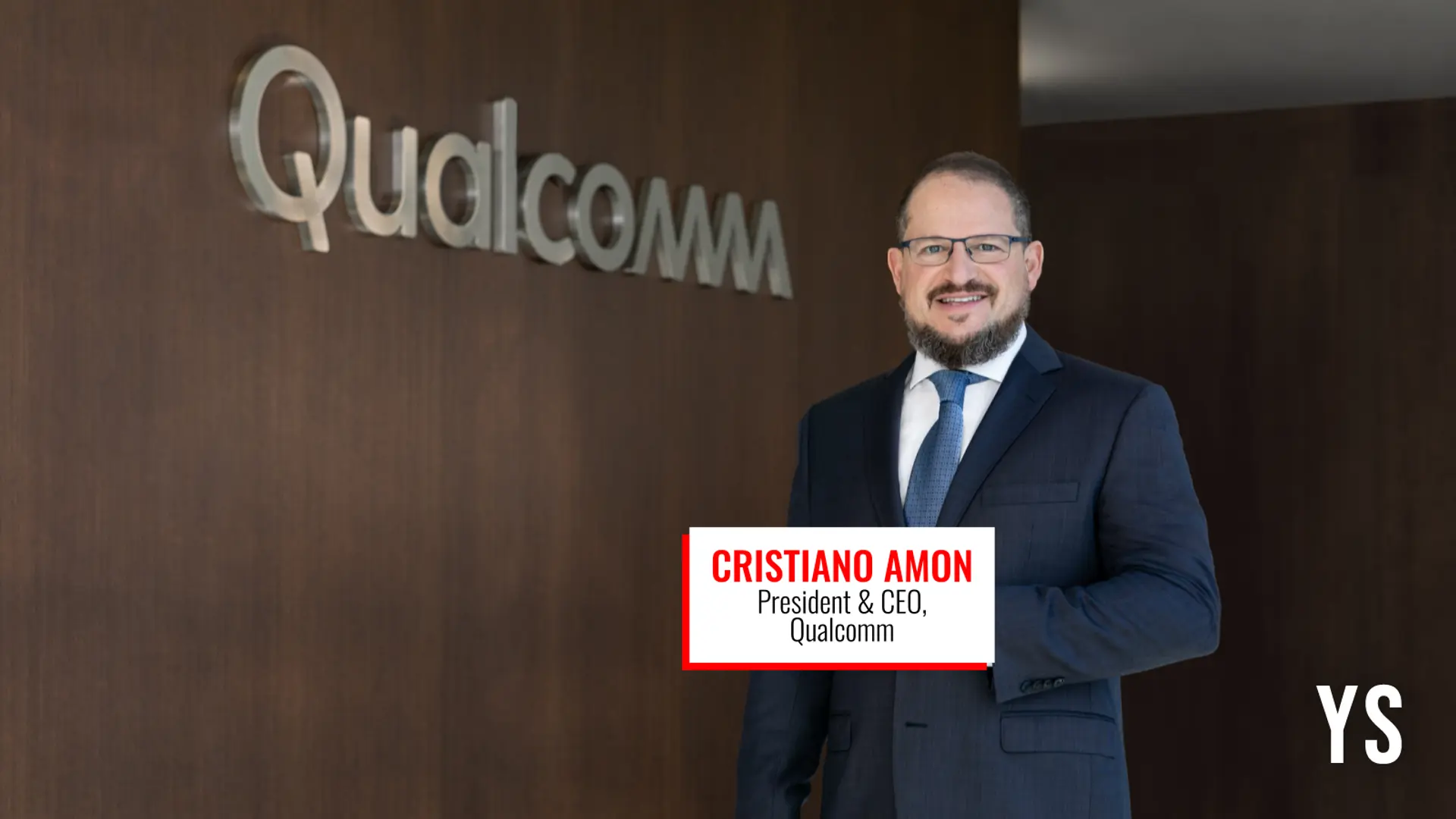

Qualcomm has unveiled one of its the most ambitious shifts in its four-decade history, signalling that it intends to become a much broader AI infrastructure company rather than remain a supplier of smartphone chips.
Over two days, the US semiconductor company has unveiled a slew of measures: a new data centre product family, a multi-generation agreement with Meta, and the acquisition of AI software company Modular. It has also announced an updated growth strategy that places data centres alongside automotive and industrial AI as its next major engines of expansion.
Beyond smartphones
The announcements show Qualcomm’s clearest attempt yet to reposition itself for the AI industry, whcih is increasingly driven by cloud infrastructure, custom silicon, and software platforms.
These developments also come at a time when the semiconductor industry is undergoing one of its biggest transitions in decades, with companies racing to meet the surging demand for AI computing while also addressing the growing costs of electricity, cooling, and data centre expansion.
NVIDIA currently dominates AI accelerators, while AMD, Intel, Broadcom, Marvell and Arm are all expanding their presence in cloud infrastructure. Hyperscale cloud providers such as Amazon, Microsoft and Google are also investing heavily in custom chips to reduce costs and improve efficiency.
The centrepiece of Qualcomm’s strategy is a new family of data centre products branded Qualcomm Dragonfly. The portfolio includes the Dragonfly C1000 central processing unit (CPU), AI inference accelerators, high-speed networking products, custom silicon offerings, and a new memory technology called High Bandwidth Compute.
Explaining the rationale behind the new portfolio, Qualcomm President and Chief Executive Officer Cristiano Amon said the nature of AI computing is changing.
“Agentic AI is driving a significant increase in demand for AI inference in the data centre. As these become the dominant workloads, infrastructure has to deliver much higher performance at lower power and cost. That plays directly to Qualcomm's strengths, and we're well positioned for this shift,” Amon noted.
Agentic AI workloads require enormous computing capacity, placing greater emphasis on energy efficiency because electricity has become one of the biggest operating costs for large AI data centres.
Qualcomm noted that its decades of experience designing highly efficient chips for smartphones and connected devices can be transferred to cloud infrastructure. The company said the Dragonfly C1000 has been designed around custom Oryon CPU cores and a chiplet architecture that combines multiple processing units into a single package.
According to Qualcomm, the processor is optimised to deliver high performance while consuming less power, although many of the company’s performance claims are based on internal estimates ahead of commercial availability. The first products are expected to enter production in 2028.
Meta validation
Perhaps the strongest validation of Qualcomm’s ambitions came from Meta, which announced a strategic multi-generation agreement under which Qualcomm will supply data centre CPUs for the social media company’s future server infrastructure.
Dragonfly C1000 will power Meta’s next generation of servers, with production scheduled to begin in the second half of 2028.
Amon said the agreement is evidence of Qualcomm’s approach gaining support from one of the world’s largest AI infrastructure investors.
“We designed our data centre CPU to deliver leading performance per core and a breakthrough in power efficiency for large scale data center deployments, and this multi-generation agreement with Meta is a significant validation of that approach,” Amon noted.
Meta's founder and CEO Mark Zuckerberg linked the partnership to the company’s long-term AI ambitions.
“We are excited to continue partnering with Qualcomm Technologies as they design the next generation of CPUs for Meta. Along with our other compute investments, we are quickly building the infrastructure we need to deliver personal superintelligence to everyone in the world,” said Zuckerberg.
Software matters
Alongside the hardware announcements, Qualcomm has also agreed to acquire AI software company Modular, a move that reflects the growing importance of software ecosystems in AI computing.
Modular develops tools that allow developers to write AI applications once and deploy them efficiently across different processors, including CPUs, graphics processors, neural processing units, and custom AI chips.
“This acquisition marks a pivotal moment not just for Qualcomm, but for the AI industry. As agentic AI scales across data centers and edge environments, the industry is moving toward disaggregated, multi-vendor architectures that demand a more open and modern software foundation,” said Amon.
Chris Lattner, Co-founder and CEO, Modular, said combining the company’s software with Qualcomm’s hardware would help make AI development “more accessible and performant for developers” while strengthening portability across different hardware platforms.
Reuters reported that the all-stock acquisition values Modular at about $3.9 billion. The software acquisition is significant because NVIDIA’s dominance in AI has been reinforced not only by its chips but also by CUDA, the software platform used by millions of developers.
Qualcomm appears to be pursuing a more open alternative that supports multiple hardware vendors rather than locking developers into a single ecosystem.
The announcements were accompanied by an updated diversification strategy presented during Qualcomm’s Investor Day. The company nearly doubled its non-handset revenue target for FY2029 to $40 billion from $22 billion. It also announced a new target of more than $15 billion in annual data centre revenue by FY2029. Qualcomm also increased its automotive revenue target to $10 billion while forecasting continued growth in industrial AI, robotics and connected devices.
“We are defining Qualcomm’s next chapter as we accelerate our edge diversification strategy, introduce a comprehensive roadmap for next-generation AI data centres, and evolve into a platform company,” said Amon. "Our presence across the entire compute continuum and unparalleled technology capabilities, in low-power computing, AI and connectivity put us in a strong position to capture these opportunities.”
The strategy also highlights Qualcomm’s determination to reduce its dependence on smartphones, which have historically generated most of its revenue. The company had earlier attempted to enter the server processor market nearly a decade ago before scaling back the efforts. However, company executives argue that the rise of AI has fundamentally changed the economics of data centres.
Edited by Swetha Kannan