



Beyond ChatGPT: India’s quest for a clinical-grade, Indian language HealthGPT
India’s race to build a HealthGPT is heating up, with startups, hospital chains, and global AI majors in play. The winners will be those that tackle language diversity, data gaps, and shift focus from treatment to prevention.

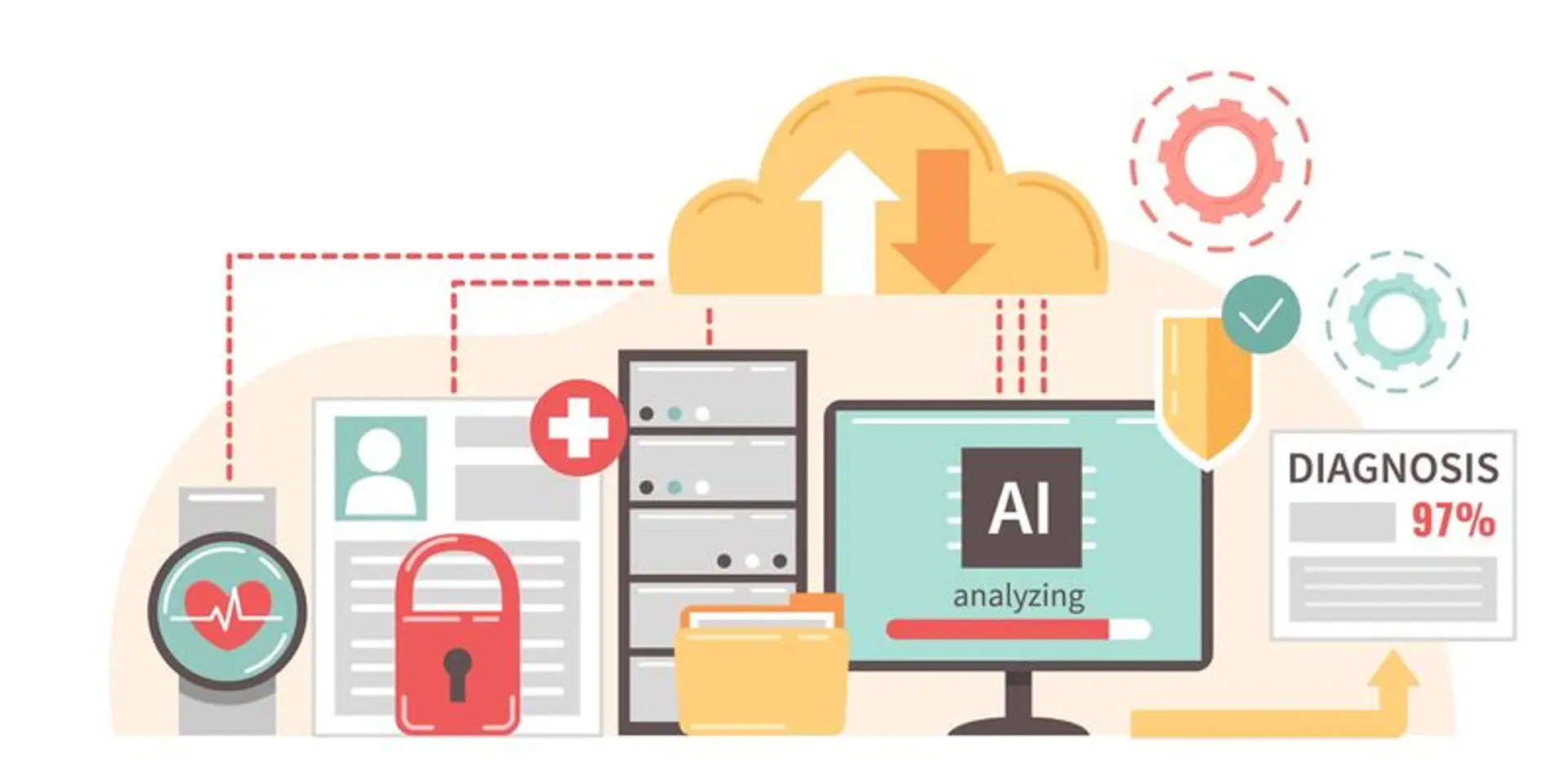

While the healthtech world is racing to build a HealthGPT, India’s healthtech sector too is no exception. We have multiple ventures trying for this breakthrough in healthcare-specific Large Language Models (LLMs), from public entities to hospital chains to healthtech ventures, as well as global AI majors who have made known their ambition to develop this for India.
While the Indian healthcare market offers limitless opportunities for a successful HealthGPT, aspiring players will have to overcome formidable challenges too to make such a product a reality.
Here are 5 trends that are already visible, both with regard to opportunities and challenges, and how based on these trends Indian HealthGPTs will eventually shape up.
The need for Indian language HealthGPTs
Indian doctors are well versed in English, even in globally-accepted medical English, but this is not the case with our patients, nurses, Asha workers, etc. This is the primary reason why the country needs an Indian language HealthGPT, especially if we are trying to leverage such a system to improve healthcare equity without overburdening our doctors.
Admitting this need, and even setting the ball rolling for it, is not even half of our challenge. However, because India is a diverse nation with 36 states and UTs, and more than one hundred spoken languages and dialects, there is a high chance that India will witness the development of not one Indian language HealthGPT, but several such LLMs.
Who are in the Indian HealthGPT race now
A few healthtech startups based in Bengaluru and Hyderabad, as well as hospital chains like Apollo and Manipal, are known to be actively pursuing their own LLM based HealthGPT products. Public institutions like NITI Aayog and National Health Authority, which is responsible for India’s Health Data Management Policy are creating the required frameworks.
However, I also expect non-profit software groups specialising in open source development to come forward to ensure an equitable solution.
A case in point is iSPIRT, which was instrumental in developing much of the software framework for Aadhaar, UPI and IndiaStack. Even new such groups may form to address this formidable challenge of creating Health LLMs.
Who all may join the race eventually
Global LLM majors, including ChatGPT, Gemini, Meta AI, Perplexity, Claude, and DeepSeek are likely to develop for the huge Indian healthcare segment. Players like ChatGPT and Gemini already have a huge advantage, as they are not only way ahead in LLMs than the rest, but have also mastered the nuances of most of our 22 official languages.
However, their entry is not likely to be as standalone players, but with suitable Indian partners. This is because while they have the advantage of scale and data scaling is vital in such Large Language Models, they lack the kind of clinical validation needed by such an Indian HealthGPT. India’s public and private hospital chains can bring this to the table.
Key challenges in creating an Indian HealthGPT
Most observers cite India’s diverse language systems as the prime or only great challenge in developing a HealthGPT. But as a former hospital promoter and genomic health-tech entrepreneur now, I can cite at least two equally great challenges. Firstly, India lacks a formal digital health record system for patients which is accessible by any treating doctors.
Hence, any aspiring Indian HealthGPT should be able to work without such data, and even to provide a basic medical record framework for this to be successful. Secondly, India has a huge urban-rural divide, which is evident from the services offered by a PHC vis-a-vis a super-specialty hospital. This also calls for multiple specialized HealthGPTs in India.
How India should leverage its HealthGPTs
There are many obvious ways India can leverage its HealthGPTs, like triage services for mass infections and casualties, teleconsultation, maternal & infant health support, detecting diagnostic anomalies, furthering healthcare inequities, tribal health outreach, and building a virtual bridge between doctor-rich and doctor-starved regions of the country.
But there is an even greater leverage that is possible for Indian HealthGPTs, which is to shift our focus from reactive treatments to preventive solutions for lifestyle diseases. Treating killer lifestyle diseases like diabetes, high BP, heart attack, stroke, cancer, dementia, COPD, organ failures, etc., after they develop is emotionally and financially draining for not only patients and their families, but also for the nation.
It makes immense sense, instead, to detect such killer disease risks in the genes, years or decades before these diseases develop. This is possible if genomic preventive solutions are included in a HealthGPT’s backend, so that personalised lifestyle modifications can prevent the detected disease risks from developing.
HealthGPTs that address the prevention angle more effectively will win big in this fight of emerging Indian Health LLMs.
In fact, this race for developing India-specific HealthGPTs would be a golden opportunity to deploy more preventive strategies so that less of expensive and painful treatments are necessary.
(Dr. Sajeev Nair is a biohacking evangelist, bestselling author, chief curator of the World Biohacking Summit, Dubai, and the Founder of Vieroots, a genomic healthtech startup.)
(Disclaimer: The views and opinions expressed in this article are those of the author and do not necessarily reflect the views of YourStory.)