



Mem0 raises $24M to power long-term memory for AI
AI startup Mem0 will use the fresh capital to grow its engineering team, extend memory capabilities to meet enterprise needs, and shore up partnerships with major AI platforms and frameworks.

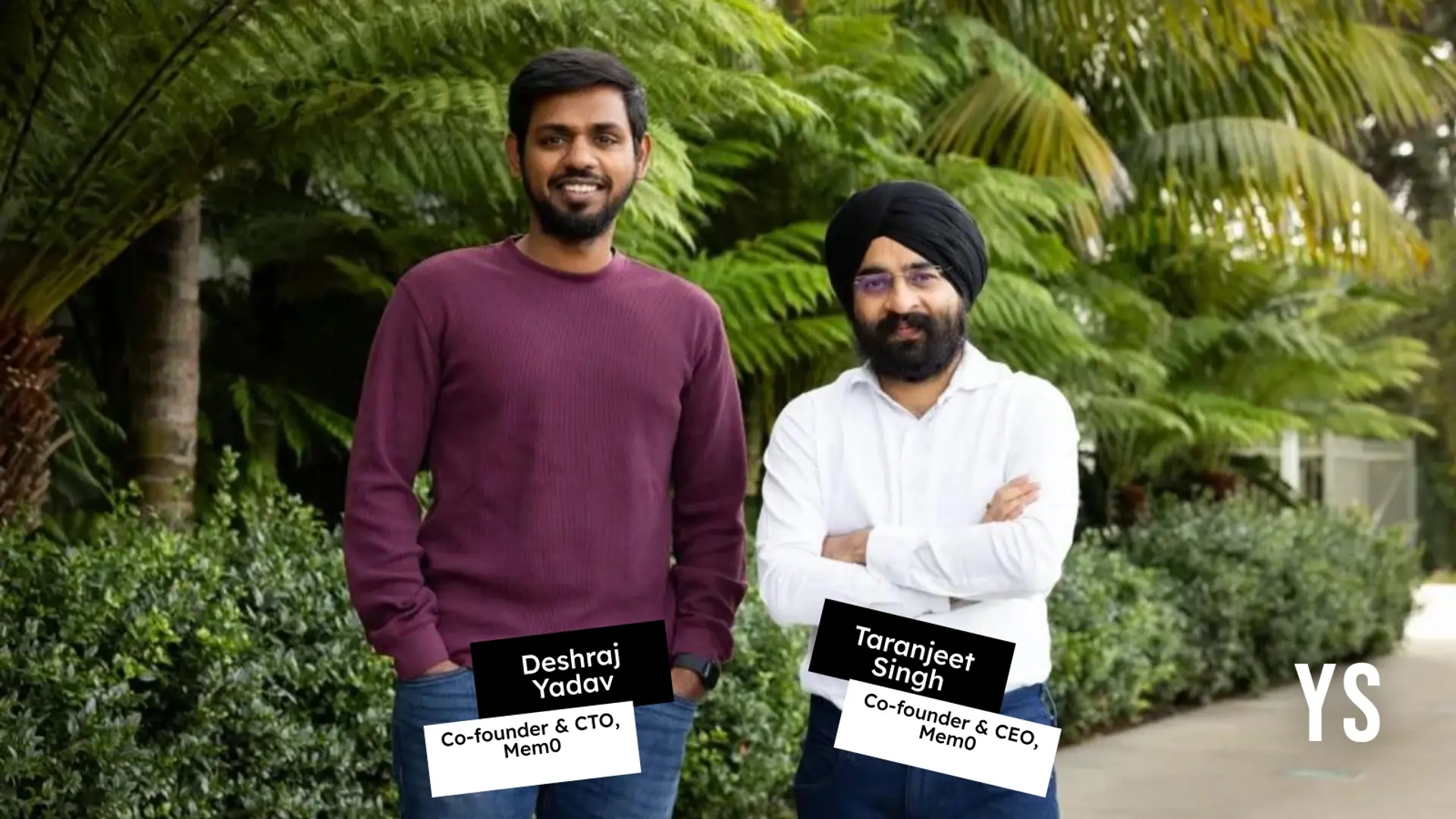

San Francisco-based startup Mem0 on Wednesday raised $24 million in a combined seed and Series A funding as it seeks to solve one of generative AI’s thorniest problems.
The round was led by Basis Set Ventures, with participation from Peak XV Partners, Kindred Ventures, the GitHub Fund, and Y Combinator. It also received strategic backing from technology leaders such as Scott Belsky and Dharmesh Shah.
Mem0 builds what it calls a memory layer for artificial intelligence (AI) agents and large language models (LLMs)—a persistent system that stores and retrieves user context across conversations, intended to fix the short-term nature of today’s models, which can only attend to a limited amount of text at a time.
This means people repeatedly re-explain preferences to assistants, paste the same information into prompts, and watch helpers repeat suggestions they have already rejected. Mem0 pitches its product as a readymade infrastructure layer that developers can bolt in with just a few lines of code, so agents retain long-term context and personalise behaviour.
The project’s open-source repository has attracted more than 41,000 stars on GitHub, and the company says its Python package has been downloaded 14 million times. Mem0 also noted a rapid rise in API calls from roughly 35 million in Q1 of 2025 to 186 million by Q3.
The startup was founded by Taranjeet Singh and Deshraj Yadav. Singh’s public profile and repositories show a history of building developer tools and open-source projects, including an earlier project called Embedchain. Yadav has worked on AI infrastructure for Tesla’s Autopilot programme.
The founders say they previously shipped tools used by millions of developers and researchers, and they took Mem0 through Y Combinator before this round.
Memory matters
LLMs work like very clever notepads that can only hold a limited amount of text at once. This limit, known as the context window, means that once a conversation or document becomes too long, the model forgets earlier parts unless the information is reinserted.
A common workaround is retrieval-augmented generation (RAG)—where a separate database stores documents or past interactions, and the system retrieves the most relevant pieces each time the model is asked a question.
Vector databases such as Pinecone or Weaviate often power this process by helping the model find related information efficiently.
RAG is practical and cheaper than retraining models, but it does not provide true long-term memory. It cannot automatically track preferences, forget irrelevant facts, or resolve contradictions over many interactions.
Mem0 aims to bridge this gap; its memory layer extracts and organises information from conversations, rates it by importance and confidence, handles conflicting details, and returns only what is most relevant to the model at any given time. This approach reduces cost and response time while allowing continuity across sessions.
Memory infrastructure is now emerging as its own category within the AI ecosystem, alongside areas such as compute, model hosting, and vector search. Mem0’s system builds on these tools but sits one level higher, deciding what to keep, what to forget, and how to create a consistent user profile over time. It complements, rather than replaces, existing retrieval and database technologies.
According to Mem0, thousands of teams use its memory layer in production and agent frameworks such as CrewAI, Flowise, and Langflow have native integrations. It additionally claims a partnership with Amazon Web Services, which it says selected Mem0 as the exclusive memory provider for a new Agent SDK.
The startup noted that the fresh capital will be used to grow its engineering team, extend memory capabilities to meet enterprise needs, and shore up partnerships with major AI platforms and frameworks.
“Memory infrastructure is becoming mission-critical for AI personalisation. Imagine a world where all your memories, context and preferences are stored in a database—portable across apps through a single “memory sign-on," said Arnav Sahu, Partner, Peak XV.
Mem0’s latest raise comes as investors hunt for durable infrastructure plays within the broader AI boom.
Edited by Suman Singh