



Forget GPUs: Singapore is testing data centres powered by neurons
What if the next AI data centre runs on living neurons? Singapore is testing whether biology could power a new kind of computing.

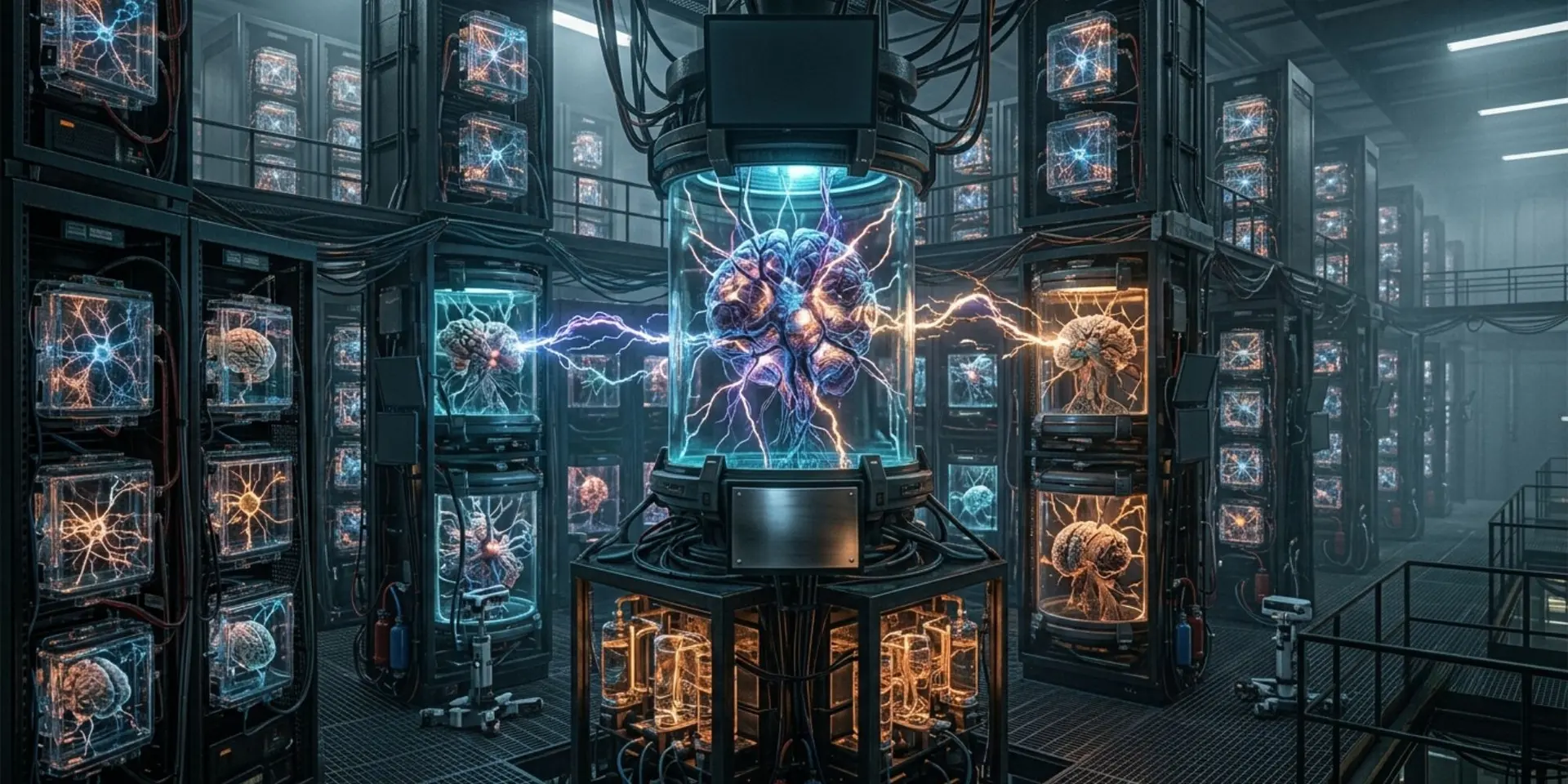

What if the next AI computer does not run entirely on silicon? Singapore is piloting a biological data centre that uses living human neurons to perform computing tasks, opening a very different route for AI infrastructure.
Early reports say the prototype uses about 16 million neurons across 20 small computers, creating a system that combines biological neural networks with conventional electronics. The project brings together NUS Medicine, data-centre developer DayOne and Melbourne-based startup Cortical Labs.
How biological computing works
A biological data centre replaces some silicon processors with what researchers call "wetware". In this system, neurons grown from stem cells form living networks that connect to computer chips through microelectrode arrays.
These arrays allow electrical signals to travel between the neurons and the computer, enabling software to interpret the activity as computation.
The approach is inspired by the way biological brains process information. Rather than relying entirely on silicon circuits, the system uses living neural networks that can adapt through their activity.
Inside Singapore's prototype
Located at the National University of Singapore's Life Sciences Institute, the prototype uses Cortical Labs' CL1 systems arranged in a 20-computer rack.
The partners describe the project as an early step towards adaptive computing, where biological neural networks can learn from experience and respond to changing conditions.
The neurons are reportedly derived from blood cells that are reprogrammed into stem cells before being developed into neural cultures. Because the cells are living, the facility also needs to maintain and feed them regularly, giving the data centre a very different operating model from conventional server facilities.
Why biology could matter for AI
One of the biggest potential advantages is energy efficiency. Supporters of biological computing argue that neurons could perform certain types of AI computation while using significantly less energy than conventional servers. That could become important as demand for AI computing pushes data-centre electricity consumption higher.
However, the project has not yet established a firm energy advantage through independent benchmarks. Comparing biological systems with GPUs on identical workloads will be important before claims about efficiency can be properly assessed.

Where the technology could fit
The system is not designed to replace large GPU clusters overnight. Instead, biological computing could eventually be useful for specialised applications where adaptability and learning from limited data are more important than maximum processing speed.
Potential areas include robotics, security and other systems that need to respond to changing environments. There are also major challenges.
Researchers will need to demonstrate reliability, reproducibility and consistent performance while finding ways to scale biological systems from millions of neurons to much larger networks.
What comes next
The next stage will be important for determining whether biological computing can move beyond an experimental concept. Researchers are expected to compare neuron-based systems with conventional silicon hardware on the same tasks while also working on automated cell maintenance, safety and ethical considerations.
Singapore is positioning the project alongside its broader push for more sustainable data-centre capacity. If biological systems can deliver useful computing with significantly lower energy consumption, neuron-powered machines could become a specialised new layer of AI infrastructure.