



Tamil Nadu’s new agriculture budget brings AI to the farm
Tamil Nadu's 2026 agriculture budget expands AI-powered farming through drones, the Uzhavan app and Bharat-VISTAAR to support farmers.

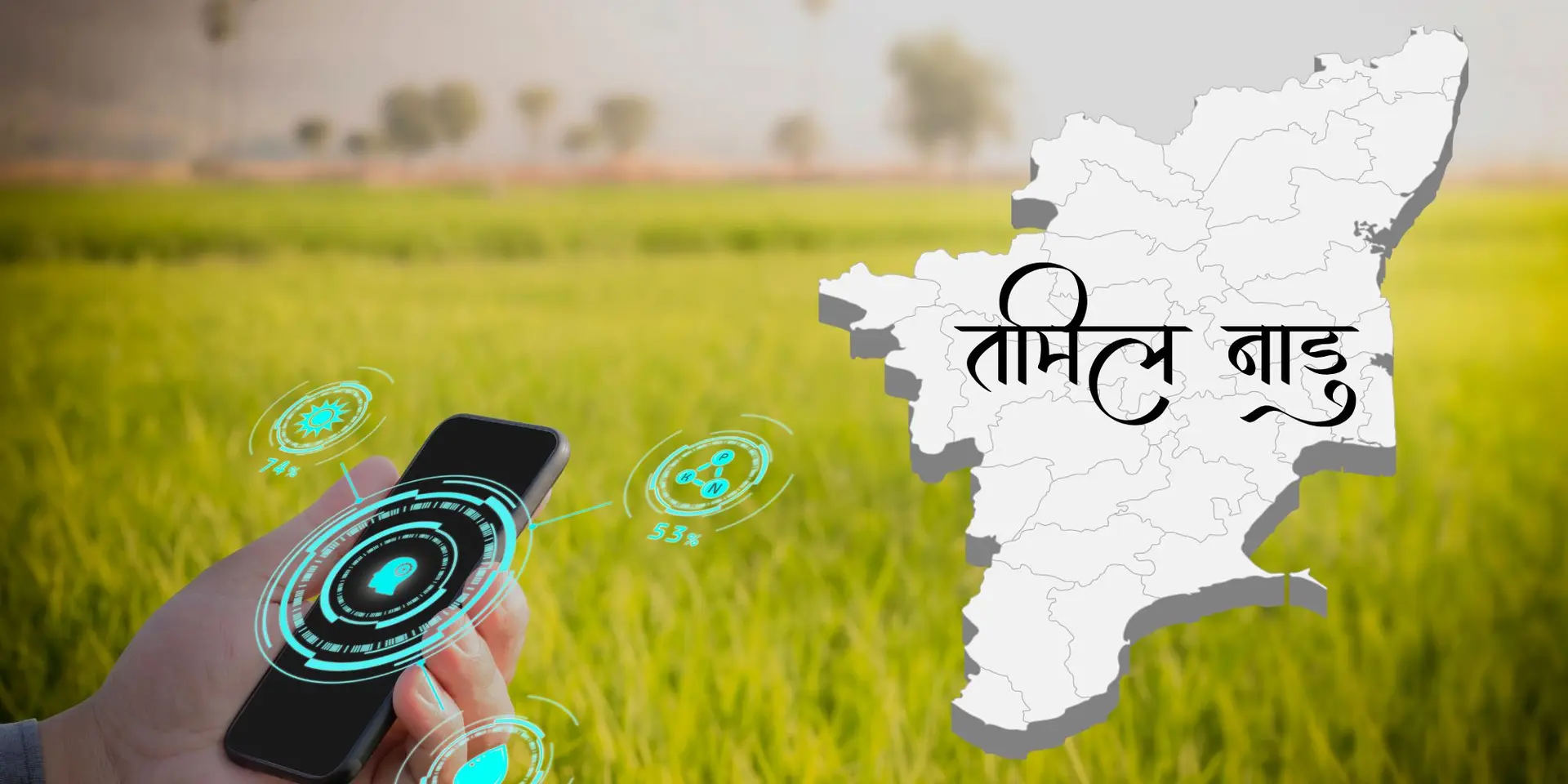

Two documents this year show AI moving from experiment to funded programme in Tamil Nadu agriculture: the Economic Survey released in February, and the Agriculture Budget presented on August 6.
What the pilots showed
The Economic Survey of Tamil Nadu 2025-26, released on February 16, reported that AI and drone-based paddy cultivation pilots covering more than 870 acres delivered yield gains of 15 to 20 percent. The pilots use drone imagery and AI models to monitor fields and flag pest infestation early.
The survey placed this inside a wider push under the Tamil Nadu AI Mission. An AI open data platform is being built with more than 100 datasets across agriculture, education and traffic management, funded at Rs 14 crore over its first two years. That figure is data infrastructure spending across three sectors, not an agriculture allocation.
February's interim Agriculture Budget, presented by then minister M. R. K. Panneerselvam, earmarked Rs 47,248 crore for the department, up from Rs 45,661 crore.
What August funded
Agriculture Minister R. Vinoth presented the Agriculture Budget for 2026-27 on August 6, introducing the Uzhavar AI scheme with Rs 2 crore. It is meant to bring AI and machine learning into extension work, delivering advisories across the crop cycle: localised weather, soil health and fertility, pest and disease outbreak alerts, and crop recommendations matched to local agro-climatic conditions.
Alongside it, Voice-First Agriculture Services will let farmers pull advisories, market information and scheme details by voice rather than typing. For farmers who do not type comfortably, that is the bigger unlock.
The budget also funds drone pilot training for 500 people, including 100 women, through TNAU's Remote Pilot Training Organisation at Rs 1.50 crore, with Rs 2.50 crore subsidising drones for 50 trained women.
What already exists
The Uzhavan app carries an AI pest identification system built earlier with the Tamil Nadu e-Governance Agency. Farmers photograph an affected crop; the system identifies the pest and returns guidance in Tamil. This is not new in either budget. It speeds up first diagnosis but should complement, not replace, agricultural officers, particularly when images are unclear or symptoms overlap across pests.
The national layer
Bharat-VISTAAR, announced in the Union Budget 2026-27 as a multilingual AI tool integrating the AgriStack portals with ICAR's package of practices, has Rs 150 crore for the year. Union Agriculture Minister Shivraj Singh Chouhan launched it from Jaipur on February 17. Phase one runs in Hindi and English by phone call and chatbot, across states including Maharashtra, Bihar and Gujarat.
No announcement confirms Tamil Nadu's platforms will integrate with it. The question is not trivial: Maharashtra's MahaVISTAAR-AI has been reported reaching around 25 lakh farmers, a scale no standalone state app has hit quickly.
The hard part
Rs 2 crore funds a first version, not statewide coverage. The binding constraints are not budget lines: connectivity in interior districts, trust in a machine recommendation over inherited practice, and someone to sit with a farmer the first three times.
Research from the state agrees. A 2025 comparative study published in Discover Agriculture found that adoption of digital climate-smart agricultural services improved where institutions and local change agents acted as intermediaries, backed by ICT infrastructure and locale-specific content.
Data quality matters too. AI recommendations are only as good as the crop, weather and pest data behind them, and farmers will need to know how theirs is used.
The 870-acre result is real evidence. Scaling it is a field problem, not a software one.