



Tata Motors uses AI to cut defects and predict what customers want
Automaker deploys computer vision, digital twins and predictive analytics to sharpen manufacturing, quality and sales planning.

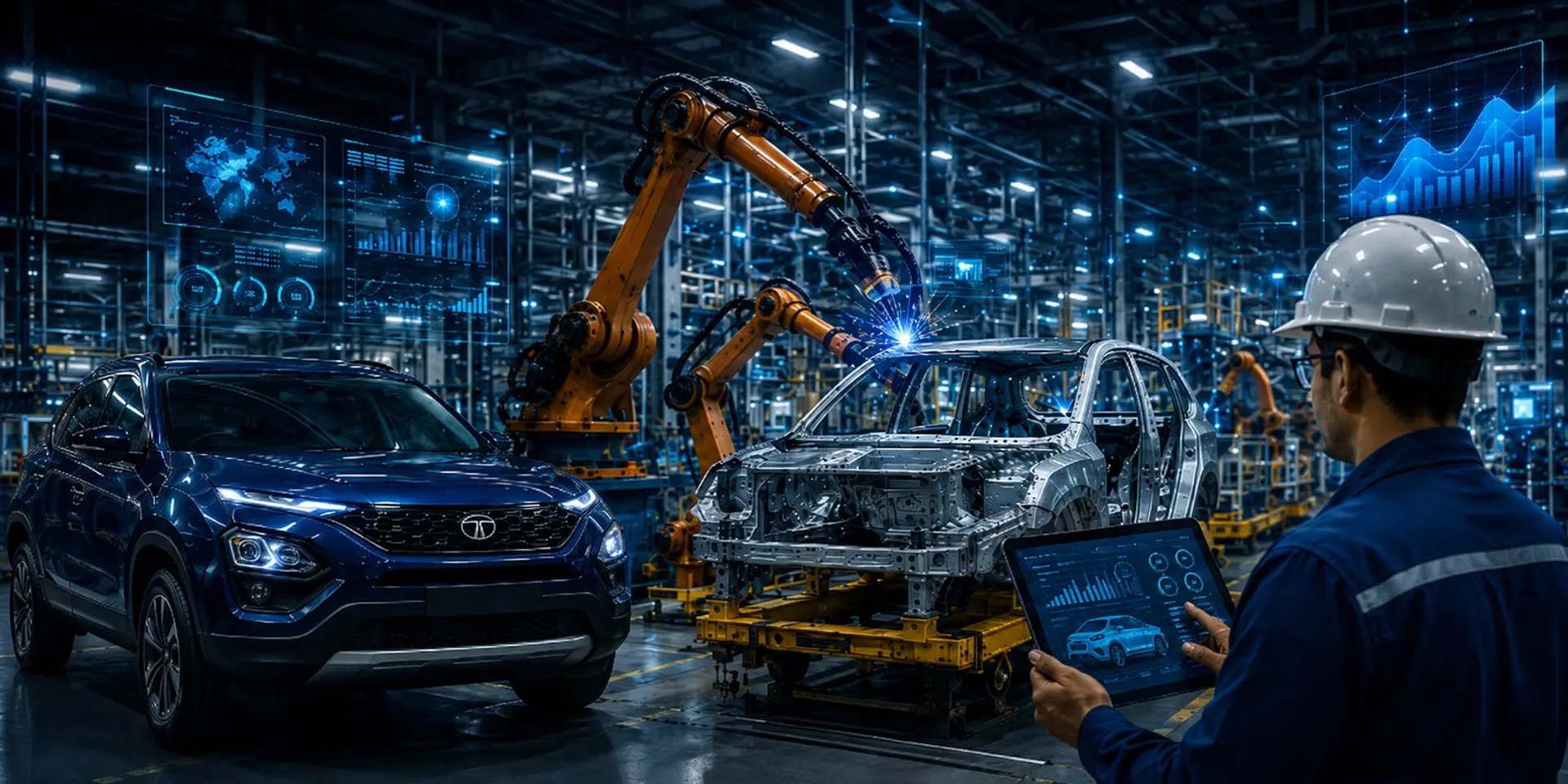

Tata Motors is putting artificial intelligence deeper into its factories, vehicles and customer systems as it looks to build cars faster, reduce defects and respond more sharply to changing market demand.
For India’s auto industry, this marks a shift from AI as a back-office tool to AI as a core part of the production line. At Tata Motors, connected machines, sensors, robotics and data analytics are helping create smarter factories where problems can be spotted before they slow down output.
On the shop floor, AI can study machine behaviour, production speed and quality patterns in real time. This allows teams to predict equipment failures, plan maintenance earlier and reduce unexpected downtime. Instead of waiting for a machine to break down, the system can flag early warning signs and help engineers act before production is hit.
Quality control is another major focus. Computer vision and AI-enabled inspection systems can scan components, welds, paint finish and assembly quality with a level of consistency that is difficult to achieve manually. Even small defects or missing parts can be identified faster, helping reduce rework, warranty costs and customer complaints.
AI is also improving traceability. By linking vehicle parts, production stages and quality checks through digital systems, Tata Motors can track how a vehicle moves through the manufacturing process. This makes it easier to identify where a defect originated and resolve it quickly.
Beyond the factory, Tata Motors is using data to better understand customers. Demand forecasting models can analyse sales trends, regional preferences, dealer feedback, inventory levels and market signals to help the company plan production more accurately. This is especially important as customer choices shift quickly between SUVs, EVs, CNG vehicles and connected mobility features.
The company’s AI push also comes at a time when vehicles themselves are becoming more software-driven. Predictive diagnostics, virtual assistants and connected vehicle data can help service teams identify issues earlier and offer more personalised support to owners.
For Tata Motors, the goal is not just automation. It is about building a more responsive automotive business where factories, supply chains, dealerships and service networks are connected through data. If executed well, AI could help the company reduce waste, improve product reliability and bring vehicles to customers faster.
As competition intensifies in electric vehicles and connected mobility, Tata Motors’ AI-led transformation could become a key advantage. The carmaker is no longer only manufacturing vehicles; it is building a data-driven mobility ecosystem around them.