



A bold new way to communicate - no Wi-Fi, no mobile data, no problem
Jack Dorsey's Bit Chat lets you send encrypted messages without internet, mobile data, or towers — using only Bluetooth. Discover how this mesh-powered chatbot could change communication as we know it, read the full story.

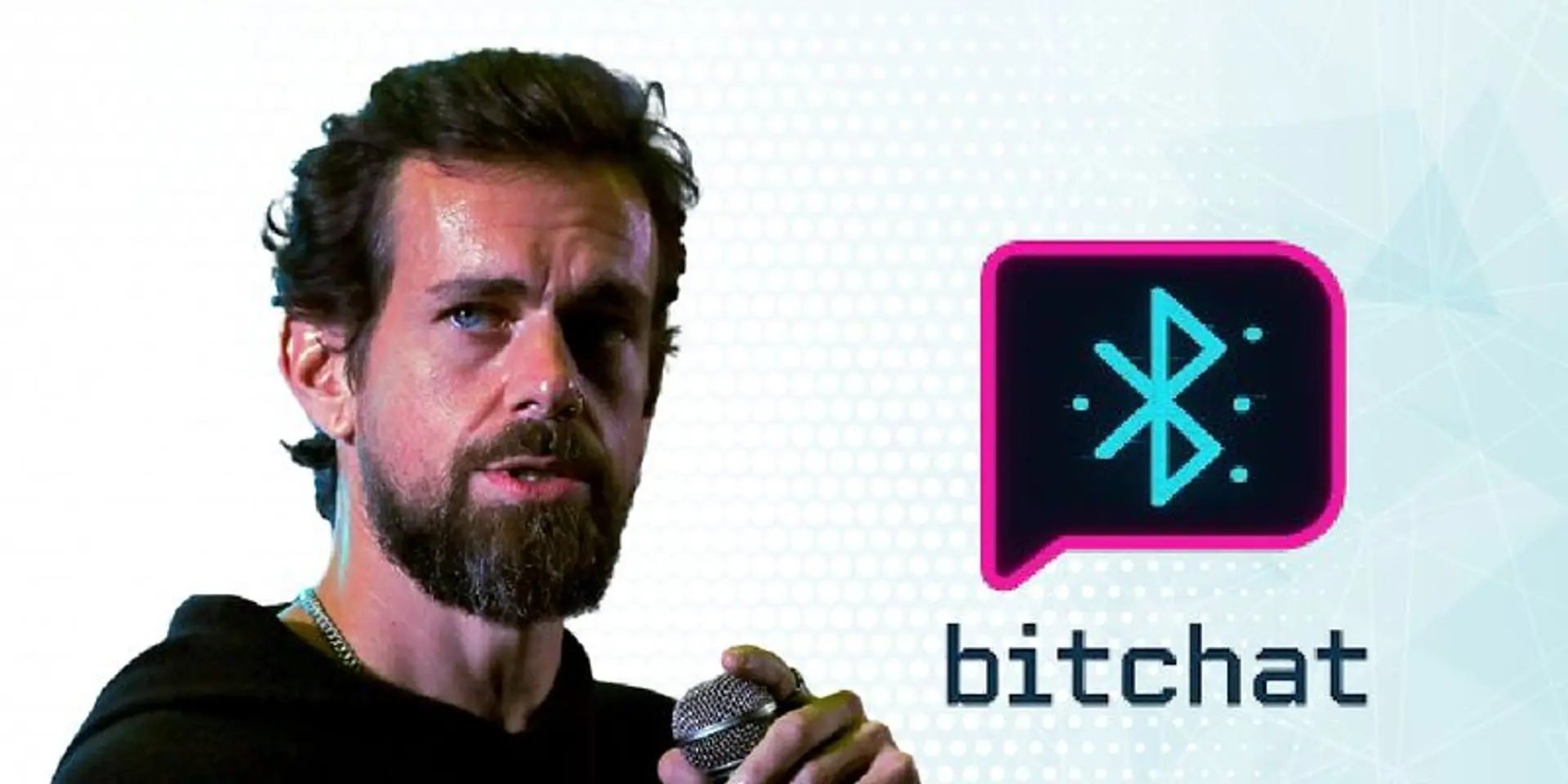

Imagine a world where sending a message doesn't require an internet connection, mobile data, or even a SIM card. Now stop imagining — because that world is here. Jack Dorsey, the co-founder of Twitter and digital payments company Block, is back with a radically simple, yet powerful idea: what if your phone could communicate directly with other phones, bypassing all traditional infrastructure?
Enter Bit Chat, a new messaging app that lets you send encrypted messages using Bluetooth Low Energy (BLE). No Wi-Fi. No cell towers. Just devices talking to each other, directly and quietly. In a world increasingly dependent on centralised communication networks, Bit Chat is a breath of fresh, offline air.
How Bit Chat works: Your phone becomes the network
Bit Chat’s brilliance lies in how it repurposes existing smartphone tech — specifically, BLE — to form a self-sustaining communication network.
Here’s a breakdown of how it works:
- Message splitting and compression: When you send a message through Bit Chat, it’s first broken into multiple small packets. These chunks are then compressed using LZ4, a high-speed, lossless data compression algorithm designed to work with low bandwidth.
- Bluetooth broadcasting: Each packet is broadcast as a Bluetooth advertisement — a tiny, 31-byte signal that can be picked up by any device in range. BLE advertisements are typically used by devices like smartwatches or trackers to announce their presence. Bit Chat cleverly uses them to carry actual data.
- Direct delivery or relay: If the recipient is within Bluetooth range (typically up to 30 metres), they can receive and reassemble the packets instantly. If they’re not, the system relies on mesh networking — nearby Bit Chat users automatically act as relays, picking up the packets and re-broadcasting them until they reach the intended recipient.
- Temporary and encrypted: These message chunks live only in the device’s RAM, not on disk, and come with a Time-to-Live (TTL) limit. Once that timer runs out, the chunk vanishes — ensuring privacy and preventing network clutter. Plus, messages are end-to-end encrypted, so even if others relay your message, they can’t read it.
In short, your phone becomes both a messenger and a node, helping messages hop device to device like ripples in a pond.
The limitations: Why Bit Chat isn’t replacing WhatsApp just yet
While Bit Chat is a remarkable innovation, it’s important to understand its limitations:
- Range and network density: BLE has a limited range. Without enough users nearby, messages can’t travel far. Bit Chat thrives in dense environments like festivals, college campuses, or urban areas — not in remote locations with few users.
- Speed and reliability: Since messages rely on devices relaying chunks in real-time, delays can happen. If someone turns off Bluetooth or closes the app, message propagation may be disrupted.
- No internet features: There are no read receipts, cloud backups, or real-time syncing. This is by design — Bit Chat is meant to be infrastructure-free, but that also means it lacks the conveniences of traditional messaging apps.
Still, for what it’s built to do, Bit Chat performs incredibly well.
The bigger picture: Privacy, decentralisation, and resilience
What makes Bit Chat exciting isn’t just the novelty — it’s the philosophy behind it. As governments and corporations tighten control over digital communications, Bit Chat offers an alternative that’s:
- Censorship-resistant: With no central server to block or monitor, it’s nearly impossible to censor Bit Chat once it’s widely adopted.
- Disaster-resilient: In emergencies like natural disasters, earthquakes, or wars, internet infrastructure is often the first to go down. Bit Chat could enable basic communication even in those scenarios.
- Decentralised by design: There’s no cloud, no data collection, and no middleman. Communication is peer-to-peer, encrypted, and fleeting — a perfect recipe for privacy.
The implications are massive. In 2024, over 70 documented internet shutdowns took place worldwide, affecting millions. In these moments, tools like Bit Chat can empower communities to stay connected, even without access to traditional networks.
Jack Dorsey’s quiet comeback — and a new kind of tech ethos
Jack Dorsey’s post-Twitter ventures have leaned into decentralisation — from Bitcoin payments to alternative social media. Bit Chat fits right into that ethos. It’s not trying to replace existing platforms but rather reimagine how we connect when everything else fails.
It’s a “quiet tech” solution: minimal, efficient, privacy-first, and elegant in its simplicity. And in a world full of noisy apps and data-hungry platforms, that’s a breath of fresh air.
Bit Chat isn’t just a messaging app. It’s a statement — about the kind of tech future we want to build.