



How do companies monetize loneliness?
Loneliness is no longer just a feeling—it’s a business model. Read on to uncover how companies are turning isolation into income.

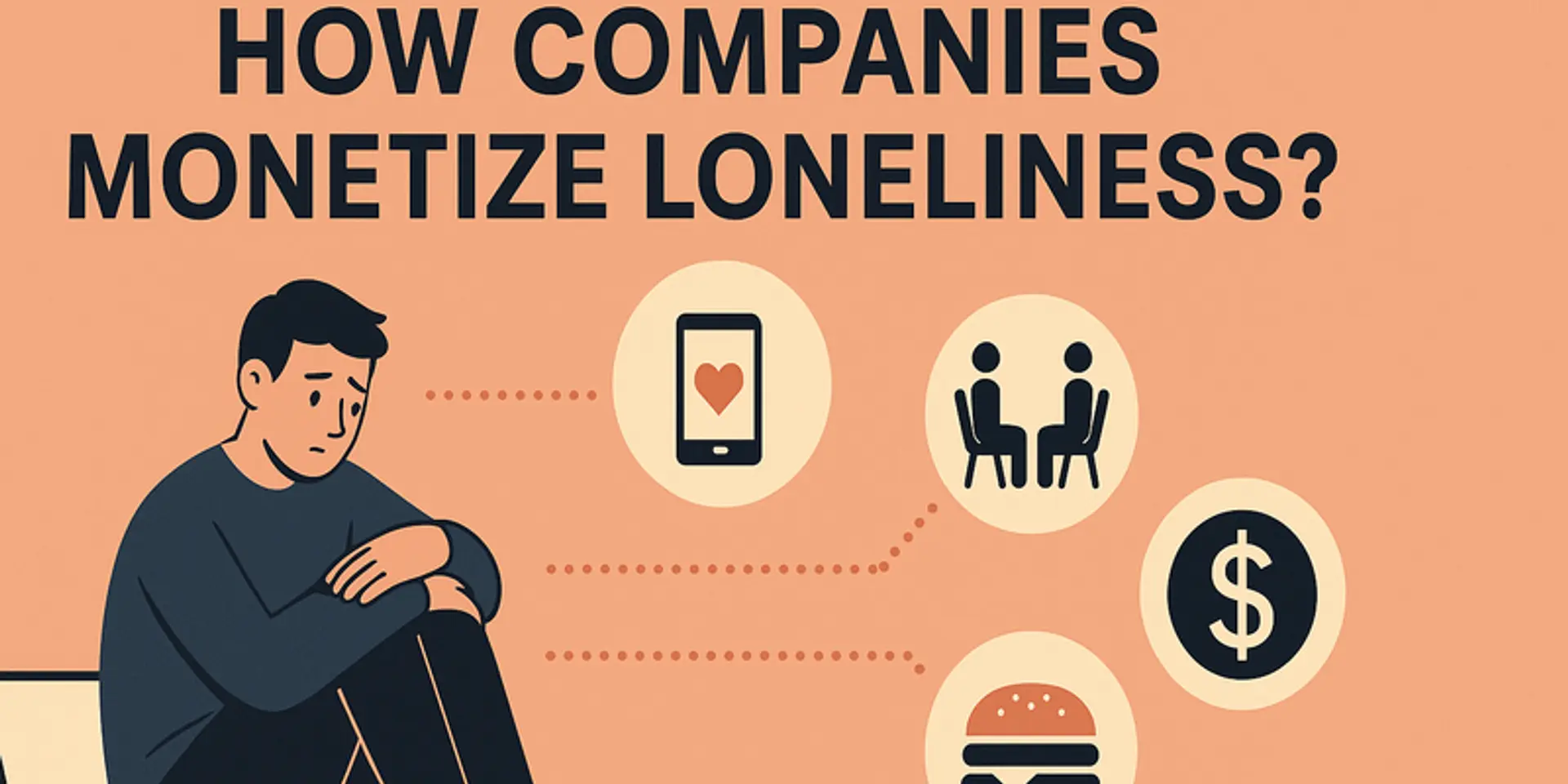

Loneliness isn't just a side effect of modern life. It's a business model. In 2025, over 1 in 4 adults globally report feeling chronically lonely, with Gen Z leading the stats—73% say they feel isolated at least sometimes.
In the U.S. alone, 57% of people report frequent loneliness, up sharply from just a few years ago.
What was once considered a personal issue has now become a public health concern. In 2023, the World Health Organization officially declared loneliness a global health threat. But while health systems struggle to tackle its consequences, the corporate world has done something different: it has turned loneliness into a goldmine.
From AI chatbots to subscription platforms, companies are now designing products to capitalise on isolation—and they’re making billions while doing it.
Why lonely people make the best customers?
Lonely people are high-value customers. They spend more time online, subscribe to more services, and are more likely to pay for artificial companionship. Just look at the success of dating apps, which generate the majority of their revenue from a small base of emotionally invested users. Tinder, Bumble, Hinge—they’re not selling love. They’re selling the hope of connection, one swipe at a time.
And then there’s the rise of AI companions. Apps like Replika and devices like the Friend pendant are designed to mimic human relationships. This market alone is expected to hit $140 billion by 2030. These platforms don’t just provide virtual connection—they monetise every message, every moment, often through token purchases or subscription upgrades.
Even pet care is part of the loneliness economy. Whether it’s a real dog or a digital cat on your screen, companionship sells. The global pet care industry is expected to surpass $427 billion by 2032, driven partly by people seeking emotional support.
From suburbs to screens: how tech engineered isolation
Loneliness didn’t start with the smartphone. It began with the car. The boom in the automobile industry pulled people out of walkable neighbourhoods and into sprawling suburbs. Public spaces faded. Human interactions shrank.
Then came television, which turned leisure time into screen time. In the span of a few decades, Americans gained nearly 300 extra hours of free time a year—and they spent it indoors, watching TV. Corporate America learned a vital lesson: isolated people pay attention, and attention can be sold.
Enter the internet. Today, the digital world is not just part of our lives—it is our lives. From social media to streaming services, every second you spend online is monetised. Google runs ads on every search. Instagram sells your data. Netflix charges monthly fees to keep you inside and entertained. As the Guardian once noted, Netflix’s biggest competitor isn’t another streaming service. It’s sleep.
Brands selling artificial connections
In a world where real relationships are hard to find, brands have stepped in to fill the void—on their terms.
AI friends now offer 24/7 companionship. Services that rent out “friends” or dinner companions are growing in popularity, especially in countries like Japan and the U.S. Co-living and co-working spaces promise community—at a premium price.
But what they’re really selling is the simulation of connection. These aren’t communities; they’re carefully engineered consumption ecosystems, designed to monetise your need for belonging.
Even brand language is shifting. Companies now use words like “community” and “tribe” in their marketing, knowing full well that people without real support systems will turn to them for connection.
The hidden cost of monetising loneliness
The effects of this corporate-driven isolation go beyond economics. Loneliness has been linked to increased rates of depression, anxiety, heart disease, and even early death. And the workplace impact is staggering—loneliness-related absenteeism and disengagement cost U.S. employers nearly $460 billion annually.
This is the vicious cycle: loneliness drives people to consume more. That consumption keeps them isolated. And the companies profiting from it have no incentive to break the cycle.
Is there a way forward?
Yes—but it starts with awareness. Not all monetisation is bad. But ethical brands can choose to empower, not exploit. Some ways forward include:
- Encouraging offline engagement (IRL events, meetups)
- Designing for community, not just consumption
- Supporting public infrastructure like libraries and parks
- Promoting digital balance, not screen addiction
In the attention economy—and the emerging simulation economy—the brands that champion real connection will stand out.
Edited by Rahul Bansal