



upGrad Rekrut
View Brand PublisherIndia’s AI workforce revolution begins with talent: upGrad Rekrut is rewriting the script
India’s AI workforce revolution begins with talent: upGrad Rekrut is rewriting the script


“AI is going to take over everything.” What once sounded like sci-fi paranoia is now a recurring headline, a workplace debate, and a strategic dilemma for talent leaders across the globe. But at ‘The India Strategy: Talent, AI, and the Next Global Workforce,’ an exclusive industry conclave hosted by upGrad Rekrut, the narrative shifted from fear to action.
With India rapidly emerging as a global hub for GCCs and digital innovation, the rules of talent strategy are being rewritten. The conclave was curated as a high-impact, invite-only platform and was designed to spark dialogue among senior industry voices on how AI is reshaping workforce needs and how organizations must evolve their hiring and skilling strategies to keep pace.
The upGrad Rekrut advantage
Since joining forces, upGrad and Rekrut India - now operating as upGrad Rekrut, have been working to address a critical gap in the hiring ecosystem: the need to align deep skilling with strategic recruitment in a fast-evolving world of work. With a growing presence among GCCs as an emerging talent partner, upGrad Rekrut integrates domain-led skilling pathways with hiring intelligence to support enterprises in building future-ready teams at scale. From helping tech-driven GCCs ramp up niche talent to supporting global firms in shaping inclusive leadership pipelines, the firm operates at the intersection of technology, talent, and transformation.
The Elevate event served to showcase this unique positioning - bridging AI-driven learning with hiring solutions that directly serve business transformation. Held at The Oberoi, Bengaluru, the event brought together 80+ senior leaders from India’s leading GCCs, global firms, and talent platforms to address a pressing question: In an AI-driven economy, what does future-ready talent actually look like?
“This forum is about more than AI adoption,” said Ajay Shah, President of upGrad Rekrut, (Co-founder erstwhile Rekrut India) in his opening address. “It’s about building organizations that are agile, responsible, and human-centered.”
The tone was immediately grounded in real-world examples. In the first spotlight session, Sharada Nandakumar, CEO of Voya India, shared how her firm scaled from around 900 employees to over 3,000 in five years, despite launching during the pandemic.
“Resilience isn’t a strategy; it’s the outcome of people believing in a shared vision,” she said.
Nandakumar highlighted how Voya evolved from a traditional back-office setup into an innovation partner, earning NASSCOM recognition for its impact on talent development.
AI as an amplifier, not a threat
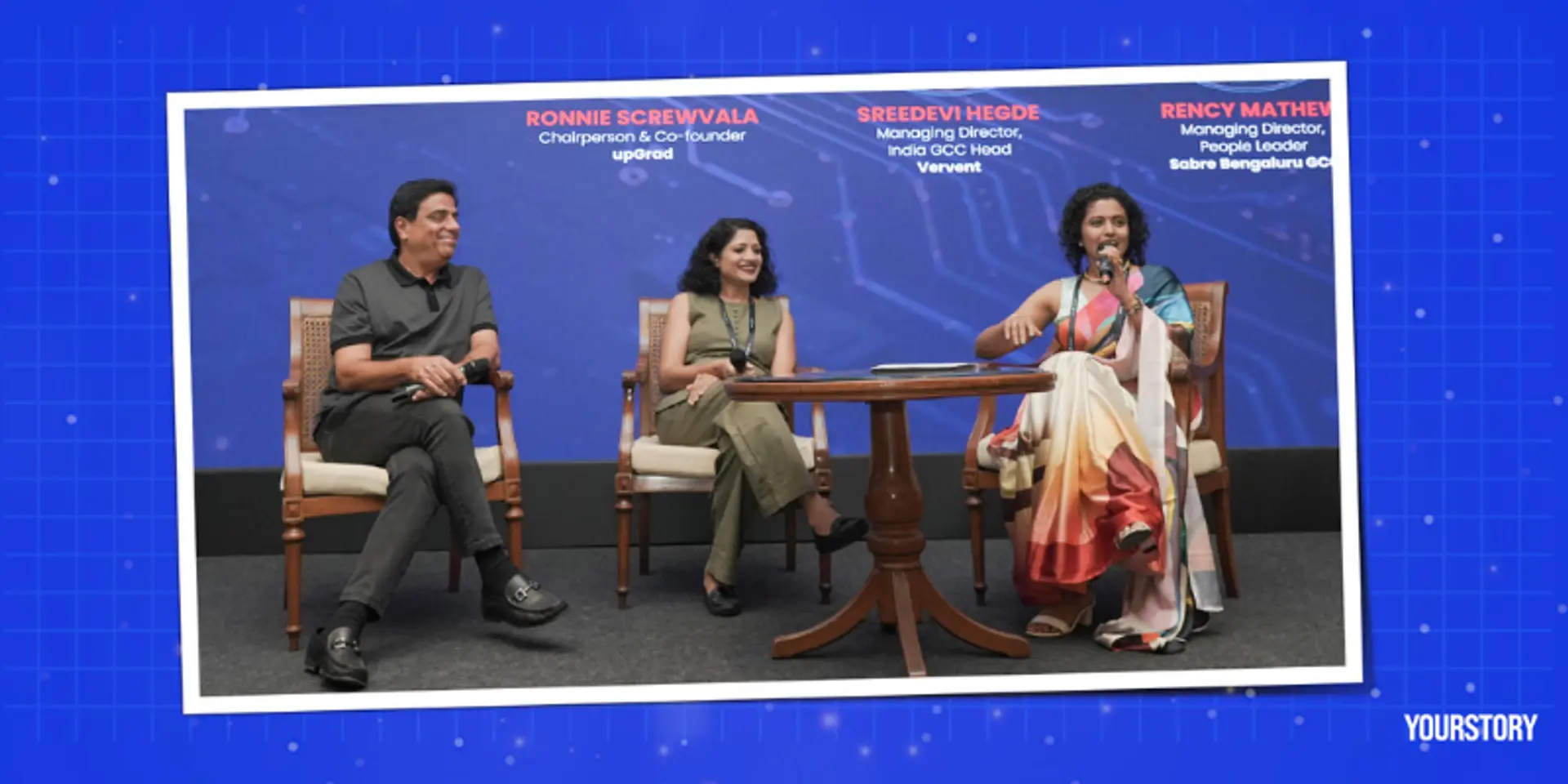
In a compelling fireside chat, Ronnie Screwvala, Co-founder & Chairperson of upGrad, challenged the fear narrative surrounding AI. “Disruption is not new. It’s how we choose to respond that defines us,” he said. “I’m actually excited about the possibilities AI offers. It’s a moment of reinvention.”
The conversation dove deep into the human side of technology. Rency Mathew, Managing Director at Sabre, reframed the tech as an enabler. “When I think of AI, I think of it as the amplifier. It takes away the repetitive, so we can focus on strategic work,” she said. “Now, we hire not just for skills but for how quickly someone can adapt.”
Moderating the session, Sreedevi Hegde, Managing Director of Vervent, pointed out the cultural tension AI introduces. “There’s a dual challenge: those afraid of AI, and those who feel it compromises their originality,” she said, framing a broader concern about identity and authenticity in an algorithm-driven workplace. At the end of the session, she captured the spirit of the conversation in three words: “Embrace, enjoy, and grow.”
India at the talent-AI crossroads
The evening’s main panel, “India at the Crossroads of Talent and AI,” tackled both opportunity and urgency.
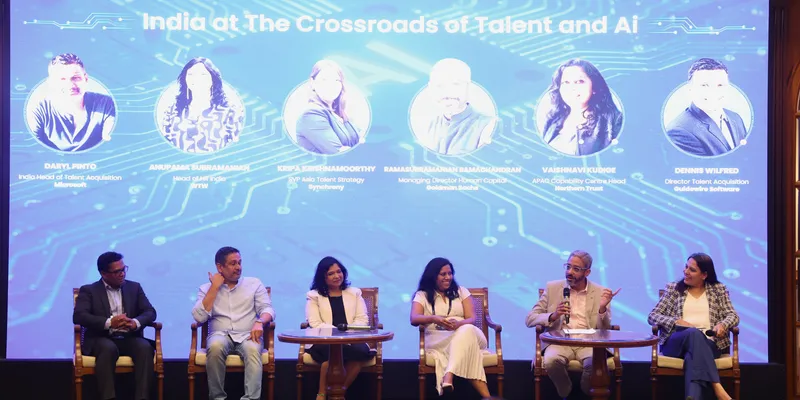
Dennis Wilfred, Director Talent acquisition, Guidewire Software, noted, “AI is enabling. It lets recruiters spend more time engaging with candidates rather than just sourcing.” Yet, he acknowledged the challenge of AI-polished resumes, stressing the importance of deeper candidate assessment.
Anupama Subramanian, Head of HR in India at WTW, emphasized a culture of experimentation: “We say learn, play, compete. It’s not about convincing anymore; it’s about ensuring a fail-safe environment where learning from failure is encouraged.”
Kripa Krishnamoorthy, SVP at Synchrony, underscored the dual dimensions of pace and face. “We overestimate short-term change and underestimate long-term impact,” she said. She highlighted Synchrony’s internal AI tool, Synchrony GPT, and stressed job redesign as a critical path to meaningful skilling.
Daryl Pinto, India Head of Talent Acquisition at Microsoft, centered the conversation back on people: “AI may change the recruitment landscape, but don’t forget the human element. We still hire on gut and intuition.”
Another leader Vaishnavi Kudige who is the APAC Capability Centre Head at a global brand, reflected on evolving global expectations: “India is no longer just about cost arbitrage. We’re expected to lead. The question is: are we ready to walk the talk?”
Together, the panelists underscored a shared imperative: AI isn’t just redefining processes, it’s reshaping how India must define and deliver talent leadership on the global stage.
In another leadership spotlight session, Pawan Sachdeva, Senior Managing Director and Technology Head for India at Carelon Global Solutions, brought another transformative success story. With more than 25 years in tech and a track record of scaling capability centers from hundreds to tens of thousands, Sachdeva spoke about building Carelon’s India footprint from scratch. “We started with a business case for 1,800 employees,” he said. “Today, we’re at 18,000.”
He described the journey from the outpost to the transformation hub. “We evolved from being just a vendor location to a portfolio hub that drives strategy,” he said. Offices in Bengaluru, Hyderabad, and Gurgaon were scaled in response to fast-paced growth. His leadership model focused on three pillars: integrated structures, empowered local leadership, and deep domain talent, especially in data and AI.
Closing the evening, Husain Tinwala, President of upGrad Rekrut (Co-founder, erstwhile Rekrut India), reinforced the importance of human judgment in an AI-heavy hiring future. “We’re not just observing this shift, we’re driving it,” he said.
He shared a striking conversation with a peer who said, “I don’t hire based on resumes. I hire based on adaptability and willingness to learn.” Tinwala added, “AI demands responsibility. We’re its advocates, not just its users.”
As attendees moved into networking mode, one takeaway was clear: AI is not replacing talent; its reshaping what talent means. And in that shift, India may well find its next strategic advantage. These conversations reflect a shift in India’s hiring playbook - where skills speak louder than CVs. As the AI era reshapes talent priorities, Elevate is designed to be the launchpad where bold ideas turn into actionable strategies, one region at a time.
After a successful Bengaluru edition, the workforce solutions leader is now gearing up for the Hyderabad chapter of Elevate. The exclusive, invite-only event will expand its focus to engage regional GCCs and mid-to-large IT enterprises, continuing the conversation around future-ready talent, AI-driven workforce strategies, and outcome-linked hiring.