



How China’s Xiaomi Beat Apple, and Is Now Taking on Tesla
China’s Xiaomi has done what Apple couldn’t built a wildly popular EV, and is now gunning for Tesla with record-breaking sales and a devoted fanbase. Dive into how this smartphone giant became an EV powerhouse — read the full story!


In the U.S., when someone mentions a seamless ecosystem, devoted fanbase, and constant innovation, Apple comes to mind. But in China, Xiaomi plays that role with a twist. From toothbrushes to smart mattresses, the brand’s mantra is clear: “If it’s worth tech-ing, Xiaomi’s selling it.” Their relentless marketing to Gen-Z and younger consumers has built them a cult-like following think Apple’s “One More Thing” energy, but with “One More Gadget” momentum.
From Smartphones to Smart… Everything
Under the charismatic leadership of Lei Jun often seen as China’s answer to Steve Jobs, Xiaomi transformed from a budget-friendly smartphone maker into a lifestyle monolith. Their product matrix spans from phones to scooters, cat feeders, mattresses, and now, electric cars. The goal? To plug Xiaomi into every facet of daily life, creating a tech habitat that’s hard to exit.
Why EVs, Why Now?
In 2021, geopolitical storms brewed: U.S. sanctions threatened Xiaomi’s smartphone lifeline, sparking a panic in boardrooms: “What if iPhones can’t sell?” As a response, Xiaomi pivoted, shooting for the roads. Many quip that smartphones are tiny supercomputers on wheels but building a car involves tens of thousands of parts and an orchestral supply chain. To pull it off, Xiaomi brought in veteran talent from Geely, BMW, SAIC, and Wuling, and funneled over $1.6 billion into 100+ supply chain companies.
Swift as a SU7
By late 2023, the Xiaomi SU7 debuted. It wasn't just any EV within 230 days, Xiaomi rolled out 100,000 units from its Beijing factory. Lei Jun even took a nap on the factory floor to celebrate, in a whimsical echo of Elon Musk’s Tesla-floor naps.
By the end of 2024, orders locked in had soared past 248,000 units, with deliveries steadily climbing above 180,000 early in 2025.
A YU7-Sized Answer to Tesla
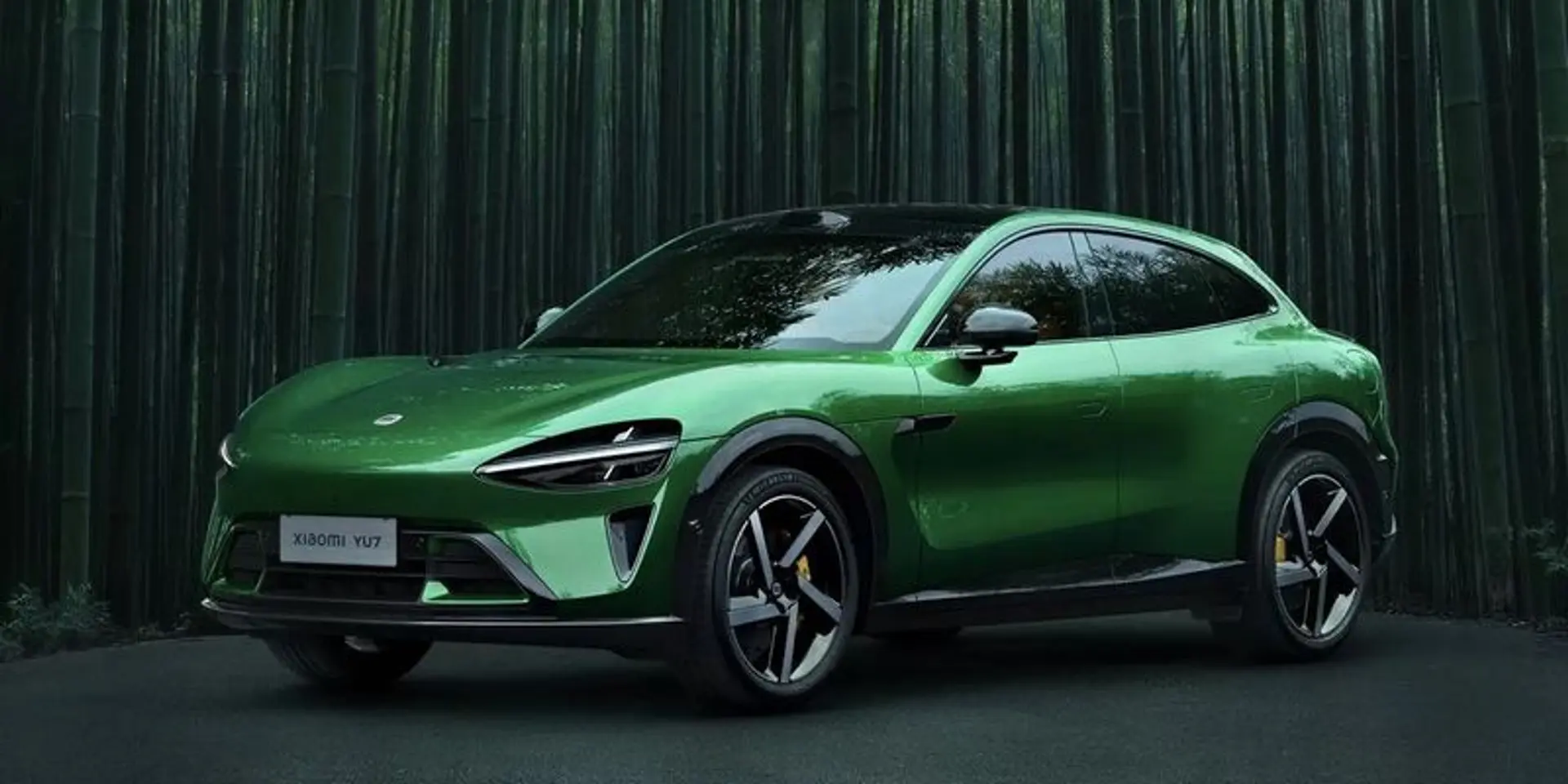
In mid-2025, Xiaomi dropped the YU7 SUV an electric mid-range challenger clearly aimed at Tesla’s Model Y.
Priced attractively at around $35,000, the YU7 offers an 800-volt architecture, up to 518 miles of CLTC range, and Xiaomi’s signature HyperVision display and HyperOS integration across devices. In just an hour, it stacked up a staggering 289,000 pre-orders outpacing even the SU7’s early figures.
The Numbers That Speak
Xiaomi’s EV ambitions are fueling its balance sheet:
- Q2 2025 Results: Net profit more than doubled to 11.9 billion yuan (~$1.66 billion), with revenue surging 30% year-over-year to 116 billion yuan (nearly $16.2 billion). EV segment revenue tripled to 20.6 billion yuan with improved margins of 26.4%, thanks to the YU7 demand.
- Stock Surge: Investor faith soared EV-related shares jumped ~500%, dwarfing BYD’s 75% rise.
- July 2025 Delivery Boom: Xiaomi delivered over 30,000 EVs (SU7 + YU7), despite rivals like Li Auto and Nio slowing down.
Riding China’s EV Tsunami
China is the EV capital of the world. In 2024, at least 47–48% of new passenger car sales were electric — nearly half of all auto purchases. The country accounted for two-thirds of global EV sales, with around 10.9–12.9 million NEV units sold.
However, Xiaomi is navigating fierce seas:
- 2024 EV Market Share Breakdown in China: BYD dominates with ~34%, Tesla trails at around 6%, while Xiaomi is still a baby among the giants.
- Still, in price wars and R&D agility, nimble players like Xiaomi, Leapmotor, and Xpeng are outperforming legacy behemoths.
Global Roads Are Rough
Domestically, Xiaomi's EV play is red-hot. But internationally? Trade barriers are real. The U.S. imposes a 100% tariff on Chinese EVs, making American expansion virtually locked out.
Europe is erecting its own shields, even as Xiaomi prepares entry into EU markets by 2027 via Mi Home stores and overseas deliveries.
So, Is Xiaomi on Easy Street… or a Bumpy Ride Ahead?
Easy street? Not quite. But strategic hustle? Absolutely.
Strengths:
- A decidedly humanized brand powered by Lei Jun's charisma.
- Blazing speed 100,000 SU7s in 230 days, 289,000 YU7 pre-orders in an hour.
- Integrated ecosystem cars are not just vehicles; they’re mobile Mi Homes.
- Financial momentum – skyrocketing profits and margins.
Headwinds:
- EV market saturated with ~140 Chinese automakers.
- Dominated by legacy giants like BYD (~34%) and Tesla (~5–6%).
- Global expansion limited by geopolitical friction — tariffs, skepticism, regulations.
Final Takeaway — The Xiaomi Glow-Up
In the U.S., Apple dominates high-end electronics. In China, Xiaomi is rewriting that playbook affordable, connected, aspirational. They didn’t aim to build a flying car like Apple’s never-realized "Project Titan." Instead, they built a grounded, well-packaged, tech-integrated EV that sells like hotcakes.
Xiaomi is not on easy street — it’s on express lane, cracking the EV code with fanfare, efficiency, and ecosystem integration. The road to global domination is bumpy, but if anyone's got the route mapped, it's the tech giant that dares to bridge smartphones... and smart driveways.