



A Rs 50 a day habit: Mykare brings healthcare savings app to solve affordability and accessibility
Kerala startup Mykare is turning healthcare planning into a daily financial habit for India’s underserved 400 million missing middle class.


In India, health emergencies often unfold not only as medical crises, but as financial catastrophes. For the country’s 40 crore self-employed and daily-wage earners—the informal workforce that forms the economic backbone of India—illness frequently means debt, asset sales, or delayed treatment.
Kerala startup Mykare aims to redefine this journey. Founded in 2022, the startup has developed what it calls India’s first daily healthcare saving app for the underserved “missing middle”—a segment that falls between government welfare schemes and private health coverage. It is too rich for subsidies and too poor for private insurance. Even those who have coverage find it inadequate in the face of rising inflation.
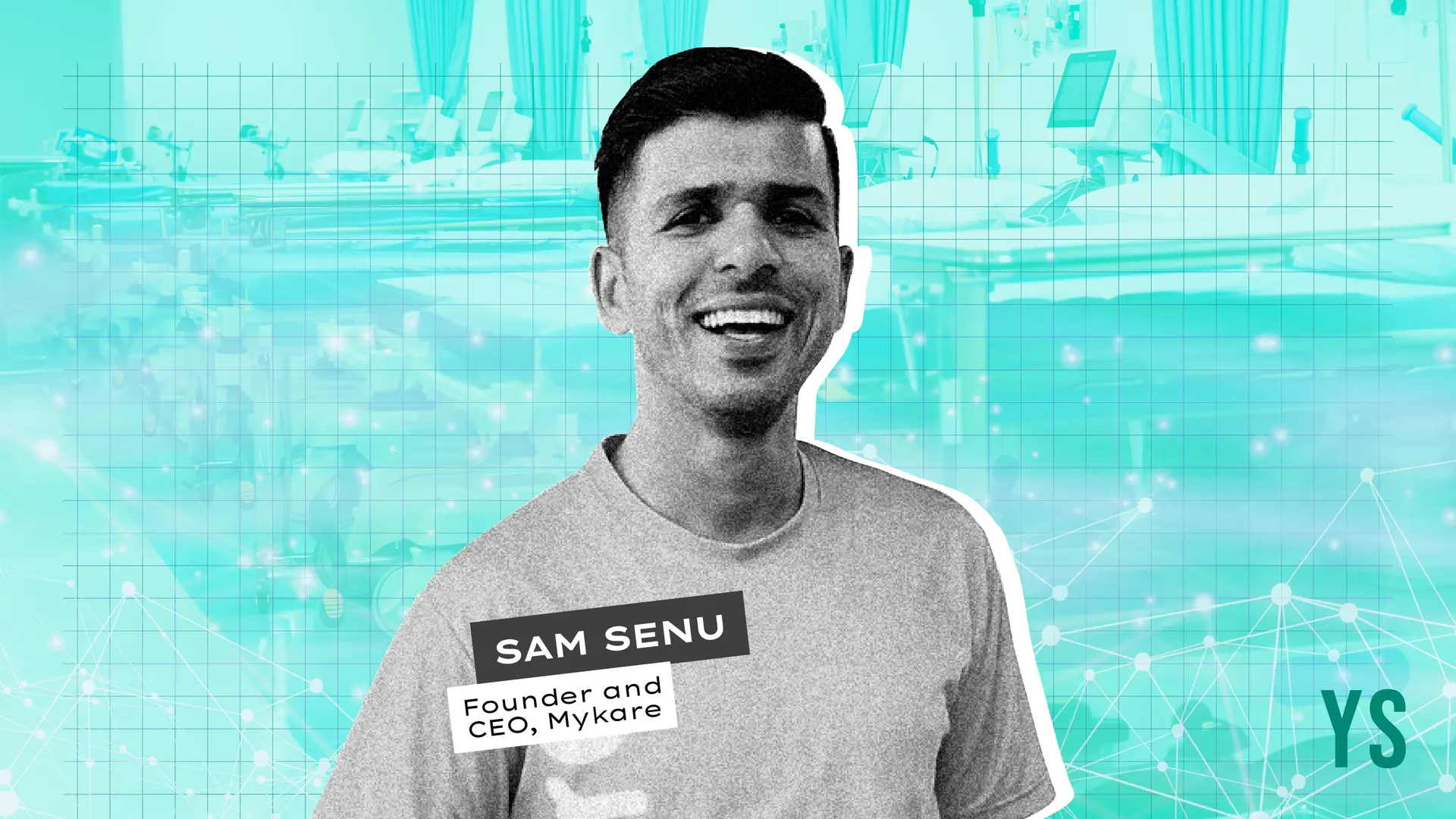
“When all doors are closed, the middle class pays out of pocket or postpones care,” says Senu Sam, Co-founder of Mykare, in an interaction with YourStory.
From surgeries to savings
Mykare initially began with elective surgeries, offering end-to-end seamless care. The vertical became EBITDA-positive, but the model didn’t solve the deeper mass-market problem.
“The customer pain point during surgery was relatively smaller. Most came once and left, and if they went directly to a hospital, we lost revenue,” says Senu.
He explains, “We realised the real problem starts earlier—they aren’t prepared financially, they don’t know which doctor or facility to go to, and they need someone to guide them through the process. Combined with a lack of money and trust, this leads to delayed treatment.”
One insight stood out: users disliked paying for medical insurance, calling it a “waste of money.” But nearly all liked the idea of saving.
“That’s when we thought: why can’t saving be the starting point? Once they enter the Mykare ecosystem through savings, we can build trust, offer coverage, and even interest-free loans,” Senu says.
The savings habit
Through its app, Mykare encourages users to set aside Rs 50–Rs 100 daily for future medical expenses. Users can withdraw their savings anytime, which are placed in curated instruments—mutual funds, digital gold, RBI-regulated recurring deposits, and ONDC-linked tools—to beat inflation. Mykare has secured the required licenses to distribute these products.
“I experienced the importance of saving for healthcare when my father was admitted in an emergency,” Senu recalls, adding, “If you don’t have money ready, you’re left asking friends, family, or selling assets. I’ve seen people waiting outside hospitals, selling gold, vehicles, even children’s education fees, just to get treatment.”
This experience shaped Mykare’s thesis: India’s middle class doesn’t need convenience as much as preparation.
“People think the problem is waiting time. But India’s middle class is willing to wait. What they truly want is not speed, but lower costs, the right guidance, and dignity. Preparing them financially is the mission we are on.”
Building with purpose, not pace
According to MyKare's research, fewer than 3% of India’s self-employed have health insurance, and 71% cite medical costs as their top financial worry. Mykare’s model turns saving into a healthcare habit, where users gain unlimited general physician consultations, access to care managers, and assistance with paperwork and counselling.
“An auto-rickshaw driver earns Rs 500–Rs 700 a day. I’m asking him to save Rs 50 for healthcare. Every year, 55 million people in India fall into poverty because of healthcare expenses. By preparing and giving them access to coverage and interest-free loans, we protect families from financial ruin,” Senu says.
Mykare’s strategy has been deliberately cautious. Starting with Kochi, Bengaluru, Hyderabad, and Chennai, the startup prioritised depth over expansion. “Every state is like a new country,” Senu says, pointing to linguistic, operational, and cost-related complexities. Running a 100-member team from Kerala also keeps costs lower than in Bengaluru.
Within three years, Mykare became EBITDA-positive, facilitating over 10,000 surgeries, 20,000 OPDs, and serving over 1 lakh users. It now has an ARR of $3 million and 80% annual revenue growth. “We didn’t raise too much, and we didn’t burn too much. We focused more on profitability than growth,” Senu says.

From app to infrastructure
Having been in pre-launch for some time, the Mykare Savings app rolled out nationally on Monday, August 25, 2025. The company expects 4 lakh users by year-end and one million by 2026.
Senu says the app is only the first phase. “Eventually, we’ll build referral clinics and asset-light hospitals with SME partners, where long-term savers get affordable treatment and a seamless experience,” he says, adding the startup has already partnered with 1,000+ SME hospitals.
Mykare aims to build India’s first full-stack healthcare platform, which combines savings, interest-free loans, and affordable medical coverage with access to doctors and care managers.
“Recently, a food delivery partner connected with us about piles. He noticed blood but wouldn’t go to a doctor. He was afraid of cost and process. Registration is Rs 300, doctor fee Rs 500, and a scan can cost Rs 10,000. For a gig worker earning Rs 600 a day, that’s unimaginable. So, they postpone treatment, and it turns into a bigger emergency. It’s a brewing health crisis—the epidemic of delayed treatment,” he explains.
By tying unlimited consultations to daily savings, Mykare hopes to shift behaviour and catch problems earlier. Over time, Senu claims, users who save consistently unlock more benefits within the Mykare ecosystem.
“They won’t install a healthcare app otherwise. But once they save for healthcare, their lifetime with us could be 10 to 20 years. Over that time, we’ll build the healthcare system around them,” he explains.
Mykare’s model reframes how Indians interact with healthcare, creating a new category at the intersection of fintech and health behaviour.
“Every saving should have a purpose. For our users, that purpose is healthcare; Rs 100 a day can grow into Rs 50–80 lakh in 30 years, when they need it most. That’s the bridge we’re building,” Senu says.
Edited by Suman Singh