



Why Seedless Fruit Is a Disaster Waiting To Happen
Seedless fruit is a convenience we love—but it’s also a fragile, clone-driven system that risks another banana-style wipeout and citrus crises. Read the full explainer to see how seedlessness works, why it’s risky, and what we can do to keep our favourite fruits alive.

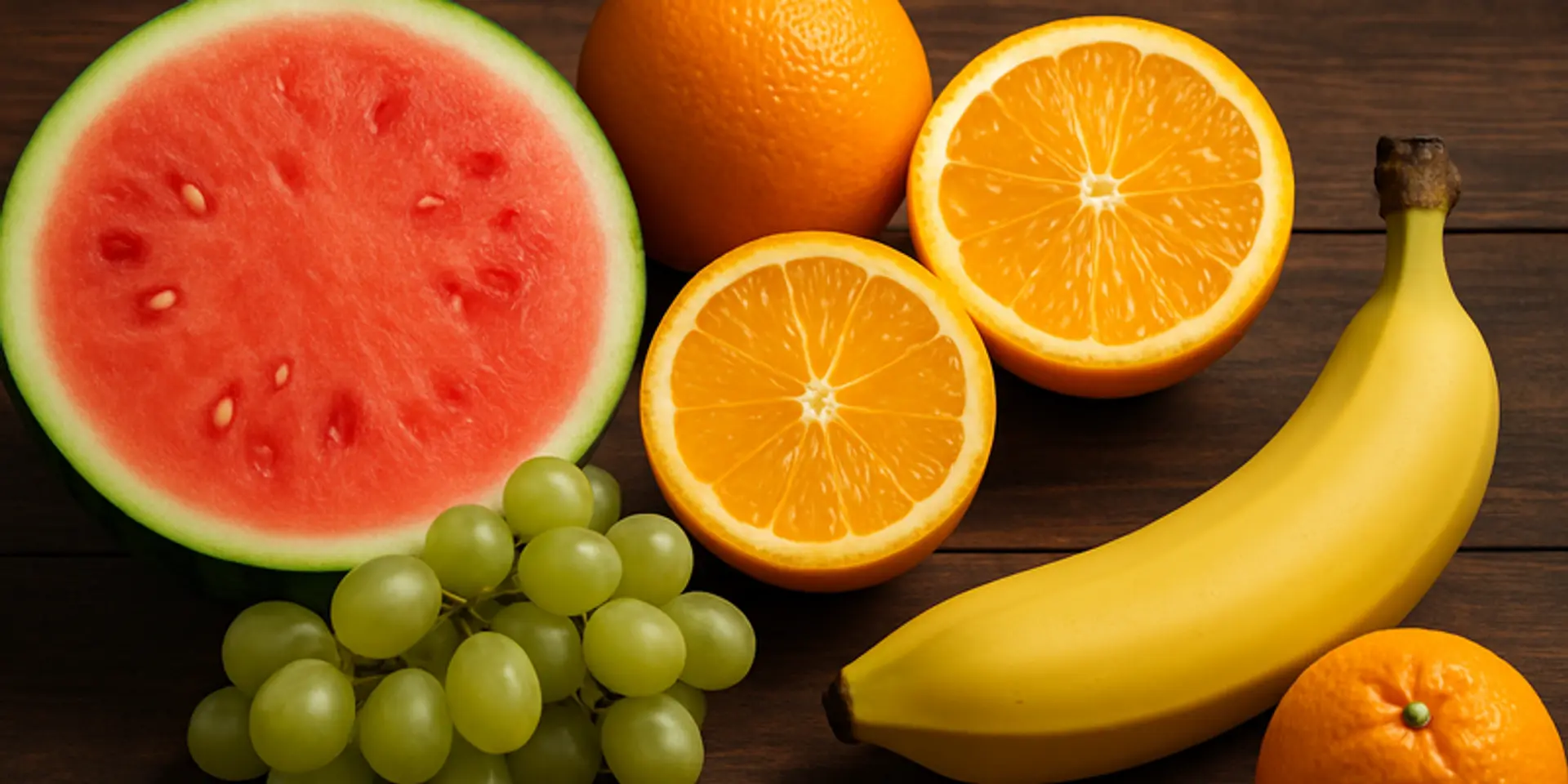

Seedless fruit feels like a UX win—no pips, no fuss, just vibes. But the biology behind that convenience is a paradox: fruit evolved to carry seeds, yet we’ve built whole supply chains around fruit that can’t reproduce without us. That dependence is more than a quirk of horticulture; it’s a structural risk for food security in a hotter, pest-heavier, supply-chain-twitchy world. Let’s peel back the science, the history, and the hidden hazards.
What “seedless” really means
Broadly, seedlessness arrives in two ways:
- Parthenocarpy: the plant sets fruit without fertilisation, so there are no seeds. Classic case: navel oranges. A spontaneous mutation (a “bud sport”) in Brazil produced fruit that formed without pollination. Because there are no viable seeds, every navel orange tree on earth is a clone, propagated by grafting twigs from that original mutant onto rootstocks.
- Stenospermocarpy: pollination happens, fruit starts to develop, but the embryo aborts—leaving tiny “seed traces.” Most seedless table grapes are stenospermocarpic; breeders even use embryo-rescue to recover hybrids before those embryos fail.
Both routes are natural(ish) oddities that humans amplified—first by grafting and cuttings, today with tissue culture, hormones, and, increasingly, gene editing. A recent review sums it up neatly: parthenocarpy and stenospermocarpy are the two main playbooks for seedless fruit, and both can be induced or accelerated by modern breeding methods.
How we “hack” a melon
If you’ve ever wondered how seedless watermelons exist without seeds to plant, here’s the trick: growers first produce tetraploid watermelons (4 sets of chromosomes) by treating seedlings with colchicine. Cross those with normal diploids (2 sets), and you get triploids (3 sets). Triploids make fruit, but their odd chromosome count makes their seeds abort hence “seedless.” Fields still need bees and a polliniser row of diploid plants to set fruit at all; the triploid’s own pollen isn’t viable.
Clones scale; clones also stumble
Cloning makes agriculture efficient: identical plants ripen together, ship predictably, and slot neatly into global logistics. But monocultures share the same genetic Achilles’ heel. No case study is more famous than bananas.
- Then: Mid-20th century “Panama disease” (Fusarium wilt, Race 1) wrecked plantations of the sweet, sturdy Gros Michel, forcing the industry to switch to Cavendish bananas, a different clone that resisted that strain.
- Now: A new strain, Tropical Race 4 (TR4), is spreading across Asia, Africa, the Middle East and into Latin America, threatening Cavendish as well. FAO warns of accelerating impacts across regions; recent peer-reviewed work documents detections even on plantains in Venezuela.
This isn’t a niche crop: bananas were the most produced fruit globally in 2022 about 135 million tonnes and a pillar of trade and livelihoods. A TR4-driven shock wouldn’t just sting smoothie bars; it would hit smallholders and import-dependent markets worldwide.
Citrus under siege
Clonally propagated citrus faces its own “boss level”: citrus greening (huanglongbing). The bacterial disease has hammered groves and pushed up retail prices; USDA economists have modelled its consumer impacts and tracked the rising share of imports in U.S. fresh citrus as domestic output struggles. Mandarins (many of them easy-peeling, often seedless) have soared in popularity even as oranges falter, reshaping the category.
The maintenance trap
Systems that only work with constant human “babysitting” are fragile. In software, one bad update can floor millions of machines (remember the July 2024 global Windows BSOD). In orchards, one well-adapted pathogen can floor millions of genetically identical trees. The pattern is the same: high convenience, low resilience.
Can gene editing save convenience fruit?
Breeders are racing to build resilience without giving up convenience. Tools like CRISPR can accelerate disease resistance and even remove pits or seeds (think seedless blackberries or “pit-lite” cherries under development), potentially diversifying genetics while keeping shopper-friendly traits. But consumer acceptance is uneven: about half of U.S. adults view GM foods as worse for health, and global surveys show many publics consider GM foods unsafe. Transparent labelling and risk communication will matter as edited fruit edges from pilot to produce aisle.
So, is seedless bad? Not exactly—but it’s risky to make it everything
The goal isn’t to cancel seedless fruit; it’s to rebalance. A convenience-only mindset turns supply into a single point of failure. A resilience-first mindset spreads risk.
What that looks like in practice:
- Diversify genetics within crops: don’t rely on one clone. Public collections (like UC Riverside’s 1,000-plus citrus accessions) and international genebanks are invaluable “spare parts” for the future.
- Breed for resistance using every tool conventional crosses, polyploid tricks, marker-assisted selection, and yes, gene editing where regulated and accepted. (Grapes are a great example: seedlessness via stenospermocarpy can be paired with disease-resistance loci.)
- Design fields for resilience: mix cultivars, rotate, quarantine carefully, and invest in clean-plant certification and biosecurity especially for TR4-prone banana regions.
- Nudge demand: normalise seasonal seeded options and flavour-first heritage varieties (your grandparents’ seed-spitting watermelons and tart oranges had a point).
The takeaway
Seedless fruit is a marvel of human ingenuity and a maintenance bill that comes due if we keep doubling down on clones. The science is clear: parthenocarpy and stenospermocarpy are powerful tools, but resilience demands genetic diversity, smarter breeding, and better biosecurity. Keep the convenience. Lose the fragility. That way, your grandkids can still grab a banana seedless, sweet, and still around.