



Building with no code: How Acies is redefining enterprise tech
Acies combines consulting expertise and no-code technology to make enterprise digitisation faster and more cost-effective.


In the enterprise world, there is a wide gap between consulting advice and actual implementation. The process of building enterprise-grade applications through traditional coding is slow, expensive, and fragmented, leading to rising costs and systems that don’t work well together.
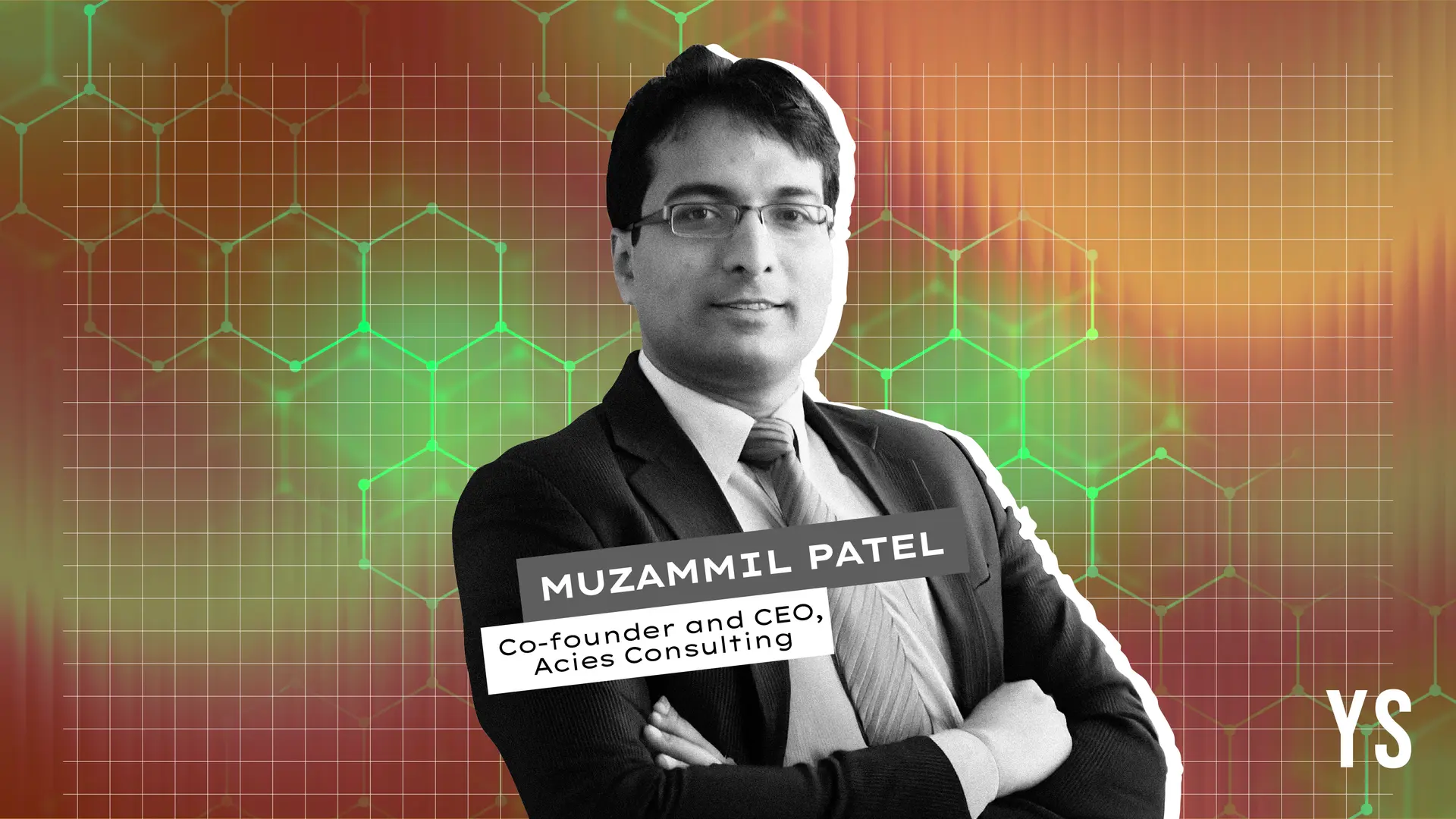
Acies, a Mumbai-headquartered firm founded in 2017 by Muzammil Patel and nine other co-founders, set out to close this gap. The founding team wanted to take the next step in how consulting should work by moving beyond advice to actual implementation. “Most of us knew each other well,” Patel, CEO, tells YourStory. “To implement something, you need to control the technology. Otherwise, good advice remains only on paper.”
Before starting Acies, Patel worked for nearly 15 years for consulting firms, including Ernst & Young and Deloitte, where he was a partner leading the financial services risk advisory business in India.
Soon after starting up, the founders realised that lasting impact could only come if solutions were implemented and scalable. This led to Acies’ investment in a no-code platform.
The backbone: Revolutio
In 2019, Acies started building its flagship product, Revolutio, a no-code platform that today forms the backbone of all its offerings. The platform allows applications to be built without writing code, reducing costs and time while maintaining enterprise-grade standards.
“It took two years to make the platform enterprise-ready, but it gave us the flexibility to scale,” Patel says.
In addition to Revolutio, Acies’ TechWorks division offers 27 applications in risk, compliance, treasury, and finance. Its new product, Streamline, is a digital ERP designed to bridge the gap between giants like SAP and entry-level tools like Zoho.
Tackling the pain points
The problem Revolutio addresses is twofold. First, the fragmentation that comes from enterprises building multiple applications, each with its own architecture. Second, the high costs of digitisation.
Patel points out that while every organisation wants to digitise, coding each new application creates technical debt, with systems built differently that don’t integrate well, making it costly and inefficient.
“With Revolutio, you pre-architect once and build as many applications as you want on top of it,” he says, claiming that the platform also cuts costs to about 20% of traditional coding and reduces implementation time by nearly a quarter.
The startup stores client data on its own cloud-native no-code platform, ensuring that enterprises have full control and flexibility over their applications. The platform is designed with strong security and compliance features to handle sensitive enterprise data.
On the technology side, Acies also integrates AI into Revolutio to power automation and predictive analytics, using generative AI to help clients build workflows faster and interact through natural language.

Business model and growth
Acies works on a B2B model, providing both consulting and technology solutions. The consulting business brings in steady cash flow, while its no-code platform and applications are licensed to enterprises. Clients pay based on the applications they use and the scale of their usage.
By reducing the cost of building applications to nearly one-fifth of traditional coding, the startup helps companies save significantly while still keeping strong profit margins. This approach has allowed the company to remain cash surplus and fund its own growth without external support.
Acies’ first big client was HDFC Life Insurance. “HFDC pushed us to automate, by giving us the confidence to build products,” Patel says.
The team currently works with over 75 clients, including LIC, ICICI Bank, and HDFC Bank, and has 100+ live sites across India, Singapore, Malaysia, and the Middle East. Patel notes that about 65% of the startup’s revenue still comes from financial services, though the company is now diversifying into other industries as well.
The bootstrapped startup closed FY25 with Rs 37 crore revenue and is on track to touch Rs 70 crore by March 2026. It turned profitable in FY20.
Acies currently employs around 300 people across its operations. While Mumbai remains the headquarters, the startup has a development centre in Goa and offices in Singapore, Malaysia, the UAE, and the US. It also plans to expand into Europe and establish a presence in GIFT City to tap into new talent pools.

Competition and market size
The no-code space has seen a surge of players worldwide, from website builders like Wix and Shopify to specialised API tools. But Acies operates alongside niche, comprehensive enterprise-grade platforms.
“In reality, there are only four or five platforms in the world that can build enterprise applications end-to-end without coding,” says Patel. “Our closest competitors would be Microsoft’s Power Platform and Unqork.”
Acies has faced challenges in adapting its architecture to rapid tech changes and in hiring talent. “It’s not enough to hire coders,” Patel says. “In no-code, you’re building something others will build on.”
According to a Research and Markets report, the global no-code development platforms market is valued at about $28.1 billion in 2024 and is expected to grow to nearly $93.9 billion by 2029, at a 27.6% CAGR, which is driven by digital transformation and faster app development needs. “We want to be in a position to at least be at about 20% of the enterprise market geographies that we operate primarily in India, Southeast Asia, and the Middle East,” Patel says.
The way forward
Looking forward, Acies is working on simplifying Revolutio further, making it easier for non-technical users to build applications. The company is also adding conversational AI features to enable users to create apps by simply talking to the platform.
“Our vision is to democratise technology,” says Patel. “If a kirana store can use a no-code platform to build their own inventory management or accounting apps, that’s when we’ll feel we’ve achieved something meaningful.”