



Chennai spacetech startup Agnikul Cosmos opens large-format additive facility for rockets
For the first time in India, Agnikul's facility also enables 3D printing of aerospace and rocket components up to one metre in height.

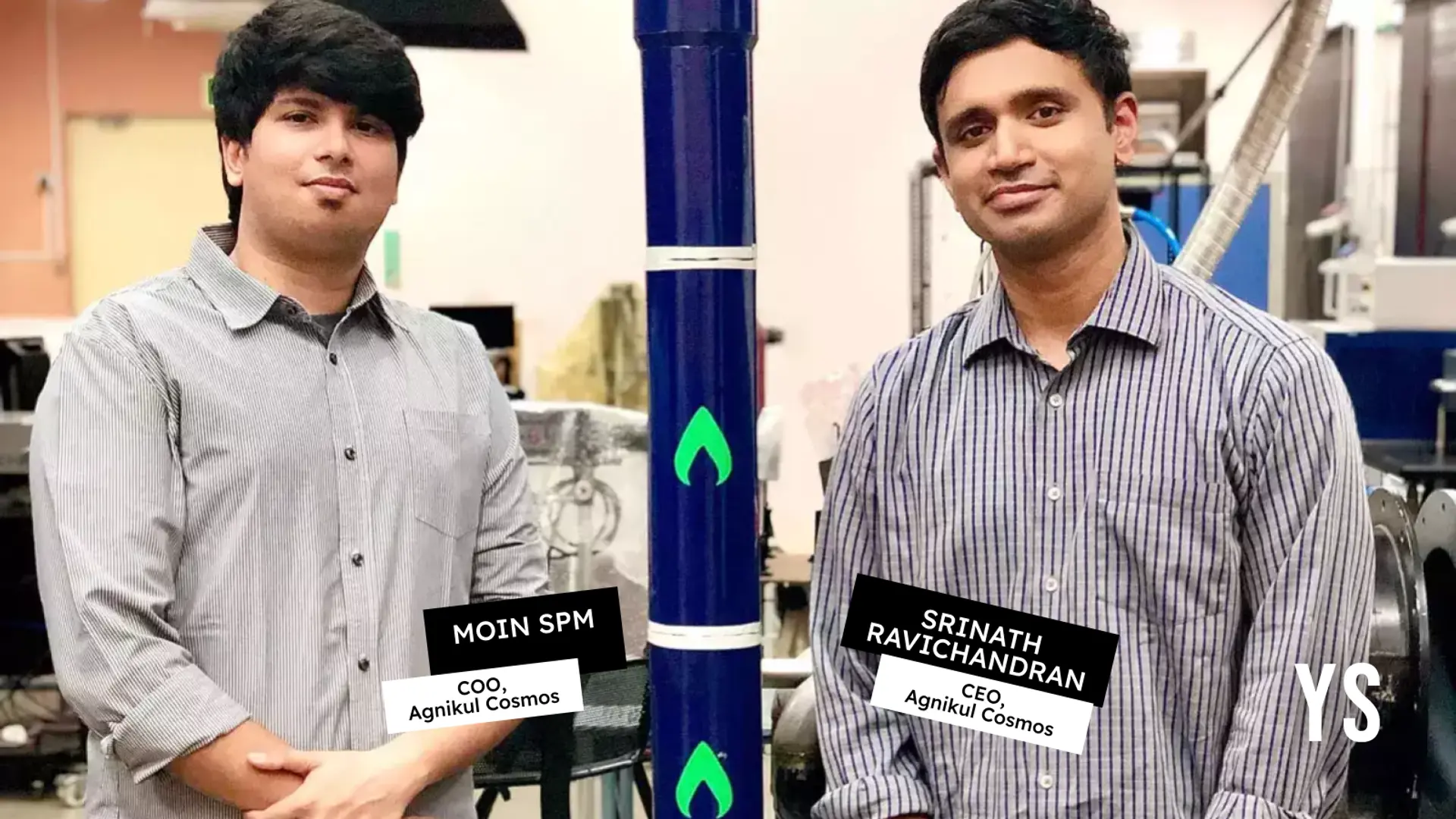

Space startup Agnikul Cosmos has commissioned a new additive manufacturing facility for aerospace and rocket systems, which is expected to reduce the cost of building for space by 50%.
For the first time in India, the facility also enables 3D printing of aerospace and rocket components up to one metre in height, the Chennai startup said.
"The facility introduces a fully integrated ecosystem, covering design, simulation, printing, post-processing, and finishing to enhance quality, reliability, and supply chain resilience, while lowering the cost of building for space by 50%," the company said in a statement.
"This facility will allow the company to print engines measuring one metre and deliver seven times the thrust of its earlier designs. With this facility now commissioned, the company can manufacture these engines in just days, and that too in-house—accelerating development cycles and enabling rapid innovation at scale," said Srinath Ravichandran, Co-founder and CEO of Agnikul Cosmos.
By making it possible to produce parts that were previously considered difficult for additive manufacturing, Agnikul can now deliver fully finished, flight-ready hardware within a few days, significantly accelerating development timelines while expanding what can be achieved through 3D printing.
"By developing not just printing capacity but also full-scale machines in-house, we are equipping ourselves to build space transportation systems faster, bringing us one step closer to taking Agnikul's innovations and our customers to space," Ravichandran said.

Complementing the printing capacity is an indigenously designed and developed de-powdering machine, an important post-processing system that ensures flawless surface finish and space-grade quality on additively manufactured parts. Designed and developed in-house, the machine reduces external dependencies and ensures consistent quality.
"Our goal has always been to make access to space reliable and cost-effective. With this facility in place, we are advancing our own launch readiness and also helping shape the foundation for a self-sustaining and globally competitive space industry in India," said Moin SPM, Co-founder and COO of Agnikul Cosmos.
Agnikul Cosmos, incubated at the IIT-Chennai campus, is currently developing launch vehicles, called Agnibaan, which will be capable of carrying small satellites to orbit on demand.
Agnikul successfully completed its maiden launch last year from its own private launchpad.
Edited by Suman Singh