



This Delhi-based startup is converting India’s waste into sustainable solutions
CEF Group converts municipal and agricultural waste into compressed biogas, organic fertilisers, and bio-agri inputs. It focuses on waste-to-energy, sustainable agriculture, and urban farming solutions, while reducing import dependence.


India is among the world's top 10 countries generating municipal solid waste. According to a report by The Energy and Resources Institute (TERI), India generates over 62 million tonnes (MT) of waste annually. This is caused by rapid urbanisation, economic growth, and higher rates of urban consumption.
Only 43 MT of the total waste gets collected, with merely 12 MT being treated before disposal, leaving 31 MT simply discarded in waste yards. This reality not only threatens public health but also shapes how the world perceives India.
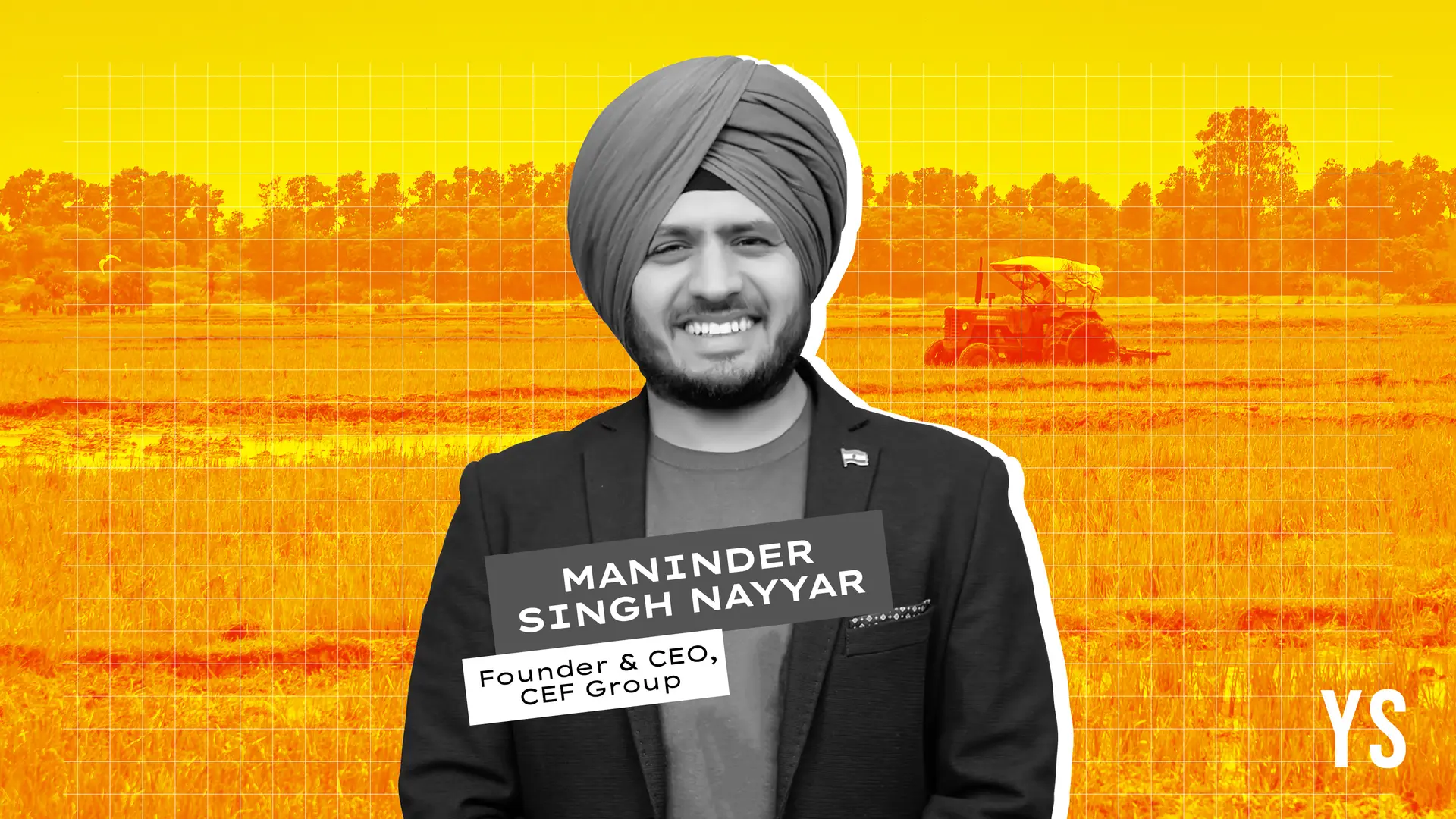
The crisis became a personal mission for Maninder Singh Nayyar, Founder and CEO of CEF Group. In 2013, after selling his online education company to a Singapore firm, he spent 16 months travelling across 17 countries.
“Everywhere I went, people loved India’s culture, but 90% of conversations circled back to the same issue: ‘India is great, but it’s dirty and unhygienic,’” Singh recalls.
Determined to change this perception, he returned to India with a mission to tackle three pressing challenges: waste management, soil health, and employment generation. Over the next five years, Singh invested in extensive research and development, during which he discovered a compressed biogas solution in Germany. Building on this, he launched CEF Group in 2018 with the technology as its cornerstone.
The solution utilised advanced aerobic digestion processes to convert organic waste into bio-CNG, a renewable fuel. The company presented this technology to the Indian Oil Corporation and the Ministry of Oil and Gas, and successful demonstrations of its potential led to an MoU with Indian Oil.
The core solution
CEF Group's flagship solution addresses a fundamental issue in India's waste management approach. “While the country was importing crores worth of natural gas annually from Qatar, it had the capacity to generate 3.5 lakh crore worth of the same gas from domestic organic waste through bio-methane production,” says Singh.
The company's technology converts municipal and agricultural waste into compressed biogas for vehicles and organic fertilisers. “Traditional waste-to-power solutions produce costly, unmarketable electricity. Our solution delivers commercially viable fuel that replaces imported natural gas.”
CEF Group is currently operating 16 projects across India, with five in advanced construction stages in cities including Jammu, Ahmedabad, Haryana and Western Uttar Pradesh. The company has secured €38 million in equity and debt funding from the German Export Finance Bank and Mumbai-based Infra Market to set up two flagship compressed biogas plants in Jammu and Ahmedabad.
The Dal Lake project in Srinagar, Jammu, launched in June 2023, stands as CEF Group’s success story, converting 70,000 tonnes of annual lake waste, such as weeds and lilies, into organic manure and allied products. The company’s processing plant in Srinagar benefits local farmers and communities while helping restore the lake’s ecological health. “This has generated government interest in replication across five additional locations nationwide,” Singh says.
CEF Group operates under India’s SATAT (Sustainable Alternative Towards Affordable Transportation) initiative, which encourages the production of CBG as a cleaner, private-sector-driven alternative to conventional fossil fuels.

A comprehensive sustainability ecosystem
Beyond waste-to-energy efforts, CEF Group uses the leftover material from bio-methane production to make organic fertilisers and plant boosters through its bio-agricultural division. It operates manufacturing facilities in Srinagar and Uttar Pradesh, with sales licenses across nine states.
The company produces over 1 lakh tonnes of organic fertilisers and bio-stimulants annually while maintaining full regulatory compliance. CEF Group plans to scale production to 5 lakh tonnes annually within the next three to four years.
The company’s ‘Urban Farmer’ initiative addresses the disconnect between urban consumers and food production. It offers kits, organic inputs, and training that enable city households to set up home gardens and grow their own safe, chemical-free fruits and vegetables, reducing dependence on chemical-heavy market produce.
“We want to encourage people to grow their own fruits and vegetables, as it offers safer, healthier, and more sustainable food choices,” Singh says. The initiative has evolved into a direct farm-to-consumer model serving 400 customers with fresh vegetable deliveries within 14 hours of harvest. There are plans to scale to 10,000 customers.
The startup’s retail vertical, born during the COVID-19 supply chain disruptions, leverages strategic partnerships with Indian Oil's network of 30,000 petrol pumps for cost-effective distribution of natural products. It operates 32 stores across India, and maintains profitability through a high-volume, low-margin model.
Beyond retail, CEF Group serves both public and private clients, including government bodies and municipal corporations seeking sustainable waste-management and clean energy solutions, such as compressed biogas plants and organic fertiliser production.
On the consumer side, it caters to health- and environment-conscious urban households through subscription-based farm-to-consumer produce, sustainable retail outlets, and urban farming services. The company also supports farmers with bio-agricultural inputs and partners with NGOs and social programmes focused on skill development and community empowerment.

Overcoming industry challenges
However, presenting and implementing these solutions did not come without challenges. Singh's team initially faced scepticism from traditional institutions about the practicality of integrated waste management solutions.
“The regulatory landscape is challenging, mainly in the fertiliser market, where unlicensed producers create unfair competition,” Singh says.
He adds that CEF Group faced delays in securing funding from Indian banks and instead arranged debt financing abroad, including AKA Bank in Germany. Today, their biofuel projects are financed this way, while agritech and retail operations remain self-funded through internal cash flows.
Singh says the biggest challenge lies in educating both farmers about moving away from chemical-dependent agriculture and consumers about food quality. CEF Group addresses this by promoting ‘naturally grown’ food rather than ‘organic’.
CEF Group transitioned from founder-led operations to professional management in 2022-23, establishing dedicated leadership for each vertical, as it aims to expand from 900 to 1,500 employees by FY27. The company also addresses broader social challenges through Bal Bharti, a 54-year-old NGO that has impacted over two lakh lives across 12 states through employment generation, skill development, and educational initiatives.
Future plans
As CEF Group's waste-to-energy projects move from construction to commissioning in 2025, the company hopes to demonstrate the viability of large-scale waste management solutions that could transform India’s approach to organic waste processing.
“For now, rather than expanding into new verticals, the focus remains on scaling existing operations while maintaining quality and sustainability standards,” Singh says.