



India’s e-bus push gathers pace, but registrations lag behind orders
Reports show that state governments have increasingly placed orders for electric buses, but registrations recorded on Vahan portal suggest that e-buses being introduced into fleets are yet to touch 2024 levels.

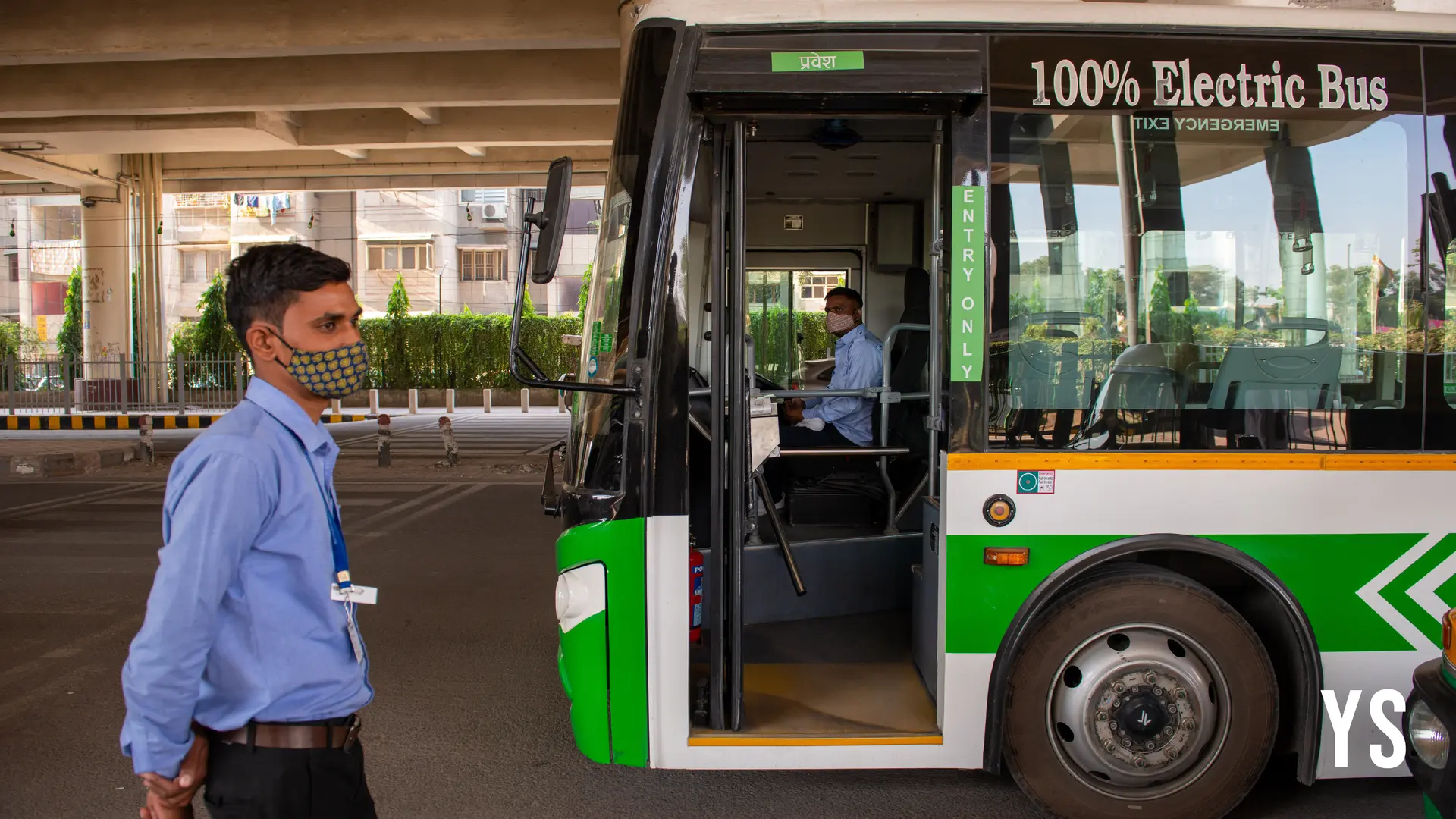

India has set an ambitious goal of electrifying 40% of all new buses by 2030, but the roads tell a different story.
According to Vahan data, only 3,066 e-buses have been registered year-to-date, still short of the 2024 peak of 3,611. This gap indicates that much of the action this year has been happening at the order and production stages, forecasting a gradual pick up in registrations late this year and beginning next year as most e-bus manufacturers take between 3-12 months to fulfil orders.
A recent report by CareEdge reinforces this indication. The report notes that annual sales volume of e-buses in India is expected to reach more than 17,000 units in FY27, accounting for nearly 15% of the total bus volume in the country compared to 4% in FY24.
The Indian government is driving the push with schemes like the PM e-Drive Scheme, which aims to deploy 14,028 electric buses and has a financial outlay of about Rs 10,900 crore from April 2024 to March 2026 in major cities. This is complemented by the PM eBus Sewa-Payment Security Mechanism (PSM) Scheme, which provides a financial safety net for operators and aims to deploy over 38,000 e-buses, ensuring the long-term financial viability of e-bus operations.

Riding on this support, the state governments are placing bulk orders to electrify their bus fleets. For instance, Karnataka has placed an order for 4,500 e-buses, Delhi has placed an order for 2,800 buses, Telangana has placed an order for 2000 e-buses, and Maharashtra has placed an order for over 5,500 electric buses—all these orders placed this year alone.
This order pipeline is reshaping the e-bus ecosystem. Original equipment manufacturers (OEMs) are looking to ramp up their production capacity to satisfy large commercial orders. For instance, e-bus maker EKA Mobility is planning to invest Rs 800 crore this financial year to ramp up its production capacity and ensure timely delivery of buses to state governments and private reports, Mint had reported.
Similarly, IFC recently infused $137 million into JBM ECOLIFE, part of JBM Auto and GreenCell Mobility, to help deploy 4,000 e-buses and charging stations across 39 municipalities in the country.
These investments along with strong order books and government intervention is expected to help India achieve its goal of electrifying a major chunk of its bus fleets.