



Job readiness has no finish line: Ronnie Screwvala on the need to keep learning
Ronnie Screwvala, Chairman of upGrad, in a conversation with Shradha Sharma, Founder, YourStory, talks about being job ready every day, why learning must be continuous, and how ownership, measurement, and discipline are key to building a skilled, future-ready workforce.

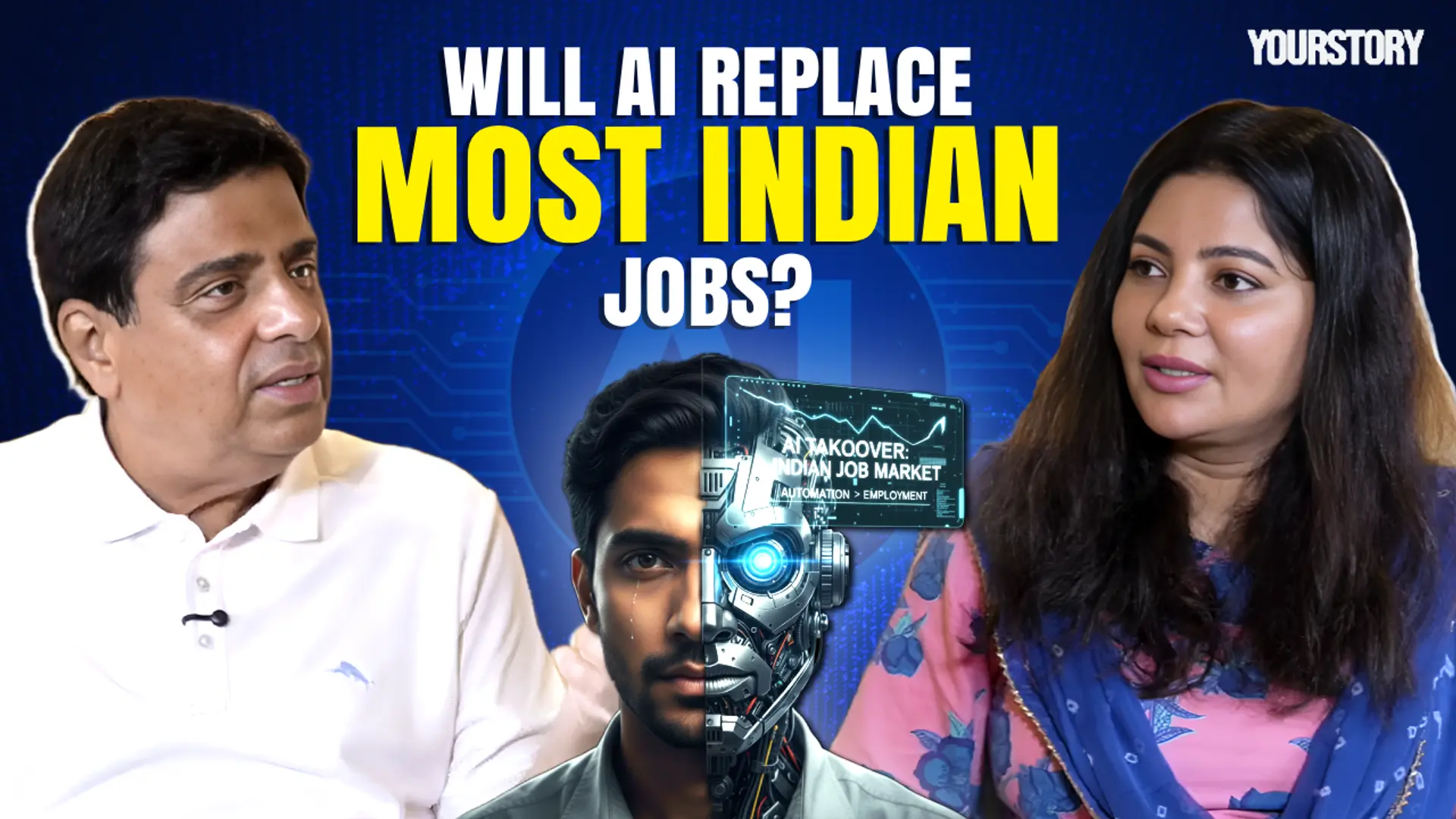

Job readiness is not a one-off task. It is a habit, a daily practice, a muscle that must be exercised again and again, says education industry veteran and Co-founder and Chairman of upGrad, Ronnie Screwvala.
“Job readiness is not a one-time thing… An athlete cannot say, 'I am now ready.' Because every day you have to improve your game,” says Screwvala, in a conversation with Shradha Sharma, Founder and CEO of YourStory.
This disrupts the usual chorus of promises and points to discipline, he adds.
Start with this thought, and the rest begins to fall into place. If readiness is a continuum, then training cannot be a short course followed by a certificate and then a sigh of relief. It must be lifelong and woven into the fabric of work and learning.
This explains why online learning matters only when it is accessible and accountable, and why skilling programmes need owners and report cards, emphasises Screwvala, as he debunks popular discourse and insists on following a practice that’s demanding and goes beyond mere good intentions.
“A workforce without discipline is not a workforce,” he says.
However, this is not an invitation to leaders to micromanage or romanticise hours at a desk. It is a reminder that enthusiasm without rigour will not sustain an economy that aims to scale. Enthusiasm will get you through a demo day, but discipline builds a reliable supply chain, a dependable classroom, and a competent technician, he asserts.
Outcomes matter
Screwvala also speaks about the need for alignment between university learning and entrepreneurship.
“The head boy in the school is not the one who is going to be the most successful afterwards, just because that person was the head boy,” he says, showing how conventional indicators of success can be misleading.
When heads of colleges are judged by grades and placements they will prioritise marks over entrepreneurship. Changing that requires shifting incentives, rewarding risk taking, and accepting failure as part of the learning process.
“Everything needs to have a report card in terms of outcomes,” he says, pointing towards measurement and accountability.
Ownership, measurement
Policy matters but implementation matters more. “Everything needs to have an owner. Everything needs to have skin in the game,” Screwvala insists.
Ownership must be real even if it is small. Grants that create dependency will not create accountability, and targets that measure spending rather than impact will produce activity without meaningful change, he says.
Spend deliberately on evaluation, and give implementers both the responsibility and resources to deliver results, says Screwvala.
The upGrad chairman also recommends that out of the significant sum spent on tinkering labs, a defined portion should be ringfenced for continuous evaluation. Measurement must be treated as a budgetary priority, he adds.
Ringfencing funds for evaluation is, in his view, the only way to ensure that tinkering labs, skilling centres, and pilot programmes are more than ceremonial gestures.
Rebranding the field
Screwvala is clear that technology is an essential tool but rejects the idea that tech alone is a panacea. He goes so far as to argue that the term 'edtech' should be abandoned because it distracts from the real mission.
“Edtech should be a terminology that should be dropped,” he says and proposes an alternative language, such as the ‘forever learning segment’ or the ‘job ready segment’.
At the same time, he defends the online mode as a permanent feature of learning.
“Online is here to stay,” he notes, pointing out that for many people online is the only realistic route to continuous upskilling while juggling jobs and family.
But online courses alone will not create readiness. Peer-to-peer learning is an important human-centred mechanism that drives practice and accountability.
“Peer-to-peer learning is where you are going to get the best learning,” he says, arguing that showing up with peers, practising, getting feedback, and iterating make one job ready.
Profit, nonprofits and the space between
Screwvala does not view profit as inherently suspect.
“Profit is not a bad word, because 90% of the time it does get reinvested into better work, better future, and higher accountability,” he says, adding that private capital professionalises the sector and extends reach.
Material interventions must be accompanied by shifts in mindset. “We have to lift mental poverty before we lift physical poverty,” Screwvala says, and explains that self-belief is the precursor to mobility and aspiration being translated into durable opportunity.
He illustrates this through the idea of 'lighting a bulb'. People need that initial spark, something tangible that shows them they are capable of change. That is why his foundation is called Swades, drawn from the film of the same name, where Shah Rukh Khan’s character is urged to “go light your bulb” when he decides to return to India.
For Screwvala, lighting that bulb is about creating the moment of belief—which helps people feel in control of their destiny and more willing to take the next steps in skilling or employment.
Clearing the bottlenecks to growth
Screwvala repeatedly underscores the importance of discipline.
Ambition without discipline will not deliver scaled opportunity, he says. What is required is rigour, the willingness to be measured, and the patience to build systems that help people learn and improve well after a ‘certificate’ has been collected.
This practical realism sits alongside a clear sense of national pride.
“I am a very, very, very proud Indian,” Screwvala says, and that pride is paired with a frankness about habits that must change if the country has to compete with more disciplined work cultures.
He uses the analogy of a traffic jam image to capture the issues that stall progress in the country.
Picture four cars at a crossroads; no one is willing to give way, and everyone is losing time and patience. It is not simply an amusing picture. It is a diagnosis of stalled coordination and small, everyday frictions that add up to systemic under-performance.
For Screwvala, the cure is not dramatic authoritarianism but direction and coordination. “India needs a traffic cop,” he says, referring to a mechanism or mindset that nudges behaviour, aligns incentives, and clears the bottlenecks.
Failure is part of that process. “If you do not fail four times, you will never have success,” Screwvala observes.
Experiments are important, and learning at scale requires tolerance for iteration.
Circling back to job readiness, he says if job readiness is a continuum, then policy, pedagogy, funding, and technology must be organised around continuous improvement rather than milestones that mark a presumed end of learning.
“Every day you need to be more ready,” he says, adding that this simple approach sets the tone for the long term.
Edited by Swetha Kannan