



Startup TN
View Brand PublisherInside the rise of Tamil Nadu startups rewriting the food story
Four Tamil Nadu startups are taking food and farming from ordinary to extraordinary with ideas that make cows healthier, soils smarter, protein tastier, and millets cooler.


In just three years, Tamil Nadu has added more than 9,700 startups to its ecosystem. The number of ventures registered with the Department for Promotion of Industry and Internal Trade (DPIIT) has surged from 2,300 in 2021 to over 12,000 in 2025. With one of the highest per capita incomes among Indian states, Tamil Nadu is positioning itself as a global hub for entrepreneurship, aiming to rank among the Top 20 Global Startup Hubs by 2032, powered by innovation across diverse industries.
Amid this momentum, food and agriculture have taken center stage. Farmers, food technologists, and entrepreneurs are joining forces to solve persistent challenges — from animal health and soil diagnostics to tackling protein deficiency and promoting millet adoption.
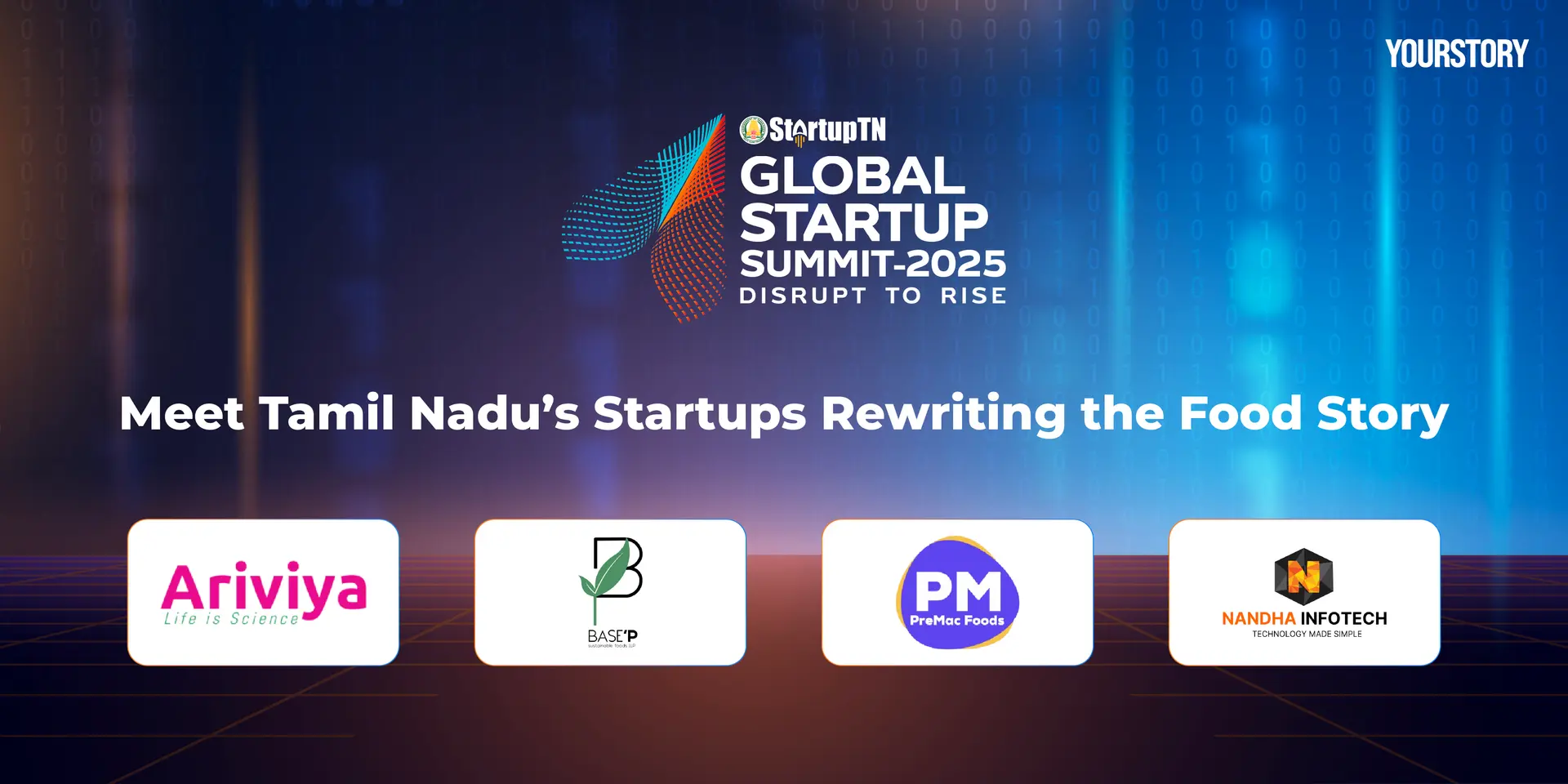
As the Tamil Nadu Global Startup Summit (TNGSS) 2025 puts the spotlight on these stories, four startups stand out for how they are reimagining what we grow, how we process it, and what ends up on our plates.
Nanotech meets dairy health: Ariviya Deep Tech
At Thanjavur-based Ariviya Deep Tech, three scientists, Dr Sivakumar Muthusamy, Dr Chinnadurai Annamalai, and Er. Swami are addressing one of the biggest challenges in dairy farming: mastitis. The disease not only reduces milk yield but also forces farmers to use heavy antibiotics, creating a ripple effect on both income and food safety.
Their solution, MammaryO, is a nano-bio foam that coats and protects cow teats until the next milking. “Science is our tool, and through nature’s own building blocks we can protect animal health, improve livelihoods, and ensure safer milk for all,” Muthusamy says.
With recognition from the Dettol Innovation Award and Invest India, Ariviya is now preparing to expand into poultry and pet care solutions. The company’s focus is clear: science-driven innovation that cuts losses for farmers while delivering better milk to consumers.
Ten-minute soil intelligence: Sri Nandha Infotech
For decades, farmers have waited weeks for costly soil test results, often forced to make cropping decisions based on outdated data. Sri Nandha Infotech, founded in Coimbatore in 2022 by T Vigneshwaran, developed SENSELUTO to address this issue. The portable device, powered by IoT and AI, delivers soil health reports in just 10 minutes.
“Innovation is not about complexity, it is about creating impact where it matters most,” Vigneshwaran says. “From empowering small farmers with climate-smart practices to preparing students for the digital future, our mission is to show that world-class innovation can rise from local roots.”
Hundreds of farmers have already used SENSELUTO to reduce costs and improve yields. Alongside this, the company’s SkillRadar platform has trained over 1,000 learners in AI, GenAI, and Digital Agriculture, creating a dual model where both farmers and future talent are better equipped to face tomorrow.
Plant protein for everyday diets: Protivore
India faces a growing protein gap, but most plant-based solutions in the market cater to urban, premium consumers. Protivore, founded in 2023 by Swathi Gopalakrishnan under Base’P Sustainable Foods, is instead developing affordable and culturally adaptable plant proteins designed for Indian households.
“Every failure, rejection, and setback has shaped my journey,” Gopalakrishnan recalls. “Courage is the only fuel you need to start.” That courage led her to build a proprietary technology that enhances the taste, digestibility, and bioavailability of plant proteins.
With 10 ready-to-cook products already in the B2B market and a consumer launch on the horizon, Protivore is focused on turning plant protein into a daily staple rather than a niche trend. Its recognitions, from the Carbon Zero Challenge to the Young Innovator Award at NSRCEL IIMB, point to its growing relevance in India’s future nutrition.
Making millets mainstream: Premac Foods
When schoolteacher Prema Chinnasamy noticed her students regularly falling ill after eating maida-based noodles, she decided to take action. Leaving behind her teaching career, she and co-founder Sathya Prakash launched Premac Foods Private Limited in 2022 to make millet-based noodles, pasta, vermicelli, and ready mixes.
“Every millet product we craft carries care for families and hope for farmers,” says Chinnasamy, whose brand sources directly from tribal and local farmers while employing rural women and empowering over 20 homemakers as homepreneurs.
In just two years, Premac has reached over 200,000 consumers and expanded into markets in the US, Singapore, and the Middle East. With patents filed and automated production scaling up, Premac is showing how millets can transition from traditional staple to modern convenience food.
The StartupTN catalyst effect
What connects these diverse success stories? StartupTN’s TANSEED program has been the common thread, providing crucial early-stage funding, mentorship, and market access. It’s a masterclass in how government support can accelerate innovation without stifling entrepreneurial spirit.
Each company received Rs 10 lakh in funding, while women-led startups and those in the fields of rural, agri-tech, and green-tech received up to Rs 15 lakh. This funding provided access to a network that opened doors to Fortune 500 partnerships, international markets, and follow-on investments.
A soil-to-shelf revolution
From nanotech in dairy farms and portable soil testing to plant protein innovation and millet-based convenience foods, Tamil Nadu startups are reshaping the food and agriculture value chain. Together, Ariviya Deep Tech, Sri Nandha Infotech, Protivore, and Premac Foods represent the state’s ability to combine science, tradition, and entrepreneurship.
As Tamil Nadu marches toward its $1 trillion economy goal by 2030, these ventures show how food and agriculture can power not just healthier diets but stronger communities, empowered farmers, and a globally competitive startup ecosystem.