



Blinkit weighs long-term growth, heavy investments over near-term EBITDA
Blinkit is focusing on long-term growth, investing in its inventory-led model, customer acquisition, and dark store network, and does not view EBITDA as a near-term target, with overall margins shaped by expansion and market competition.

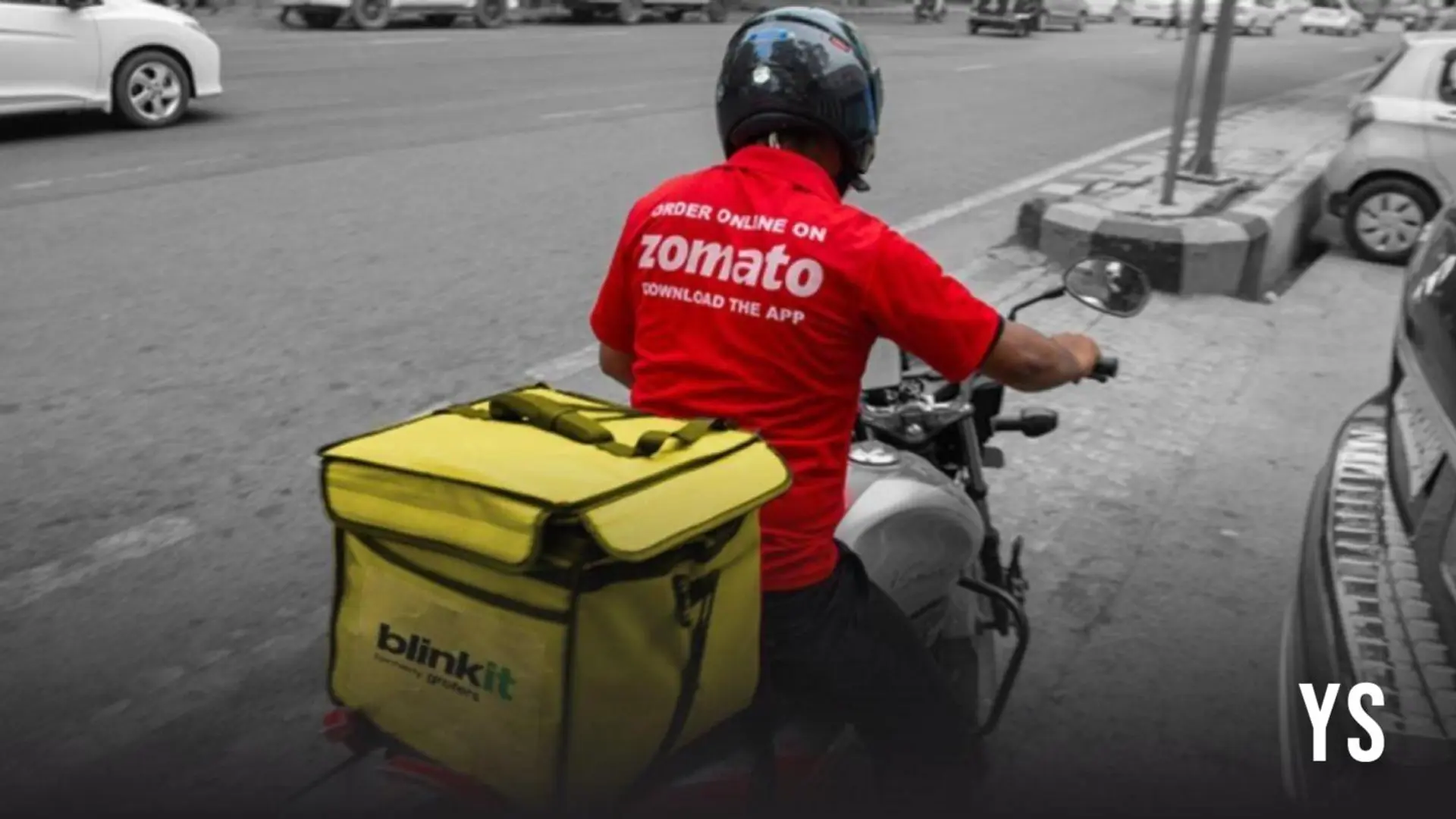

Quick commerce leader Blinkit is prioritising long-term growth over near-term profitability as it continues heavy investments in marketing, customer acquisition, and dark store expansion.
The company, which recently shifted from a marketplace to an inventory-led model, is focused on scaling its network to 3,000 dark stores by FY27 while consolidating its position in India’s fast-growing quick commerce segment.
Eternal said it is not targeting an EBITDA break-even for Blinkit. Some of its quick commerce business functions are mature and profitable, while ongoing expansion, new store openings, and customer acquisition continue to weigh on overall margins.
EBITDA, or earnings before interest, taxes, depreciation, and amortisation, is used to measure a company's core operational profitability.
Blinkit, which competes with both public and private players, including Swiggy, Zepto, and Flipkart, plans to continue investing in discounts, marketing to acquire new customers, and its supply chain and dark store network.
"I think as long as we see a healthy customer acquisition cost and a healthy LTV (lifetime value), we won't shy away from spending more on marketing because we are actually acquiring a good quality customer base," noted Akshant Goyal, CFO at Eternal, in a post-earnings call with analysts.

In its latest shareholder letter, the company said that roughly 80% of Blinkit’s net order value (NOV) in the September quarter came from an inventory-led (first-party) model, up sharply from earlier quarters. Zomato expects this share to rise to 90% in the coming quarter, effectively transforming Blinkit into a full-fledged online retailer rather than a marketplace.
Under the new model, Blinkit buys and stores products in its own dark stores, giving it tighter control over pricing, assortment, and delivery reliability. The shift is designed to improve gross margins and ensure a consistent customer experience.
The company said the move is already showing early signs of payoff. Blinkit’s net order value rose 137% year-on-year, while contribution margin improved steadily. Owing to its rapid store expansion, management expects year-on-year growth to remain about 100% for the next one or two years at least.
Blinkit added 272 dark stores during the quarter, with more than 75% of new additions in the top 10 cities. The addition takes its total count to 1,816 stores, positioning it to surpass its earlier target of crossing 2,000 stores by the end of the calendar year.
On a consolidated basis, Eternal’s adjusted revenue rose 65% year-on-year to Rs 13,590 crore, driven by growth across its food delivery, quick commerce, and going-out segments, while net profit fell to Rs 65 crore from Rs 176 crore a year ago, weighed down by ongoing investments in Blinkit’s inventory-led model, dark stores, and marketing spends across segments.

Going-out segment grows, losses steady
Eternal has been steadily expanding its going-out vertical, investing in marketing and category creation. During the quarter, it launched the District app in the UAE, integrating its existing dining-out and live events offerings into a single platform.
The segment, housed under the District app, is expected to continue posting around 30% year-on-year growth, while quarterly losses remain close to current levels, similar to trends seen in previous quarters.
"I think FY27 should be better than FY26 in terms of the losses in the business (going-out business). That's how I would put it without really pointing to a particular quarter, but I think it should happen in the next few quarters," noted CEO Deepinder Goyal.
The segment posted Rs 189 crore in revenue, down from Rs 207 crore in the June quarter but up 23% year-on-year from Rs 154 crore in Q2 FY25. Adjusted EBITDA losses remained at Rs 65 crore, reflecting continued investments in category creation and marketing.