



Just the generics: How Delhi startup Zeelab Pharmacy is making medicines affordable for Indians
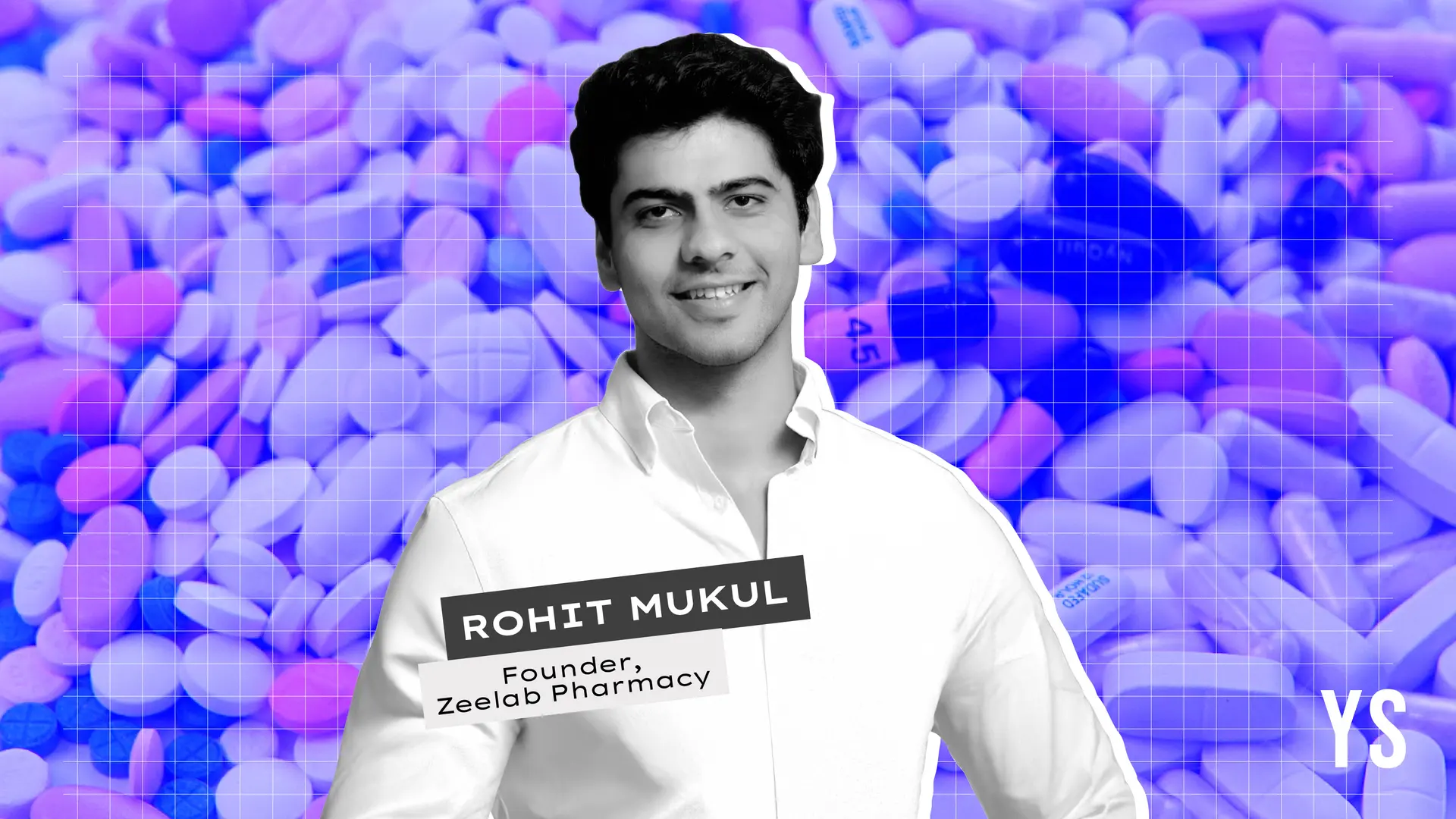
Founded by Rohit Mukul, Zeelab Pharmacy offers a wide range of generic medicines at up to 90% lower prices than branded equivalents through its 240 company-owned stores and ecommerce channels.


Last month, US President Donald Trump announced 100% import tariffs on branded and patented pharmaceutical products, making investors jittery. However, this development had little effect on Indian pharma companies.
According to the Indian Pharmaceutical Alliance (IPA)—which represents major firms like Dr. Reddy’s, Sun Pharma, Lupin, and Zydus Lifesciences—the tariffs are unlikely to affect Indian pharma companies, which primarily export generic medicines.
For Delhi startup Zeelab Pharmacy, it’s also the foundation of its business.
After completing his studies at the London School of Economics, Rohit Mukul returned to India in 2018 to start his own venture. Although he was interested in automobiles, a closer look at the Indian healthcare market revealed a larger, more urgent opportunity.
“I realised there was a major gap in how medicines are sold in India. A drug that costs Rs 10 to make was sold at Rs 100. This price difference wasn’t improving healthcare outcomes; it was simply a burden on customers’ pockets,” Mukul, the Founder and CEO of Zeelab Pharmacy, tells YourStory.
In 2020, Mukul launched the Delhi-based startup to offer a wide range of generic medicines and health essentials—from critical drugs for diabetes, cardiac conditions, and cancer, to everyday items like cough syrups, surgical supplies, diapers, and sanitary pads—at up to 90% cheaper than branded equivalents.
Building a leaner supply chain
In the crowded Indian pharmaceutical market—riddled with distributors, dealers, medical representatives, and other intermediaries—Zeelab Pharmacy procures medicines directly from manufacturers and sells to customers.
“By removing intermediaries, we can offer both medicines at sharply reduced costs and still maintain healthy margins for ourselves,” the founder says, claiming the startup clocked an annual revenue run rate (ARR) of Rs 100 crore in FY25.
Since its inception, Zeelab has served over one million customers, saving them more than Rs 1,000 crore in medical expenses through its 240 company-owned retail stores and ecommerce arm—its website and mobile app. At present, it has physical stores in Delhi-NCR, Uttar Pradesh, Kolkata, and Mumbai.
The startup claims to fulfill 1,500 orders daily online, with plans to scale to 10,000 orders by FY2026. Zeelab has also introduced 60-minute medicine delivery in Delhi-NCR, building its own quick-commerce play for healthcare while outsourcing logistics to partners like Shiprocket and Rapido.
“We serve our Delhi-NCR customers within 60 minutes of placing the order. The rest of India is served as per our standard delivery TAT of three days. We are servicing 1500 daily orders through our ecommerce platform, which is fast-growing,” says Mukul.
“Our model bridges a crucial affordability gap that even large e-pharmacies and quick-commerce players haven’t meaningfully addressed.”
Overcoming trust and prescription barriers
One of Zeelab’s early challenges was building consumer trust in generics. “In India, patients usually buy only what doctors prescribe, unlike in the West, where they sell medicines by composition names. Convincing people that every drug sold here is technically generic—and therefore, can be offered at lower cost—was not easy,” Mukul explains.
Zeelab is addressing this challenge gradually, city by city, educating consumers and building credibility in micro-markets. Presently, the startup has 1,000 employees, most of whom are pharmacists working at Zeelab’s stores. “Pharmacists are torchbearers in our revolution of making healthcare affordable in India,” he adds.
For instance, Zeelab Pharmacy sells Thyrox 25, a drug used to treat an underactive thyroid gland, at Rs 25 a strip, much less than its market price of Rs 197 per strip. Similarly, Sitazee M500, which controls high blood sugar levels, is available for Rs 52.5 a strip, compared to the market price of Rs 375 per strip.

According to ResearchAndMarkets, the Indian generic drugs market was valued at $24.91 billion in 2024 and is anticipated to reach $35.62 billion by 2030, growing at a CAGR of about 6% during 2025-2030.
“We feel we’ve found the right model-market fit. India is ripe for a large player in this category, and we want Zeelab to be the leader,” the founder says.
In fact, the government-operated Pradhan Mantri Bhartiya Janaushadhi Pariyojana (PMBJP) plays a big role in bringing public trust in generic medicine and tackling the high drug prices.
Through dedicated outlets known as Jan Aushadhi Kendras, the government retails quality generic medicines at prices 50% to 80% lower than branded counterparts, resulting in substantial savings for citizens. As of 2023, over 9,000 Jan Ayushadhi Kendras operate across India, supported by subsidies, training programmes, and quality assurance protocols.
In January 2025, the omnichannel healthcare brand had raised $2.4 million in its maiden funding round led by OTP Ventures, but it remains cautious about external capital.
With the funding, the startup plans to double down on its existing geographies while expanding to Madhya Pradesh and East and South India.
Looking ahead
Competing with startups like Truemeds, PlatinumRx, and Dawaa Dost, Zeelab is quietly redefining access to affordable medicines. Instead of competing on delivery speed, Zeelab’s focus is on value: offering high-quality generic drugs at up to 90% lower prices than branded alternatives
“We believe India will see another large healthcare retail player very soon. We want Zeelab to be that brand—redefining how Indians buy medicines, and lifting a huge cost burden from millions of families,” the founder says.
He adds, “By combining our growing online presence with a network of over 240 company-owned stores, we aim to make low-cost healthcare products accessible to middle- and lower-income households across urban and semi-urban India.”
Edited by Suman Singh