


GFF 2025: SEBI to deepen use of AI, quantum-safe systems to strengthen market oversight
According to the SEBI chief, India’s capital markets must pair speed with safety, using technology, collaboration, and cybersecurity to build a resilient, inclusive ecosystem that balances investor protection with market innovation.

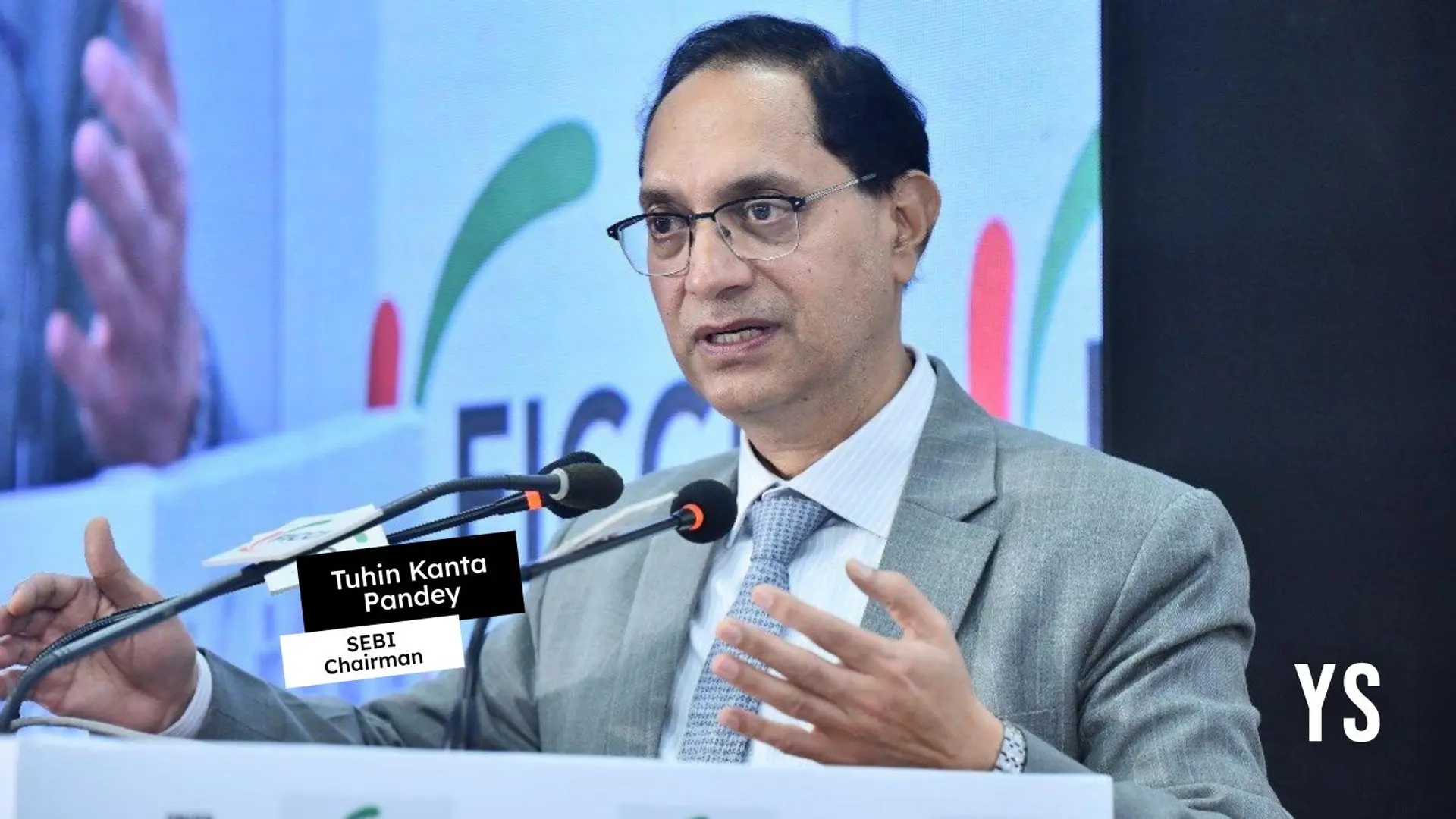

The Securities and Exchange Board of India (SEBI) will increasingly rely on technology and collaboration to build a more resilient, inclusive, and transparent capital market, SEBI Chairperson Tuhin Kanta Pandey said, stressing that resilience must evolve from being a compliance exercise to a shared industry responsibility.
Delivering a keynote address titled “Resilient and Inclusive Capital Markets in a Tech-Driven World” at the Global Fintech Festival (GFF) 2025 in Mumbai, Pandey said India’s markets have undergone a fundamental digital transformation over the past decade—from account openings and settlements to investor grievance redressal and market supervision.
“Today, the Indian securities market is being shaped by reforms and an ecosystem that is vibrant, resilient, and inclusive. Technology is at the core of every step,” he said.
Pandey outlined SEBI’s three broad priorities—investor protection, market development, and effective regulation—and said technology has become central to all three. “Whether it is investor onboarding, payment safeguards, or risk management, innovation has made the market faster, simpler, and safer,” he said.

He cited several recent initiatives aimed at improving investor safety and experience. These include UPI-based validation for IPO and secondary market payments, the Unified Investor App developed by depositories to give investors a consolidated view of holdings and voting rights, and the option for investors to voluntarily freeze trading accounts in case of suspicious activity.
SEBI has also strengthened its complaint redressal platform (SCORES) and introduced measures to help investors recover unclaimed funds and securities.
Pandey said these interventions—developed through close coordination between SEBI, depositories, exchanges, and technology partners—have significantly improved investor confidence. “We have built an ecosystem where the regulator, industry, and intermediaries work together. That coordination is our biggest strength,” he said.
On the market efficiency front, Pandey pointed to faster settlement cycles and the upcoming T+0 pilot, which aims to make India one of the first major markets in the world to move towards near-instantaneous settlement. “This has improved liquidity, reduced counterparty risk, and given investors faster access to funds,” he said.
Pandey also highlighted how SEBI is leveraging data analytics, artificial intelligence, and digital forensics to improve regulatory oversight. The market regulator's in-house analytics lab, he said, uses AI and ML to detect complex patterns of market manipulation and network-based fraud. SEBI’s social media monitoring systems are now tracking and acting against unregistered advisers and misleading online influencers.
Yet, he cautioned, “Every leap in technology brings its own challenges. Cybersecurity threats have the potential to create systemic disruptions.” He noted that SEBI has rolled out a comprehensive cybersecurity and cyber-resilience framework for all regulated entities. The framework, issued in August 2024, prescribes standard operating procedures for classifying and managing cyber incidents, continuous monitoring, and capacity building across the ecosystem.
Pandey said SEBI is also preparing for future technological disruptions, including quantum-safe cryptography and the responsible use of AI. The regulator’s Innovation Sandbox, he added, allows fintech startups to test blockchain-based applications for capital markets in a controlled environment.
He emphasised that resilience cannot be built by the regulator alone. “It is a shared responsibility among market infrastructure institutions, intermediaries, fintech innovators, and all of us in this ecosystem.”
As India’s markets continue to grow, he said, the focus should remain on balancing speed with safety. “The question is not only how fast we grow, but how safely,” he said. “Let us continue to harness technology to build thoughtfully, collaboratively, and with an unwavering focus on trust—a capital market that truly embodies a resilient and inclusive India.”
Edited by Suman Singh