



Healthtech is yet to scale; there’s scope for more, says Ramesh Kannan of PE firm Somerset Indus
As Somerset Indus Capital Partners, an active investor in healthcare, closes its third fund, Ramesh Kannan, Partner at the firm, shares the company’s plan for its next phase of growth. He also talks about where the investment opportunities lie in healthcare and what’s holding the sector back.

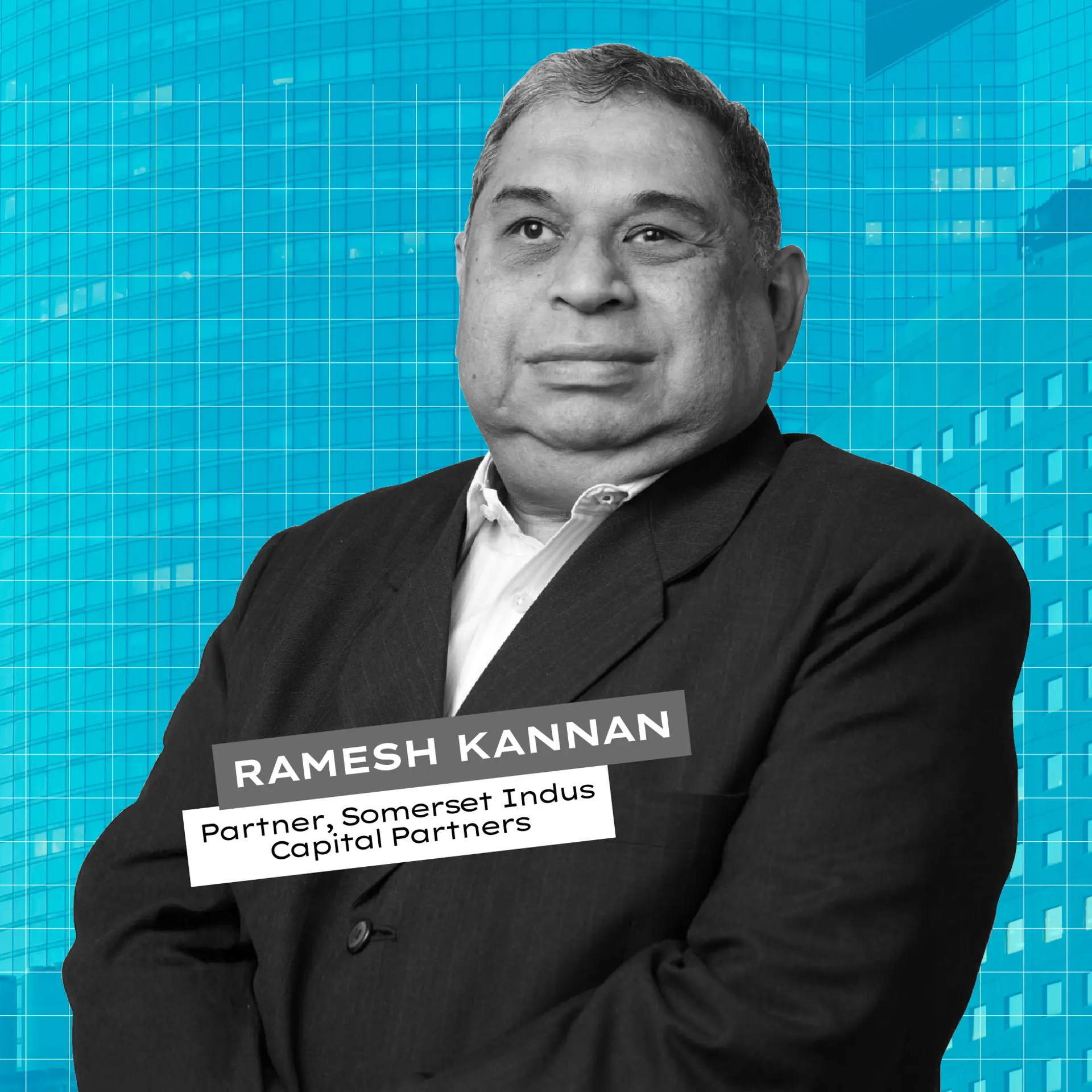

Somerset Indus Capital Partners has emerged as an active private equity investor in India’s growing healthcare sector, focusing on access and affordability primarily in the Tier II and III markets.
Over the past decade, the Mumbai-based firm has invested in 15 portfolio companies, many led by first-generation entrepreneurs, to expand affordable and quality healthcare across under-served regions. It manages assets of around $500 million across three funds.
Fund III, which is in the final stages of its close, is expected to exceed its $250 million target. It has attracted commitments from European and US development finance institutions, global investment companies, domestic banks, and impact-focused investors from Europe and Southeast Asia. The fund aims to invest in healthcare businesses that address gaps in accessibility and affordability.
Earlier, Somerset announced a full exit from Apex Hospitals in Rajasthan, after the investment delivered a 4x return. The firm had helped Apex launch tele-health and E-ICU services and establish a cancer care centre of excellence.
The firm’s past investments include Krsnaa Diagnostics, which has grown into one of India’s largest
providers of affordable diagnostic services, and Ujala Cygnus Hospitals, which has expanded low-cost tertiary care across northern India.
Apart from hospitals and diagnostics, Somerset also finds pharmaceuticals and life sciences “attractive”. Medtech manufacturing is another promising area, says Ramesh Kannan, Partner at Somerset Indus Capital Partners. “India imports most of its equipment; so ‘Make in India’ is a big theme. Surgical robotics is emerging as well,” he adds.
While there are several promising opportunities for growth and investment, Kannan believes healthtech hasn’t scaled yet, largely because it’s unclear who ultimately bears the cost. In traditional healthcare, it’s obvious who pays—the patient, the insurer, or the government. In healthtech, however, costs and benefits are often misaligned.
For outpatient services, hospitals may cover the cost of screening or equipment, expecting revenue only if a positive diagnosis leads to more intensive treatment. For inpatient care, insurance and government reimbursements require pre-approval and fixed rates, slowing adoption unless the technology demonstrably reduces costs or improves outcomes, Kannan explains in an interview to YourStory.
He also talks about current investment trends in healthcare, the ongoing consolidation across the sector, and the firm’s approach to its next phase of growth.
Edited excerpts from the interview…
YourStory (YS): How has this year been for Somerset Indus Capital Partners? What kind of investments have you made, and what’s on the horizon?
Ramesh Kannan (RK): We are currently on our third fund. In our first fund, we have almost exited all investments, with just one left that we are holding on to for better opportunities. Fund II exits have also begun. For Fund III, we’ve already invested in Cyrix Healthcare in Cochin and in a pharma packaging company called Printman. We expect to do a couple of more investments this year and next. Typically, we target 7–9 investments in each fund over a five-year cycle.
YS: Which segments in healthcare are attracting the most investor interest right now?
RK: Single-specialty hospitals are seeing a lot of traction—oncology, nephrology, IVF, mother-and-child, gastroenterology, and orthopedics in particular. Multi-speciality hospitals with a strong oncology focus are also getting attention in larger cities. Beyond hospitals, diagnostics is in a consolidation play. Many standalone diagnostic centres see value in merging into bigger platforms for scale.
YS: Apart from hospitals and diagnostics, what other areas are you focusing on?
RK: Pharmaceuticals and life sciences continue to be attractive, especially APIs (active pharmaceutical ingredients), which are getting a push from the government under PLI (production linked incentive) schemes to encourage self-reliance.
Medtech manufacturing is another promising area... Robotics, particularly surgical robotics, is emerging as well. Local companies like SSI Mantra are beginning to challenge multinational players.
YS: How is India doing in medtech manufacturing?
RK: It’s still early, but progress is visible. Unlike non-medical manufacturing, medtech requires strict approvals and longer gestation. The government is supporting PLI schemes, GST credits, and clusters like AMTZ in Vizag. CT, MRI, ultrasound, and X-ray manufacturing has begun in India in the last 3–4 years. It will take time, but the direction is positive.
YS: What trends are you seeing in home and geriatric care?
RK: Home care and geriatric care are both large opportunities. Home care is growing beyond elderly patients—urban consumers are willing to pay extra for at-home diagnostics and services, much like food delivery.
Two models are emerging in geriatric care: one is real estate-led accommodation, such as senior living facilities, with bundled services; the other is standalone clinical services, sometimes within larger residential setups… Like ‘hospital-in-hospital’ setups for elderly patients. This is gaining traction as India’s ageing population grows.
Both are seeing traction, especially in metros, though interest is spreading beyond.
YS: Consolidation seems to be a recurring theme in healthcare. What’s driving this?
RK: Larger units are being acquired by global players, while domestic players are consolidating in Tier II cities to build scale and volumes. Instead of building new hospitals from scratch, the trend now is to take over existing brownfield facilities or long-term leases—particularly trust hospitals—and upgrade them.
YS: How do you view the role of healthtech versus traditional healthcare delivery?
RK: Healthtech hasn’t scaled yet, mainly because of payment issues. In traditional healthcare, it’s clear who pays—the patient, insurer, or government. In healthtech, especially outpatient-driven models, that clarity is missing. Doctors are also hesitant to recommend high-value tests if patients view them as expensive. That said, areas like remote patient monitoring and wearables are growing, as they help optimise nursing resources.
YS: Financing and affordability are also critical. What’s changing there?
RK: Healthcare financing is evolving rapidly. NBFCs focused on healthcare are helping hospitals by discounting receivables and improving cash flow. For patients, loans and EMI options for surgeries are gaining traction. Crowdfunding platforms for high-cost procedures are also becoming more common. On top of this, CSR contributions and PPP (public-private partnerships) are playing a bigger role in preventive care and access.

AI is still at an early stage. It can enhance productivity, improve outcomes, and replace some routine, lower-level tasks. But it won’t replace doctors. Healthcare is still doctor-driven, and patients will always want human confirmation, says Ramesh Kannan, Partner at Somerset Indus.
YS: What is your take on the churn among doctors in hospitals?
RK: Historically, doctors were consultants, not tied to one hospital. They had private OPDs (outpatient departments) or clinics and referred patients to hospitals of their choice. Today, most major hospitals employ full-time doctors and discourage outside OPD. Hospitals support them with fixed pay initially, then a mix of fixed and variable (pay), and eventually shift fully to variable. This model reduces churn—doctors see value in the brand, research opportunities, marketing support, and academic tie-ups. While doctors still feel underpaid relative to their effort, stability has improved compared to earlier.
YS: What about the trend of doctors moving into management roles?
RK: That’s a growing trend. Many who can’t pursue post-graduation after MBBS move into management, sometimes even becoming COOs of hospitals. India’s entrepreneurial spirit supports this, but medical education itself cannot be mass-produced—it must maintain a certain quality. I believe the government risks going wrong by pushing to drastically increase doctor output without enough focus on quality.
YS: How do you view AI in healthcare?
RK: AI is still at an early stage. It can enhance productivity, improve outcomes, and replace some routine, lower-level tasks. But it won’t replace doctors. Healthcare is still doctor-driven, and patients will always want human confirmation. AI’s strength is in analysing vast databases of past cases and spotting patterns no human can. That makes it very useful in diagnostics and treatment support. The challenge is ensuring clean, reliable data.
YS: What’s holding back diagnostics today? There is a lot of talk about AI disrupting this space.
RK: The biggest issue is interoperability. A test done at one centre is rarely shared across systems; so patients repeat the same tests multiple times. Until we build interoperable systems, efficiency will remain low. Meanwhile, valuations in diagnostics have moderated after a period of high exuberance. Big tech players like Amazon or Flipkart experimenting in diagnostics won’t succeed unless they get ground execution right.
YS: What’s Somerset’s investment approach in the near term?
RK: We take time before investing because we focus on promoters. We observe how adaptable, receptive, and consistent they are before backing them. Right now, we’re focused on closing Fund III. New investments will be more active next year, while we’ll also start exits from earlier funds.
YS: Do you see opportunities beyond India?
RK: Medical tourism has created significant foreign exchange outflow. Now there’s a push to develop infrastructure partly in India, partly abroad. Smaller countries are creating opportunities for partnerships. Indian providers could play a role in reducing dependency on outbound medical tourism.
YS: What about emerging sectors like nutrition?
RK: Nutrition is becoming very interesting—protein, sports nutrition, gender-specific nutrition, often linked to preventive care. It’s a direct-to-consumer business, sold through digital platforms rather than hospitals. This is drawing a lot of new players.
Edited by Swetha Kannan