



Inside the VC Mind: Prime’s fundraising masterclass for founders
In this episode, the core investment team at Prime Venture Partners sit down to answer everything founders wish they could ask a VC face-to-face.

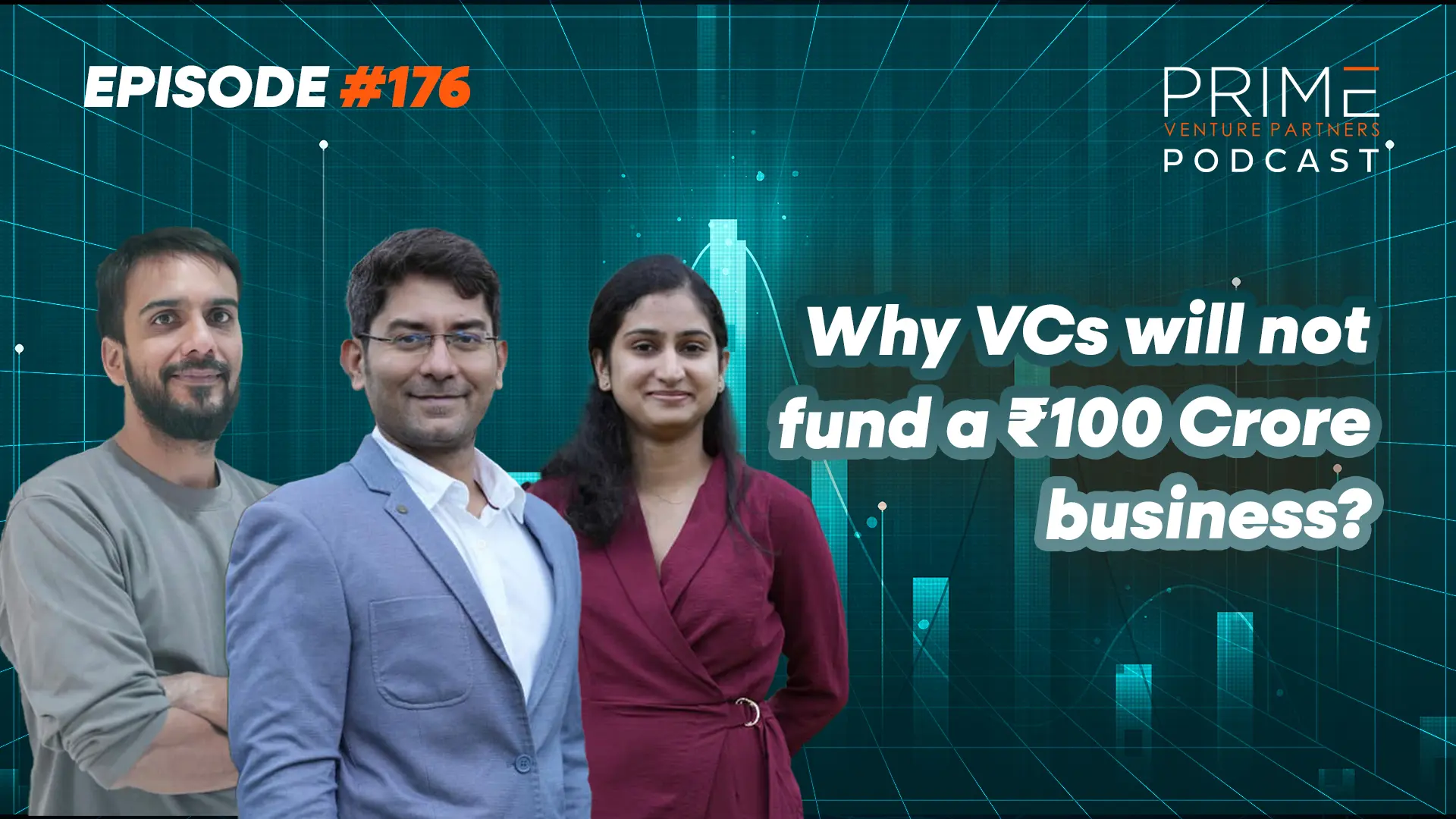

What really happens behind the closed doors of a venture capital fund? Why do some pitches instantly resonate while others disappear into inboxes?
In a rare inside look, Gaurav Ranjan, Principal at Prime Venture Partners (PVP); and Pankaj Agarwal, Vice President at PVP; in conversation with Shivani Kulkarni, Vice President at PVP, unpacked the real mechanics from first outreach to final term sheet and offered founders a brutally honest guide on fundraising and how VCs actually think.
1. Breaking Through: Referrals, relevance, and relentless follow-ups
Prime receives nearly 5,000 startups a year, but invests in five to eight. For founders, that means standing out in a sea of noise.
“If you want to reach out to someone, find a way to get a referral,” says Gaurav. “That referral could be through another investor, a portfolio company, or a friend. It always takes priority over everything else.”
For those without that network, he offers a tactical alternative: personalisation.
“Look at what the fund’s thesis is, what they’ve invested in, and what they’ve spoken about. Make some reference to that. It shows you’ve done the work.”
But it’s not just about the right VC, it’s about the right fit.
As Pankaj puts it: “You don’t need to talk to everybody. Shortlist the four-five most relevant VCs, and don’t underestimate analysts or associates, they’re often the real champions of a deal.”
And when the first message doesn’t land?
“Keep sending monthly updates,” Gaurav adds. “If I hear from a founder for three or four months in a row and see traction, that persistence always gets a call.”
2. Not every great business needs venture capital
There’s a hard truth most founders eventually face, venture funding is not the only definition of success.
“All businesses are great businesses,” says Gaurav, “but not all great businesses are VC-fundable.”
He explains with numbers. A ₹100 crore-revenue business might take years to build, yet still not fit the “venture scale” model.
“A 100-crore business could be a ₹1,000-crore valuation in a great case. Even if the VC owns 20%, that’s $24 million. For a $120-million fund, that’s not material enough.”
That doesn’t make the business small; it just means its growth trajectory isn’t aligned with venture economics.
He recalls the edtech boom. “I met founders running profitable coaching institutes making ₹60 crore in revenue. I asked them why raise VC? You’re already doing great. But FOMO kicks in, my friend raised, so I should too. That’s not always right.”
3. The first meeting: Clarity over complexity
Prime evaluates hundreds of early-stage founders each year, but only a fraction move to second meetings. The difference, according to Pankaj, often comes down to three questions:
“Do you understand the problem deeply? Do you understand who has that problem? And do you have a unique right to win?”
He adds: “At this stage, we’re not chasing metrics rather we’re chasing conviction.”
For Gaurav, founder quality trumps everything. “We index a lot more on the founder and whether you’re the right team to solve this problem. Smart founders figure out unknowns as they go.”
Both agree that founders who demonstrate insight, not just passion stand out. “With every conversation,” Pankaj says, “I want to learn something new about the market from you.”
4. Founder–Market Fit: Why experience isn’t everything
“Founder-market fit” is one of those phrases every founder hears but few understand.
At Prime, it’s not about having 10 years of domain experience, it’s about knowing what gives you an edge.
“You may not have worked in BFSI,” Gaurav explains, “but if you’ve sold to enterprises before, you already understand long sales cycles, decision-making, and procurement. That’s your edge.”
Similarly, in consumer or AI-led products, youth and user empathy might matter more than legacy.
“For an AI companion app, maybe a 23-year-old founder is better suited to build it,” adds Pankaj. “Because they live that behaviour.”
The lesson—investors don’t expect omniscience. They expect founders who understand themselves—their strengths, their blind spots, and their learning curve.
5. Storytelling: The hidden superpower
Every successful founder Prime has shared had one trait—they could make others see their vision.
“All the founders I worked with at Swiggy and Rupeek had one thing in common,” recalls Pankaj. “Their ability to share their worldview in an engaging, compelling way.”
Storytelling isn’t cosmetic. It’s a survival skill. It helps founders hire the best, rally teams through crises, and convince investors who can’t yet see what they see.
Gaurav cautions, however, that passion must meet clarity.
“If you’re building in deeptech, simplify your story so even a grandparent can understand why this problem matters. Otherwise, you lose the room.”
Shivani offers a founder-friendly exercise used during Prime’s investment committees:
“We ask founders to give a five-year TED Talk if you succeed, how will the world have changed? It forces clarity about the vision.”
6. Valuation, dilution, and the long game
When the conversation shifts to valuation, both investors roll their eyes—not in cynicism, but from experience.
“At the early stage, don’t over-optimise on valuation,” says Gaurav. “If you’re building a great business, it’ll catch up. A few crores here or there won’t matter when you’re creating a multibillion-dollar company.”
Pankaj adds that founders should focus on what they can control.
“It’s never about valuation, rather it’s about dilution. Figure out how much capital you need for the next milestone and raise just enough.”
They’ve seen the trap too many times, founders raising at inflated valuations only to struggle 18 months later when the market cools.
“You raise at $20 million,” Gaurav explains, “and next time investors expect $40 million. But if you haven’t hit the growth metrics, you’re stuck.”
7. Choosing the Right VC: The real partnership test
Capital is easy to find; conviction isn’t. “VCs are serving a commoditised product, which is capital,” Pankaj points out. “The colour of money is the same everywhere. What matters is will this person stand by you when things go wrong?”
“It’s easier to get out of a marriage than an investor relationship,” Gaurav jokes. “Ask yourself if this VC calls you on a Sunday, would you go for lunch with them? That’s the comfort level you need.”
Both stress doing VC reference checks especially with founders of companies that didn’t succeed.
“That’s when you’ll see the real partnership,” says Gaurav. “And check if they have reserves for follow-on rounds; those bridges can save you when times are tough.”
Founders choose co-founders carefully; they should choose investors with the same rigour.
8. Skill, luck, and the game of venture
When asked how much of investing success is luck versus skill, Shivani laughs,
“I’d say 70% skill, 30% luck.”
Pankaj adds, “Even the best VCs get two or three big hits. Luck plays its part, but skill, patience, and persistence make the difference.”
It’s a humility founders often forget: even VCs are constantly learning, iterating, and guessing. The difference is how thoughtfully they do it.
Fundraising, at its core, is not a transaction, it’s a long-term relationship built on trust and clarity.
As the Prime team puts it: don’t chase funding instead chase clarity. Because when the story, the team, and the timing align, the funding will definitely follow.
Timestamps:
00:00 – Introduction
05:51 – The VC funnel: 5,000 pitches → 5 investments
07:09 – How to reach a VC (referrals vs. cold outreach)
09:57 – Why not all great businesses are VC-fundable
14:20 – Founder mistakes that kill deals
18:20 – How much should you raise—and when
25:17 – Analysts & Associates: the real champions of deals
33:41 – The underrated power of monthly updates
39:49 – How founders should think about valuation
45:39 – How to pick your VC partner
50:00 – ESOPs, angels & early-stage strategy
56:00 – Skill vs. Luck — what really drives VC success
(Disclaimer: The views and opinions expressed in this article are those of the author and do not necessarily reflect the views of YourStory.)