



From physical branches to just a click: Why the future of lending is platform-led
Partnership-based lending in India is born out of two things: the crucial need for lenders to expand their footprint beyond the conventional channels, and borrowers expecting credit to show up where they already are.



Remember the last time you stood in a bank queue, holding a pile of paperwork for a personal loan application? Me neither. The rise of the digital economy built upon convenience has ensured that even banking and finance move to our fingertips through the devices in our palms rather than brick-and-mortar buildings of yore.
A loan application that still needs a waiting room chair is obsolete.
Nowadays, banks are rushing to capture borrowers where they’re already engaged. Be it a food delivery app or even a matrimonial platform, loan offers are just about everywhere. According to Research and Markets, embedded finance revenues in India are projected to jump from about $5.75 billion in 2024 to ~$28.6 billion by 2029, which is about twice as much as total digital disbursements (embedded and otherwise) in 2024-2025.
The 21st-century shift in lending is real
Digital is not just a need of the hour, but it’s good business sense too. Banks and NBFCs are seeing increased revenue through forging new partnerships with popular platforms where they access a ready pool of premium borrowers eager to consume credit. And this isn’t just limited to loans.
Think of co-branded cards around us everywhere. From a credit card for Amazon to one for Swiggy to a separate one for even Uber, today’s consumers are spoilt for choice when it comes to associating with their favourite brands and banks aren’t letting the opportunity go to capture them early.
This is embedded finance at work.
They say that the easiest way to discover the truth is to just follow the money. And the lenders’ balance
sheets lay bare their priorities.
Many Indian banks, which previously allocated around 6-8% of their overall total operating expenditure on technology, are now planning to raise that allocation to ~10%, mostly fuelled by surging digital transactional volumes and tighter regulatory demands for uptime and resilience.
The major reason for lenders to heavily invest in digital transformation is that customer expectations have drastically changed. Customer satisfaction extends beyond just good interest rates or value-added services. The new crop also demands all-around availability, speed, transparency, intuitive customer service, and personalisation, among other things.
In order to deliver this exceptional experience to borrowers, lenders need to digitise the loan origination journey, from start to finish, and ensure that credit becomes a seamless feature, available on the most commonly used apps.
Physical distribution hasn’t disappeared altogether. Although it is losing importance as the first point of interaction. As of September 2024, brick-and-mortar branches have grown to ~1.60 lakh, showing year-on-year growth, but the moments that trigger the intent of borrowing are becoming increasingly digital. Hence, even though more banks may exist now, they probably denote friction in the lending process.
Digitalisation is changing the way we think about borrowing money. It’s making it easier and simpler for more borrowers to access the credit they need, and that’s why financial decisions are migrating to digital rails.
The new playbook
It’s clear then that credit is now moving towards the consumers—away from the branches. The new playbook for lenders is to embed credit products inside partner platforms and serve borrower expectations right at the moment of truth.
In fact, it is happening right now. Digitally disbursed personal loans accounted for 12% of total personal loans by value and a whopping 74% by volume in FY 2024–25, according to a recent report from Fintech Association for Consumer Empowerment.
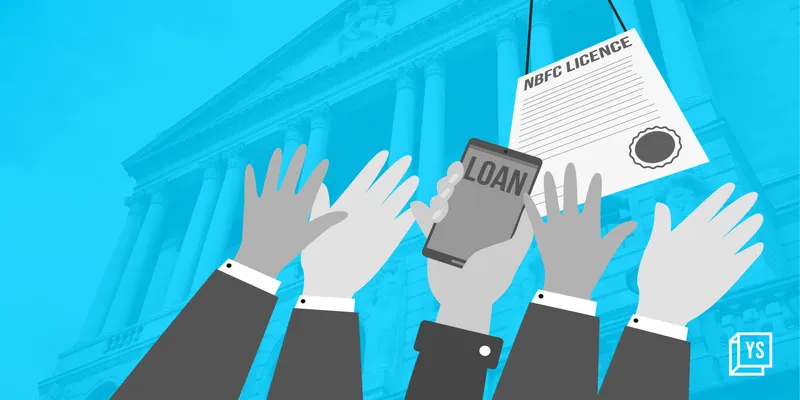
It’s not surprising that even digital platforms want to get in on the action of digital lending. In a curious shift of roles, Walmart-owned Flipkart was granted an NBFC license this March by the RBI, and the company plans to enter the lending arena itself.
A recent EY Parthenon survey shows that 65% of banks leverage partnerships to enhance their digital products as well as expand reach. In practice, this means lenders, platforms, and technology providers are working closely on innovations in loan products, their distribution, and even underwriting processes. HDFC Bank has been one of the vocal proponents of partnership-based lending.
“There is no option for us but to really look at partnership with like-minded fintechs… It’s a very important part of our growth strategy,” said Parag Rao, Group Head – Payments, Consumer Finance, Digital Banking and Technology at HDFC Bank, last year.
At its best, partnerships between lenders and platforms can look like a great symphony, with each instrument playing its own crucial part.
Banks and NBFCs come with robust financial infrastructure, regulatory strength and strong risk management abilities, whereas platforms (or loan service providers, LSPs), including super apps, DSA (Direct Selling Agents) aggregators, and marketplaces, provide a pre-vetted borrower base along with delivering the experience borrowers prefer.
The result? While lenders get to expand reach and reduce acquisition costs, LSPs get to enhance customer retention and explore alternate revenue streams. Borrowers gain access to convenient and highly tailored financial services. Certainly, a win-win for all!
The road ahead
Partnership-based lending in India is born out of two things: the crucial need for lenders to expand their footprint beyond the conventional channels, and borrowers expecting credit to show up where they already are.
Lenders who can do that grow their loan books naturally. How?
By prioritising platforms that aggregate maximum potential borrowers on a daily basis. Think ecommerce, wallets, POS and QR-code ecosystems. Another thing to do is redefine success since linear scaling is no longer possible by just expanding physical footprints. The shift, then, is all about optimising partner platforms to ensure maximum visibility and coverage to expand the surface area of credit offtake.
And lastly, lenders must invest in digital technology and infrastructure that not just powers it all but also optimises for speed, efficiency and success—both at a product and business level.
In the not-so-distant future, the bank as we know it might vanish, but financial services are here to stay. And lenders would do well to adapt before they face extinction.
(Rajat Deshpande is the Co-founder and CEO of FinBox.)
Edited by Kanishk Singh
(Disclaimer: The views and opinions expressed in this article are those of the author and do not necessarily reflect the views of YourStory.)