



7 powerful takeaways from TechSparks 2025 that every founder must know
From the real promise of artificial general intelligence to building purpose-driven ventures, here are valuable lessons that India's top founders and leaders shared at TechSparks 2025 to guide one’s entrepreneurial journey.

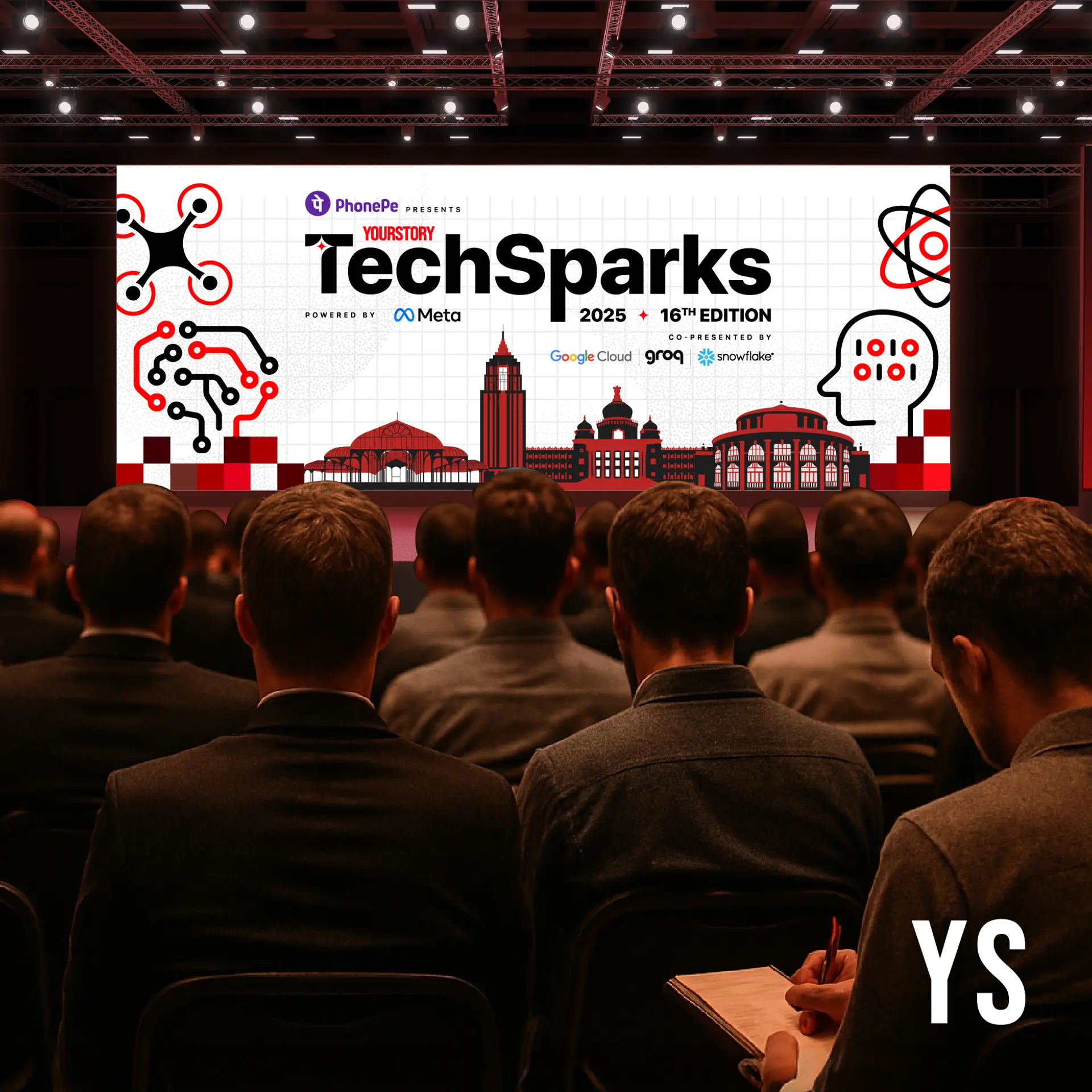

Will India build the next wave of AI innovation or merely consume it? This question lingered through the halls of the 16th edition of TechSparks 2025, themed ‘India 2030: Powered by AI’.
This edition of TechSparks cut through the buzzwords as founders and investors got real about AI's unfinished promise, the long road ahead for deeptech, and why most entrepreneurs lose their way chasing the next big thing.
From Mukesh Bansal discussing AI's current state to Ronnie Screwvala on reinvention and Kunal Kapoor on staying true to the purpose, the insights shared from the event were invaluable.
Here are seven key lessons from TechSparks 2025 that every entrepreneur should know.
AGI is the true promise, but the journey continues
While AI has made impressive strides, the quest for artificial general intelligence (AGI) remains ongoing.
"AI is very impressive. But the last mile of AI, in terms of reliability, matching authentic human intelligence, judgement, is not there yet. I think it will take time," said Mukesh Bansal, serial entrepreneur and Founder and CEO of enterprise AI startup Nurix AI, in conversation with Shradha Sharma, Founder & CEO of YourStory and The Bharat Project.
However, Bansal remains optimistic about the long-term potential. "AGI is the true promise," he noted, adding that all the investment pouring into AI today makes sense only if we consider AGI as a possibility. He pointed out that Big Tech companies are already preparing for that future, even as the path remains challenging.
Takeaway: Leverage AI's current capabilities, but build with the awareness that AGI is still on the horizon, and not an immediate reality.
Reinvention is not a project; it's a mindset
"Reinvention today is an absolute must for everybody," said Ronnie Screwvala, Co-founder of education venture upGrad and Swades Foundation, during a fireside chat with Shradha Sharma. “For entrepreneurs, reinvention should be woven into daily thinking rather than treated as a one-time event.”
Screwvala also demonstrated how his ventures have been interconnected, with each experience informing the next. His creative work shaped his media storytelling, which influenced his approach to education, creating a cumulative effect rather than isolated restarts.
Takeaway: Treat reinvention as an ongoing mindset, not a periodic exercise. Let restlessness fuel continuous evolution in your entrepreneurial journey.
Purpose is your compass through the entrepreneurial journey
Both Kunal Kapoor and Vani Kola emphasised the critical role of purpose in building sustainable businesses. The actor-entrepreneur and co-founder of crowd-sourcing platform Ketto highlighted how easy it is to lose sight of what matters when external pressures mount.
"With startups, you begin with a purpose: to build something meaningful, to change something. Then an investor asks you to pivot, or competition pushes you to cut costs, and suddenly, your story starts to get diluted. You become like everybody else. That's a dangerous space to be in," Kapoor said.
Echoing this view, Vani Kola, Managing Director at Kalaari Capital, reminded founders that purpose must serve multiple stakeholders. "Purpose has many dimensions. It isn't only about discovering your Buddha (spiritual purpose) that's important," Kola said in her keynote. "You must ask what the purpose of your company is—for your consumers, your employees, your investors, and even for yourself."
Takeaway: Define your purpose across all stakeholder dimensions and use it as your North Star when facing pressures to evolve your vision.
India's deeptech ecosystem is building for the long term
Karnataka's Minister Priyank Kharge laid out an ambitious blueprint: a Rs 600-crore deeptech fund and a Rs 1,000-crore Local Economic Acceleration Program (LEAP) designed to decentralise innovation and position the state as the ‘Deeptech Capital of Asia’.
"We’re calling it the Deeptech Decade," he said during his fireside chat with Shradha Sharma. "We want to ensure that deeptech, AI, and other frontier technologies have the right kind of capital, mentorship, and infrastructure.”
Mukesh Bansal offered a perspective on the timeline ahead. “India is at a critical pivot point. Rebuilding our deeptech ecosystem will take time, five to seven years at least. But I remain optimistic about it in the long run," he said.
Takeaway: Deeptech requires patient capital and long-term conviction. Entrepreneurs in this space should prepare for non-linear growth curves while leveraging emerging infrastructure support.
AI in healthcare demands precision and guardrails
Aayush Rai, Co-founder and CEO of home health diagnostics company Inito, emphasised the importance of validation in healthcare AI. "In healthcare, your models have to be tested and validated. We operate in a regulated industry, so we have to first test and then deploy," he said, stressing the need for guardrails around large language models that prevent them from making diagnostic decisions.
Takeaway: In healthcare and other regulated industries, AI must prioritise validation, ethics, and patient safety.
Voice and linguistic diversity are unlocking India's true market potential
One of the most compelling discussions at TechSparks 2025 centered on how voice technology is breaking down language barriers and enabling truly inclusive experiences.
"Typing in Indian languages is painful," said Sanjay Mohan, Group CTO, MakeMyTrip. "Voice changes that entirely."
The company's voice assistant, Myra, now supports Hindi, Tamil, Telugu, and Bengali, and there are plans to expand further.
Mohan explained that people speak more than they type, which gives companies longer, more natural conversations and a richer context for understanding user intent. He calls this "inclusive personalisation", technology that adapts not just to who the users are, but also how they communicate.
As Vishal Dhupar, Managing Director for South Asia at Nvidia, noted. "We have to serve 1.4 billion people who speak over 22 languages and have their own common sense and sensibilities. That cannot be done from the Western world; it has to be done here."
Takeaway: India's linguistic diversity is a market advantage. Voice-first experiences will unlock the next billion users.
Speed and AI adoption are creating new advantages
AI is shortening the distance between innovation and impact and enabling startups to rethink how fast they can deliver meaningful outcomes.
"AI is compressing time," said Vani Kola, comparing Netflix reaching 200 million users in 3.5 years with ChatGPT’s 100 million users in just a week of launch.
Pocket FM CEO Rohan Nayak illustrated what speed looks like in practice. "Over 90% of the content is AI-generated, 100% of our marketing videos are AI-generated, and we launched in Germany and Latin America entirely through AI without local teams, and we are profitable today."
The company had been burning cash at the beginning of 2025, but turned things around by focusing on AI initiatives. "We saw that AI has grown because we found a lot of great shows from our writers, which attracted new users and drove higher retention, but it also had an absolute 20% impact on our bottom line," Nayak added.
Takeaway: AI is creating unprecedented speed-to-market opportunities. Companies that effectively leverage AI for content creation, localisation, and operations can achieve profitability faster than traditional approaches.
TechSparks 2025 made one thing clear: India's startup ecosystem is at an inflection point where AI, purpose, and speed are converging to create unprecedented opportunities. Whether you are building in deeptech, healthcare, fintech, or consumer applications, these lessons from India's top founders and investors provide a roadmap for navigating the AI-powered decade ahead.
